Interview · EPICARICACY — Samantha Dewar & Shakira Cheers
Presented by Claire Collective Company, Samantha Dewar's debut original production Epicaricacy makes its Sydney premiere at Sydney Fringe 2026. A contemporary psychological drama about the fracturing of a young female friendship in the wake of a house party, it plays at The Actors Pulse Playhouse in Redfern from 10 – 12 September. Dewar (writer, producer and performer) and director and stage manager Shakira Cheers spoke with Valerie Chidiac during rehearsals ahead of the season.
EPICARICACY: A Conversation with Samantha Dewar and Shakira Cheers
Presented by Claire Collective Company, Samantha Dewar's debut original production Epicaricacy makes its Sydney premiere at Sydney Fringe 2026. A contemporary psychological drama about the fracturing of a young female friendship in the wake of a house party, it plays at The Actors Pulse Playhouse in Redfern from 10 – 12 September. Dewar (writer, producer and performer) and director and stage manager Shakira Cheers spoke with Valerie Chidiac during rehearsals ahead of the season.
Interviewed by Valerie Chidiac.
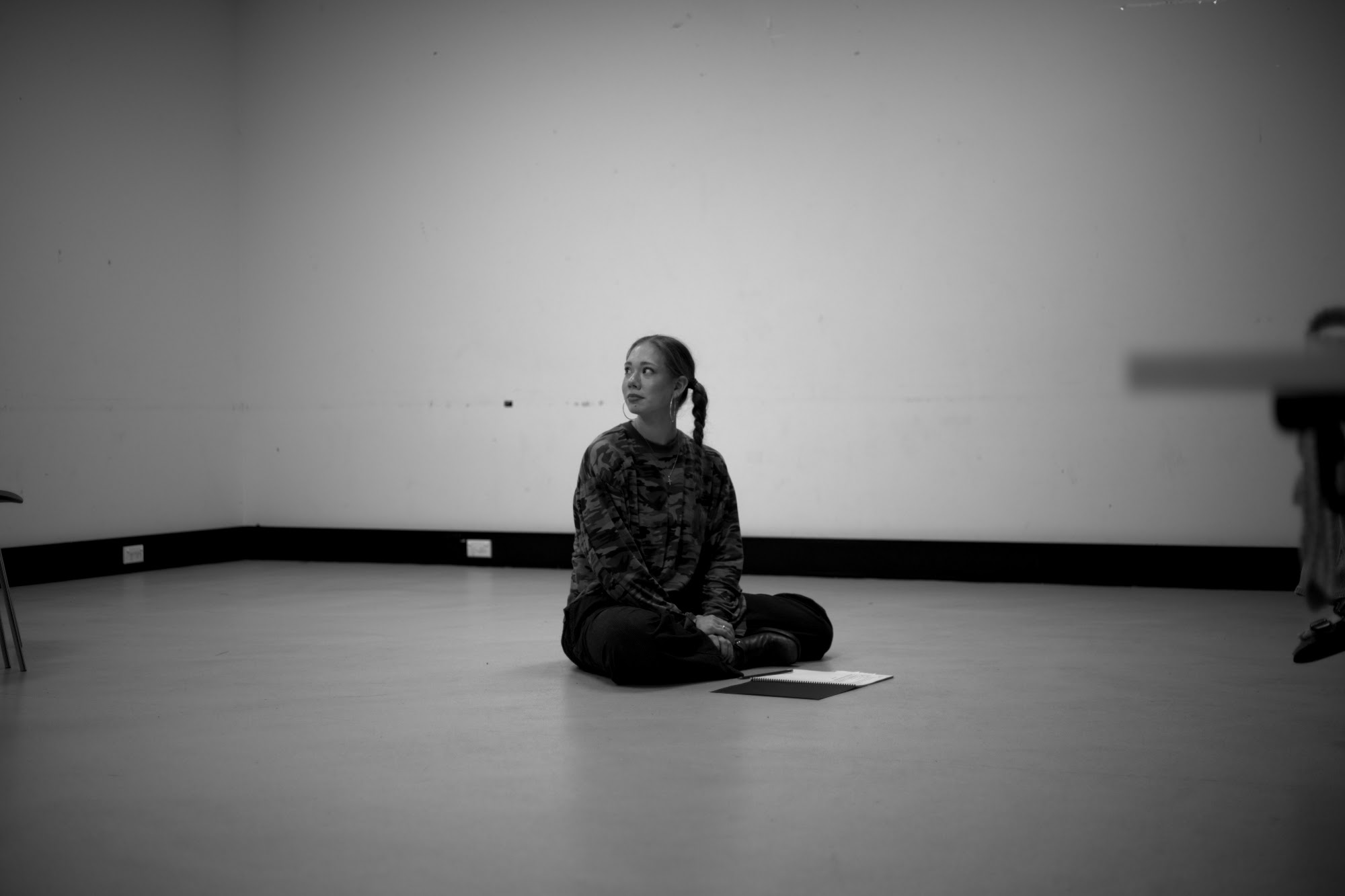
Photo: Clarence Lin Thein
In a move increasingly common for actors, writers and theatre-makers, starting your own production company is often the way to go when you want to make plays.
That is exactly what Samantha Dewar has done. Epicaricacy is the debut original production for Claire Collective Company, which she started earlier this year.
She grew up and studied acting at the Western Australian Academy of Performing Arts (WAAPA), and Epicaricacy was born out of an Advanced Diploma assignment for students to write their own piece. After an initial development at WAAPA, Samantha's Head of Acting encouraged her to put the show on and suggested Sydney Fringe.
In 2025, Samantha was hustling as an actor — including at WA Ballet and in commercial work — as well as teaching. She worked on the script bit by bit, on a daily or weekly basis, returning to it after a few months.
I spoke to writer-producer-actor Samantha Dewar and director and stage manager Shakira Cheers during the rehearsal period of Epicaricacy ahead of its Sydney debut.
This interview has been edited for length and clarity.
Firstly, how many people are struggling to pronounce the name? I'm avoiding pronouncing Epicaricacy and am just going to call it Epic.
SD: Very much. It means deriving pleasure from the misfortune of others — the same as the German word schadenfreude, which I also can't pronounce. Not to worry: the word Epicaricacy is never actually said in the show.
How did you approach the writing process: was it plot-first or by figuring out the characters, which are based on real people?
SD: The show started with a quote I saw about rotten fruit being the first to fall from a tree. That made me think of people I'd deemed a little rotten in my life. So I knew it would be based on myself and two friends whose personalities I knew like the back of my hand. I started writing a scene as if we were having a final conversation, just to see what happened. That scene is now the final scene in the show — a really cool, full-circle moment.
I then added a character called Guy. He's a real person too, but I didn't know much about him, so his plot line is loose in that regard.
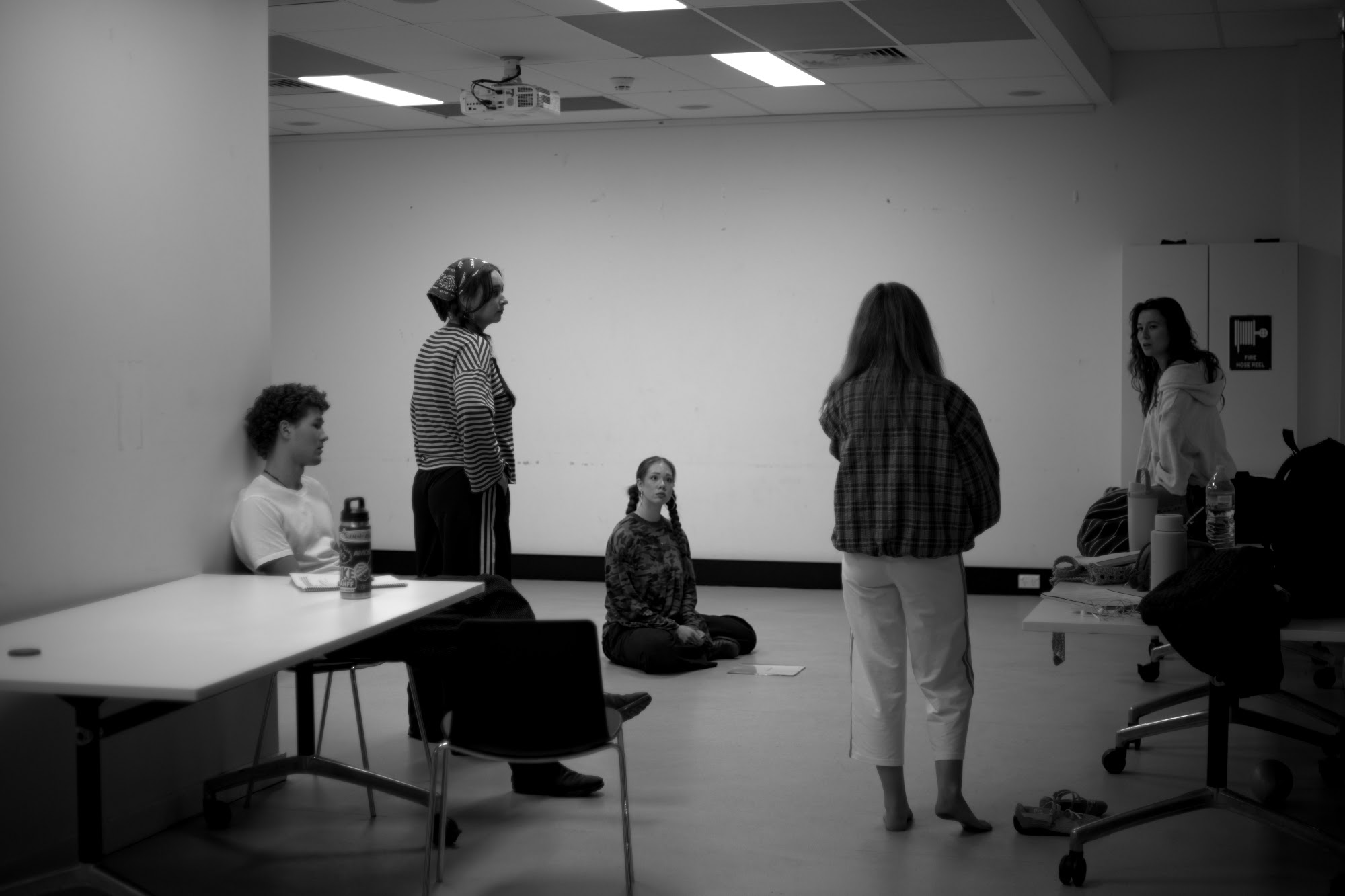
I've been changing lines during rehearsal because no artist is ever gonna be truly satisfied with the finished product. You always want to keep improving. I also love being collaborative with the actors. Sometimes in the space, an actor will say, "I think it makes more sense for me to say something else" — and if it feels right, we go with it.
Photo: Clarence Lin Thein
Beyond writing the show, you're also acting in it. How has that had an impact on you, navigating a story based on real experiences that happened to you?
SD: Because Epicaricacy is based on a true story, I've had to change things in the process. What happened in my life was real, but this is a staged version. I'm not here to prove a point or to make myself feel hurt or seen. It's a story people can watch from an outside perspective and decide who they believe — and reflect on their own friendships, and times something similar might have happened to them. My intention is to entertain audiences.
If I told it verbatim, there would be too many characters. Part of me thought: do I want to act in this? It would be way easier to produce and hand the role to someone else. But I thought — yes, it's going to be a challenge, but I am an actor. I should act. I'm glad I made that mental shift; it's been smooth sailing.
Even though I wrote it and lived parts of it, it's still a story. I've been able to separate the me from 2022 from the character I play now.
Did you ever consider directing the show and remaining completely behind the scenes?
SD: I wrote and directed the development at WAAPA because when I wrote it, I had a vision in my head of how it was gonna look. But this time, because I wanted to act in it, I needed a director whose vision would mesh with mine. I studied with Shakira at WAAPA and we've co-directed together.
We share the same brain. Whenever I'm thinking of something in a scene but haven't said it yet, Shakira will be there and she'll say it. So I get to be in my actor suit in the rehearsal room, knowing Shakira is wearing the director hat and thinking the same things. It's such a relief to have her in the room and see that vision through. It's her vision — we just happen to be thinking the same.
Did you feel there was an added layer of responsibility with casting, having known the people the characters are based on?
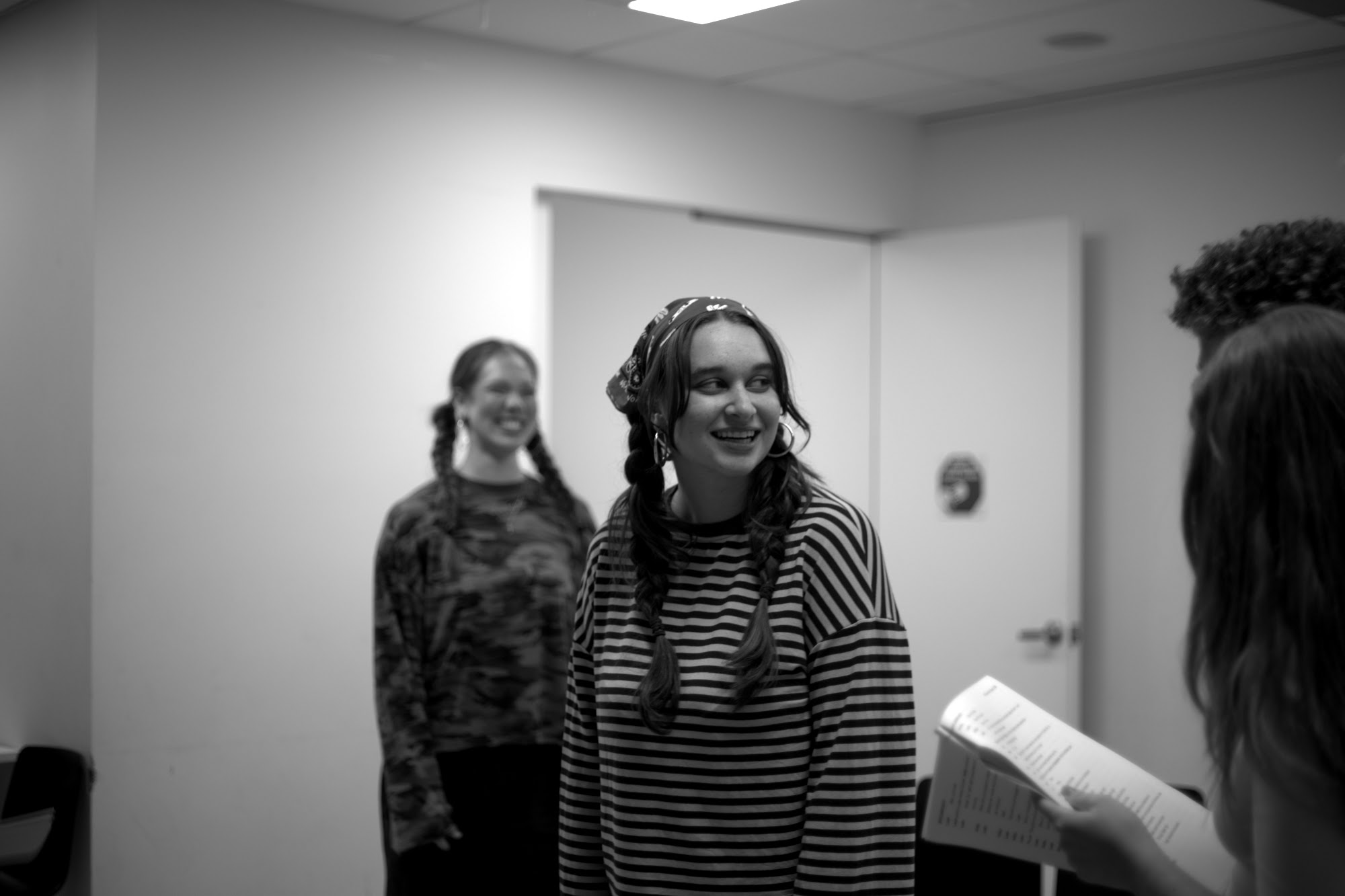
SD: The show is based on real people I used to know, but I wasn't looking for a specific look — I didn't want to replicate real life. Shakira and I were looking for actors who had the energy of each character. We had over 90 applications and shortlisted around six actors per character for a self-tape. When the final cast came together, they completely channelled the intention we had for each character.
Photo: Clarence Lin Thein
In terms of debuting Epicaricacy as a full production, why was Sydney Fringe the first place to put it on?
SD: I'd been involved in Perth Fringe for a couple of years, but for me, if you're an actor in Sydney, you're doing a good thing for your career. I felt Perth was smaller in terms of acting opportunities. I moved here to focus on my acting career, and thought: what better excuse than to put it on at Sydney Fringe. I also had everything organised from the development, so the application was easier to navigate. I was excited to be accepted.
Has there been a moment in the rehearsal process where playing off the other actors, or working with the crew, has illuminated something you didn't see before?
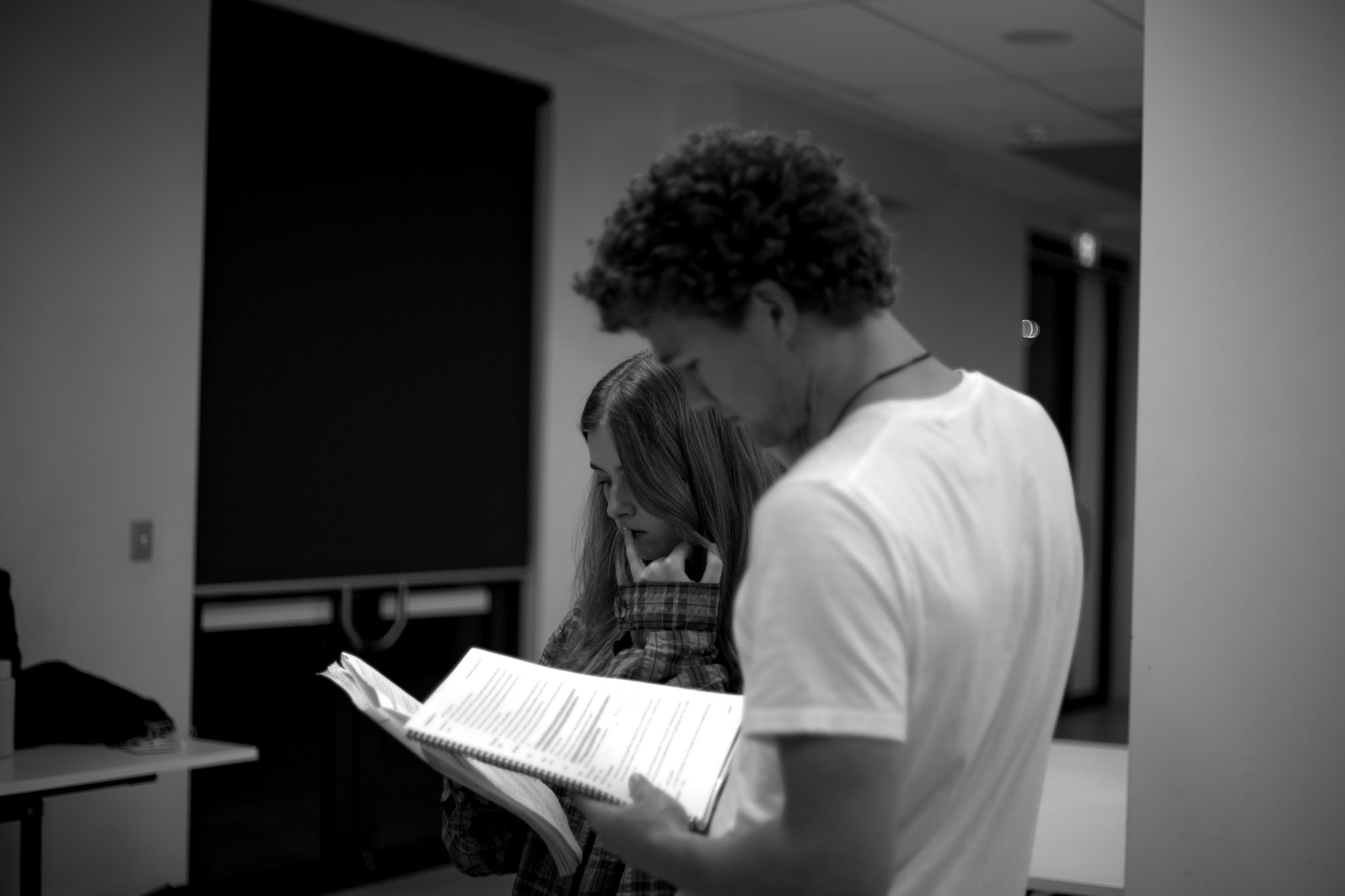
SD: I initially wrote the show when I was still feeling hurt, and for me, that still showed in the final script. There were many times during rehearsal where Jago Field, who plays Guy, would say, "I think in this moment I can make it more sincere" — especially where the line was intended to be very clear-cut and hurtful. He changed it in a way I adore.
All the actors are able to create their own objectives, narratives and intentions, so that you kind of leave the theatre thinking: who wasn't right? It's been great working with actors who can humanise their characters even more.
Is there a mission for the company in terms of what works you gravitate towards, or are you just focused on producing Epicaricacy right now?
SD: When you're in a show bubble, it's absolutely all about the show. I'm talking about double billing an absurdist piece with this one later down the track. I'm really gravitating towards absurdist work that goes into relationships. I love playing confusion on stage — there's so much going on in the actor's brain, and in the audience's, and everyone has a different perspective on what's happening.
A lot of Epicaricacy is 'he said, she said' — but what is real? I love work that makes me go home and think and reflect. Any piece that makes me think, I'm like: "I could produce you".
Do you have plans to tour the show? Are you prepping that now, or leaving it until after the Sydney season?
SD: The way forward for Claire Collective Company is to produce more work, both on screen and in theatre. I'm excited to put this show on for a very short season, but I want to see how it goes before I commit 100% to touring. I'm already talking to other writers about producing their shows for Perth Fringe. I also think Epicaricacy could have a life on screen, which would be a really exciting thing for the company to produce.
Moving forward, I think of Claire Collective Company as more of a creative hub than strictly a theatre company. We've had writers' rooms recently and welcome whatever anyone wants to create. We were podcasting at one stage — that's on hiatus at the moment. When I was thinking about what I wanted out of a company, I just wanted it to be a creative hub — whether that means books, screenplays, or any other collaboration.
Photo: Clarence Lin Thein
I also had the pleasure of chatting with Shakira, who gave us her insights as an actor-director, her history of collaboration with Samantha, and their shared vision for Epicaricacy.
How were you first introduced to the work, and did you immediately know you'd become a director of it?
SC: Samantha originally did this production when she was studying and has adapted it since. I'd heard about it back then but wasn't able to see it, unfortunately. We had a few conversations where she asked if I wanted to fly over and direct — I live in Perth. I obviously said yes.
We were initially going to co-direct because we work very well together, and have very similar minds, so she could have an outside view. Then it shifted to me being the sole director, so she could focus on the acting. We also brought Teejay Woods in as an assistant director.
Like Samantha, you are primarily an actor. Did you ever consider acting in the show, or was the conversation always focused on you directing?
SC: I've done more work in acting than directing. Originally when Samantha was talking about putting Epicaricacy on, I said if you need an actor, I'd love to fly over and be in your play. She came back and asked about me directing instead — something new for me. We've done a little directing together, so she knew we could work well that way. She also really wanted Sydney-based actors, and she wanted someone she could trust to direct.
Primarily you're an actor — so how does that bleed into the process of directing?
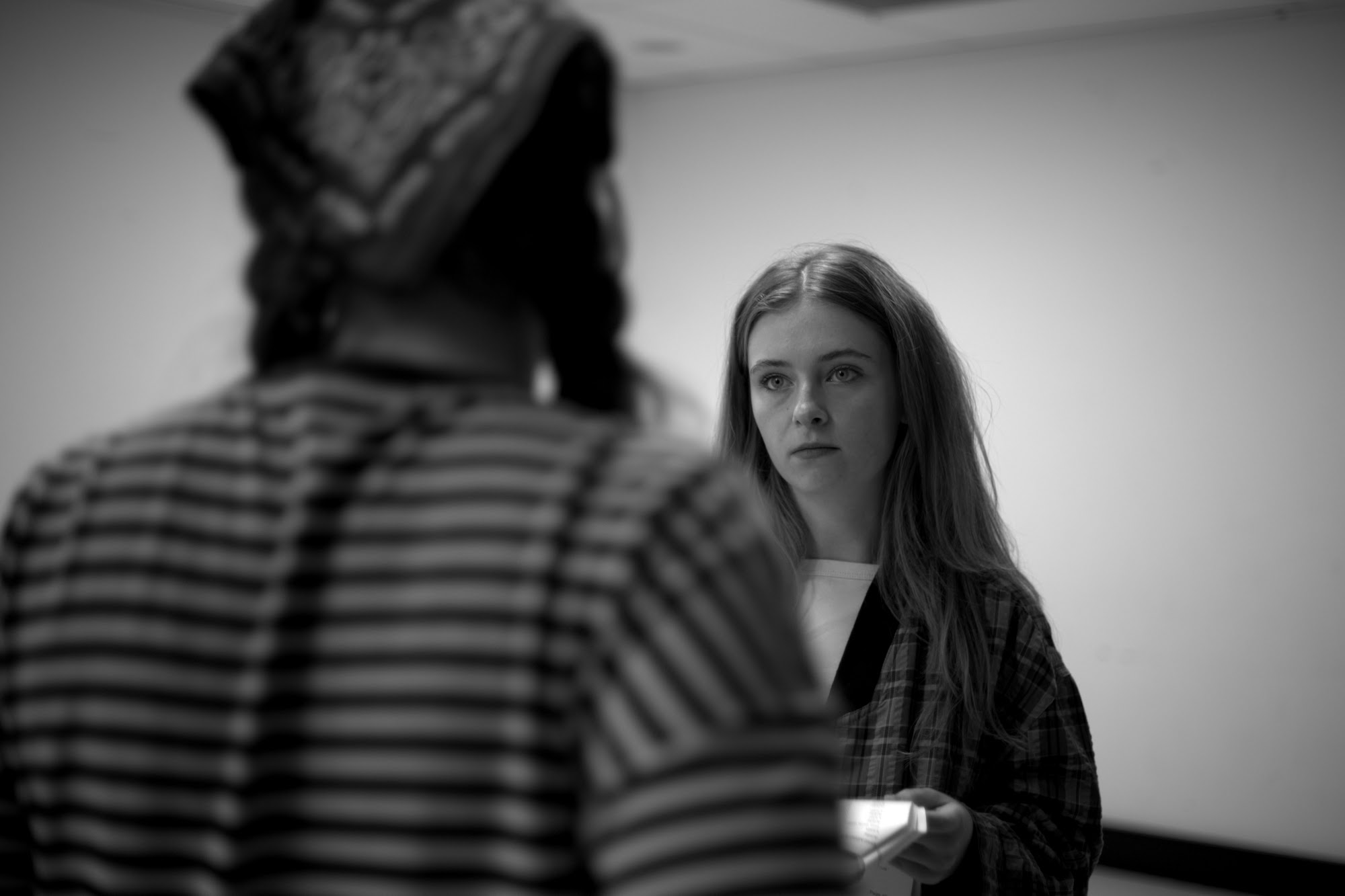
SC: With the whole workshopping and how we've been working on the scenes, I like to give the actors room within the scene to explore and play around and find new things — rather than exactly do this, do that, stand there. As an actor, that's how you find new things and can play. That's where the sparks come from.
So I've played around with a lot of that. You've got to hit this point by this line, obviously — but within that, find this, do this, try new things. Keeping the actor sparkle alight, rather than just: this is what you need to do.
Photo: Clarence Lin Thein
In terms of tone, how did you approach that? Was it apparent in the script, or did you find it while rehearsing?
SC: Samantha's writing blends together nicely — the parts where it goes into monologues, and we're in a different setting before we bring it back to the present. That all flows really nicely and creates a beautiful tone. We also wanted to make sure each character was following their own path, all culminating in the end.
Is there any scene or moment you're excited for people to see?
SC: There's a lot of interesting dynamics between each character. They know each other, but things are going on between how two characters are connected, and how they're used to interacting. And then there's how all of that changes when a boy comes into the friendship.
What do you want the audience to come away with at the end? Is there anything you want people to think about in their own lives?
SC: Each person will hopefully leave with their own thoughts about it. Hopefully they question how they feel about each character. Maybe there's a personal experience they can connect it to, or a similar position they've been in where they can feel seen or heard. It's not a resolved kind of ending, so they might go home and ponder how it could have turned out differently.
Photo: Clarence Lin Thein
Epicaricacy — presented by Claire Collective Company as part of Sydney Fringe 2026. The Actors Pulse Playhouse, 10 – 12 September 2026.
Director and Stage Manager: Shakira Cheers Assistant Director: Teejay Woods Producer and Writer: Samantha Dewar Lighting Designer and Operator: Holly Nesbitt Savannah: Samantha Dewar Leah: Caitlin Green Addy: Ruby Cullinan Guy: Jago Field
Content warnings: Strobe lighting, coarse language, discussion of sexual violence, depiction of sexual violence, content related to mental health/ill-health, depiction of sexual acts. Rated M15+.


%402x.svg)


.webp)


