Saltwater Girls Review — Lana Filies at Erskineville Town Hall, Sydney Fringe 2026
Saltwater Girls is for the Catholic girls with a bottomless pit of guilt. It is for those navigating their queerness in an environment where it is to be mocked by peers, a source of discrimination, or something to be surveilled. It’s for anyone who feels like they are yet to or still in the process of figuring how they present themselves to the world. It’s also for anyone who regularly listens to ‘Forgiven’ by Alanis Morissette. Valerie Chidiac reviews Lana Filies’ solo show at Erskineville Town Hall for Sydney Fringe 2026.
Saltwater Girls Review — Lana Filies at Erskineville Town Hall, Sydney Fringe 2026
A darkly funny solo work about Catholic school, queer desire, and a lifelong escape plan.
Saltwater Girls is for the Catholic girls with a bottomless pit of guilt. It is for those navigating their queerness in an environment where it is mocked by peers, a source of discrimination, or something to be surveilled. It's for anyone who feels like they're still figuring out how to present themselves to the world. It's also for anyone who regularly listens to 'Forgiven' by Alanis Morissette. Or all of the above.
Reviewed by Valerie Chidiac.
Photo: Amelia Gilday
"We all had our reasons to be there"
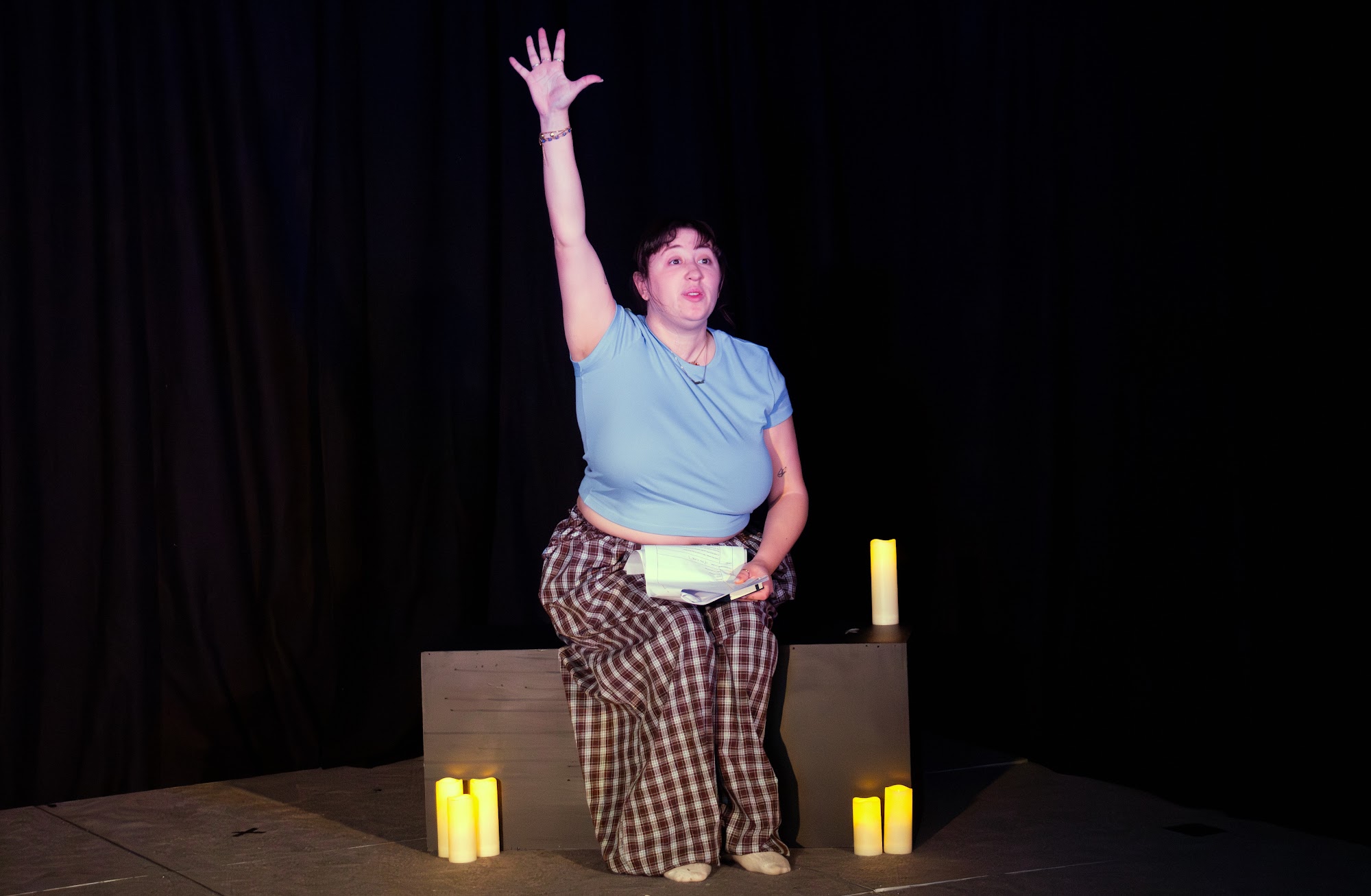
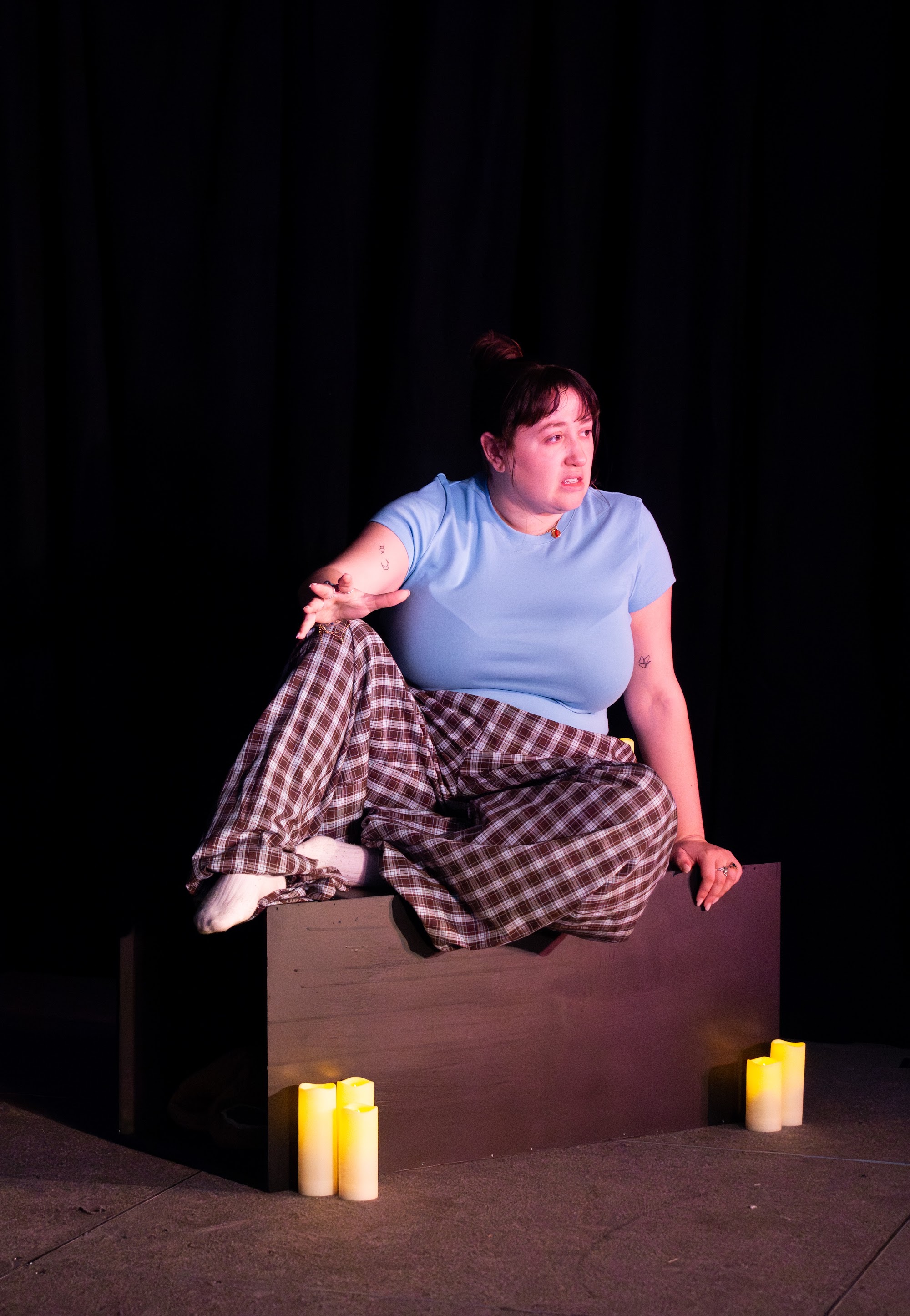
This solo show by writer-performer Lana Filies takes us back to her all-girls Catholic school. The stage is barren, only ornamented with a wooden box and candles.
Lana enters, walking through the audience, and kneels into a praying position. Immediately, we know we are in a sacred space, at church. Instead of witnessing a traditional prayer, we hear Lana's inner monologue as she unravels this so-called "Catholic utopia".
The devil is in the details as we are taken by the hand while Lana deconstructs what an upbringing in a religious school and conservative environment does to your self-expression — and, in particular, to your sexuality and permission to feel desire.
By comparing Sunday school to a weird cult, Lana identifies the omnipresent surveillance that comes from ingrained religious doctrine, as well as the mistreatment and mockery by peers who become participants. We watch her internalise these thoughts and start to think, like her: "is God watching me right now?"
Photo: Amelia Gilday
There is a subtle bite to her stream-of-consciousness, with many lines that felt poetic and noteworthy. She refers to the "disappointing gaze of the 12 disciples soldered in the stained glass window" and describes the church as "breathing in and out".
We experience Lana's emotions in real time, even as she moves between past and present situations. To me, it felt as if she could only fully speak to the audience — not to the people around her in the scenes. At times it read like she was speaking to a younger version of herself, a girl who feels constantly perceived and is self-censoring.
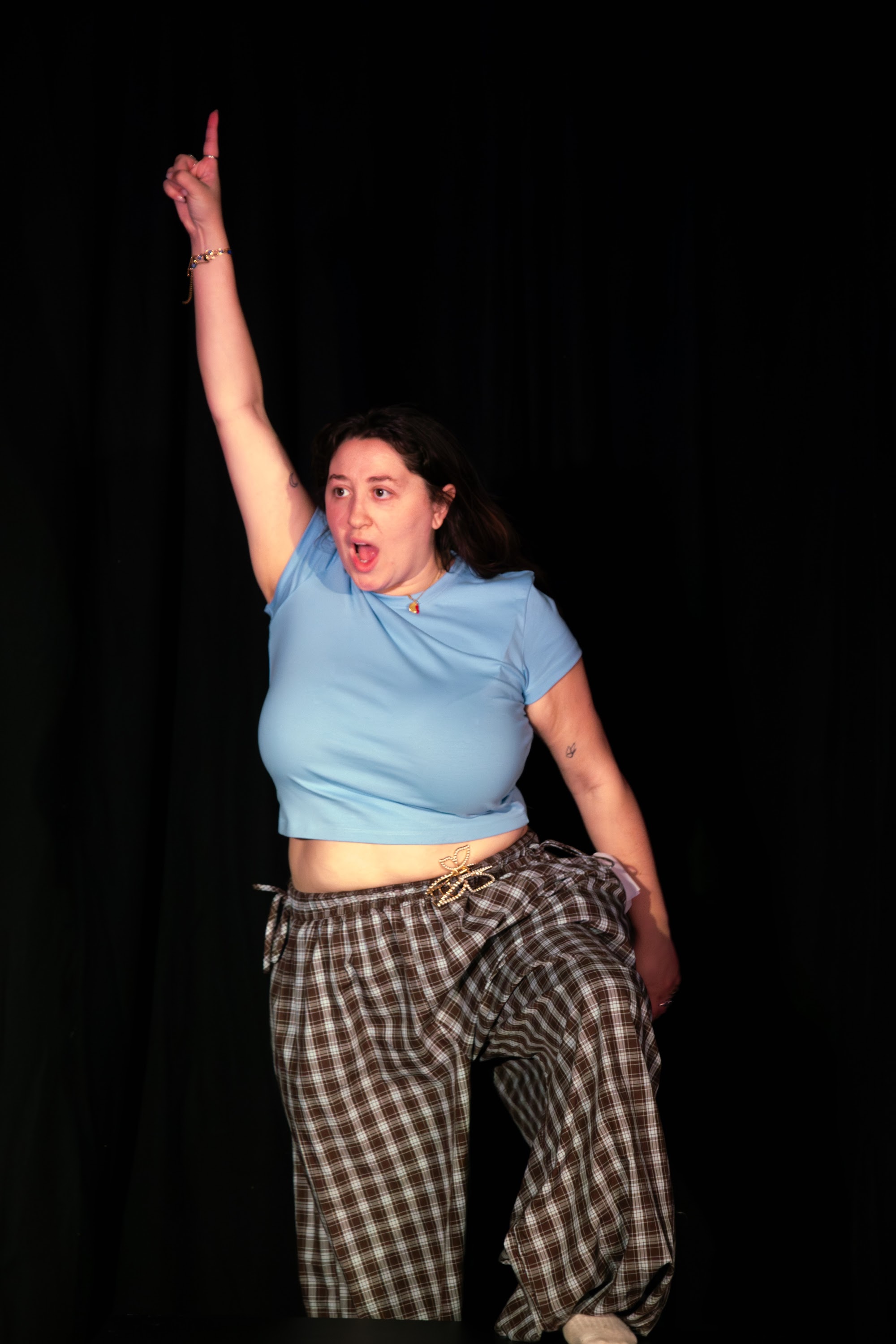
Filies also incorporates the act of journaling. She sits and reads journal entries that lean into abstract poetry about the "outstretching teenage years" and how they inform her adult self, looking to live in the city. The highlight of the show is Lana's delivery, ranging from quieter, spoken moments to sharp comedic timing and the ability to snap in and out of scenes between her younger and current self.
Photo: Amelia Gilday
"We all had a thing or two to learn"
Of course, Sappho's poems become a major reference. This is how she discovers her teacher is the first real lesbian she gets to meet in her life.
She jokingly refers to the one lesbian at school who loves Kate Bush, and realises she too is a lesbian who loves Kate Bush — but acknowledges the silent social contract that only one person can be openly gay. Any more exceeds the limit.
We hear about her love for Janet Jackson, Paula Abdul, Gillian Anderson (with a wonderful X-Files reference), Kathryn Hahn, Sarah Paulson and Tina Fey. It's clear that Lana, the writer, has been influenced by these performers' brand of humour: dry, sarcastic, and deeply infused with vulnerability.
Filies takes a jab at the socialisation of girls. It is heteronormative and harmful, she argues, because society rapidly shifts between infantilising them and sexualising them. She turns the classic trope of 'Girl meets boy. Girl falls in love.' on its head, and instead refers to herself as the "girl-woman".
When her teacher offers the supportive words "yes you will" to Lana's dreams of being an actor on Broadway, it becomes more than a teacher placating a student. It is a genuine belief that is imprinted on Lana, allowing her to envision that belief into a future reality. This, coming from the first real lesbian she meets, subconsciously allows Lana to validate her own self.
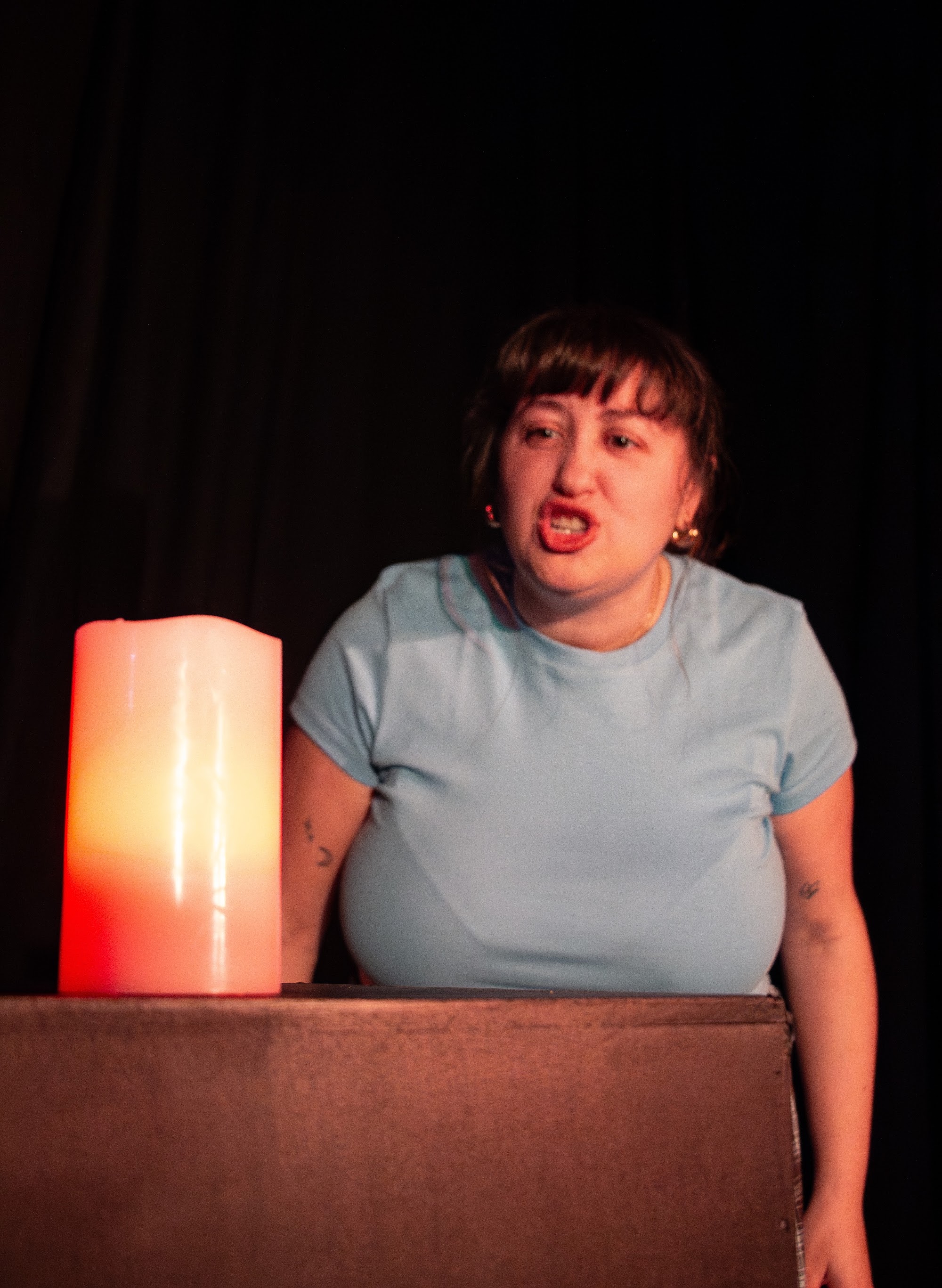
The plot line of the chapel roundtable — where her best friends and cousin Aaron try to find spiritual awakening by drinking the blood of Jesus Christ (aka wine) inside the chapel, taking "led into temptation" very literally — is a source of great humour. It did feel a bit incongruent with the rest of the show, which was more grounded and inward-facing. But it was also the only time we truly got to hear about her relationships with her friends.
Photo: Amelia Gilday
"We all needed something to cling to"
There is a rawness, straightforwardness and beating heart that many shows sacrifice in their attempt to deliver a plot-heavy production. They miss the emotional journey, or handle it over- or under-handedly. Saltwater Girls does this just right.
Most importantly, this show made me want to revisit the art that resonates with my personal identity — just as Lana looks to Sappho's poetry, the humour of Kathryn Hahn and Sarah Paulson, and the music of Janet Jackson and Paula Abdul.
This is ultimately a story of a future robbed. It felt encapsulated in the soundscape, which is featured heavily throughout the show. It ranges from church bells and choral-like instrumentals to the pristine ASMR of water dripping — and I'm pretty sure I heard the instrumental of the Robyn anthem 'Dancing On My Own' pop up.
While the show encapsulates a lot of the journey, it did end somewhat abruptly. I would have liked to see more of what our protagonist is doing now that she has done the self-reflecting. Lana is a very likeable character and it felt sudden to part with her. The scenes were quick and felt stitched together; in a show longer than 50 minutes, they would have room to breathe. I can see the potential there, if Filies wants to go further.
The crux of Saltwater Girls is that Lana wants to exist as she is — a queer person, not just in her head or in the corners of the internet, but in her day-to-day life. The teacher who once was becomes a distant figure she knew only in passing.
It is implied that the teacher left during the time when the Sex Discrimination Act (1984) was amended to allow religious schools to discriminate on the basis of sexual orientation, gender identity, sex and relationship status. It is a loss, and one that lingers far beyond, even if the memory gets clouded by the passage of time.
Saltwater Girls — a solo work by Lana Filies, presented by Moon Bureau. Erskineville Town Hall — Emerging Artist Share House, The Boom Boom Room, 8–12 September 2026.
Writer, Performer: Lana Filies Director: Amelia Gilday Production Manager: Alicia Badger Associate Producer: Madison Chippendale Photography: Amelia Gilday
Presented by Moon Bureau. Content warnings: coarse language, references to sexual harassment.


%402x.svg)

.webp)


