Snow, Moon, and Flowers Review — Sydney Japanese Dance at Sydney Fringe 2026
Sydney Japanese Dance's world premiere Snow, Moon, and Flowers (雪月花) opens a window onto a largely unacknowledged chapter of Australian history, weaving Japanese classical dance, live music, and spoken narrative into a triptych of remembrance. Reviewed at Sydney Fringe Festival on 2 September 2026 by Eugene Blazejowski Walsh — a focused act of remembrance that extends the cherry blossom branch to its audience as an invitation to cultural learning and historical reckoning.
Snow, Moon, and Flowers Review — A Cherry Blossom Branch Extended
A focused act of remembrance at Sydney Fringe 2026
Sydney Japanese Dance's world premiere Snow, Moon, and Flowers (雪月花) opens a window onto a largely unacknowledged chapter of Australian history, weaving Japanese classical dance, live music, and spoken narrative into a triptych of remembrance. Reviewed at Sydney Fringe Festival on 2 September 2026.
Reviewed by Eugene Blazejowski Walsh.
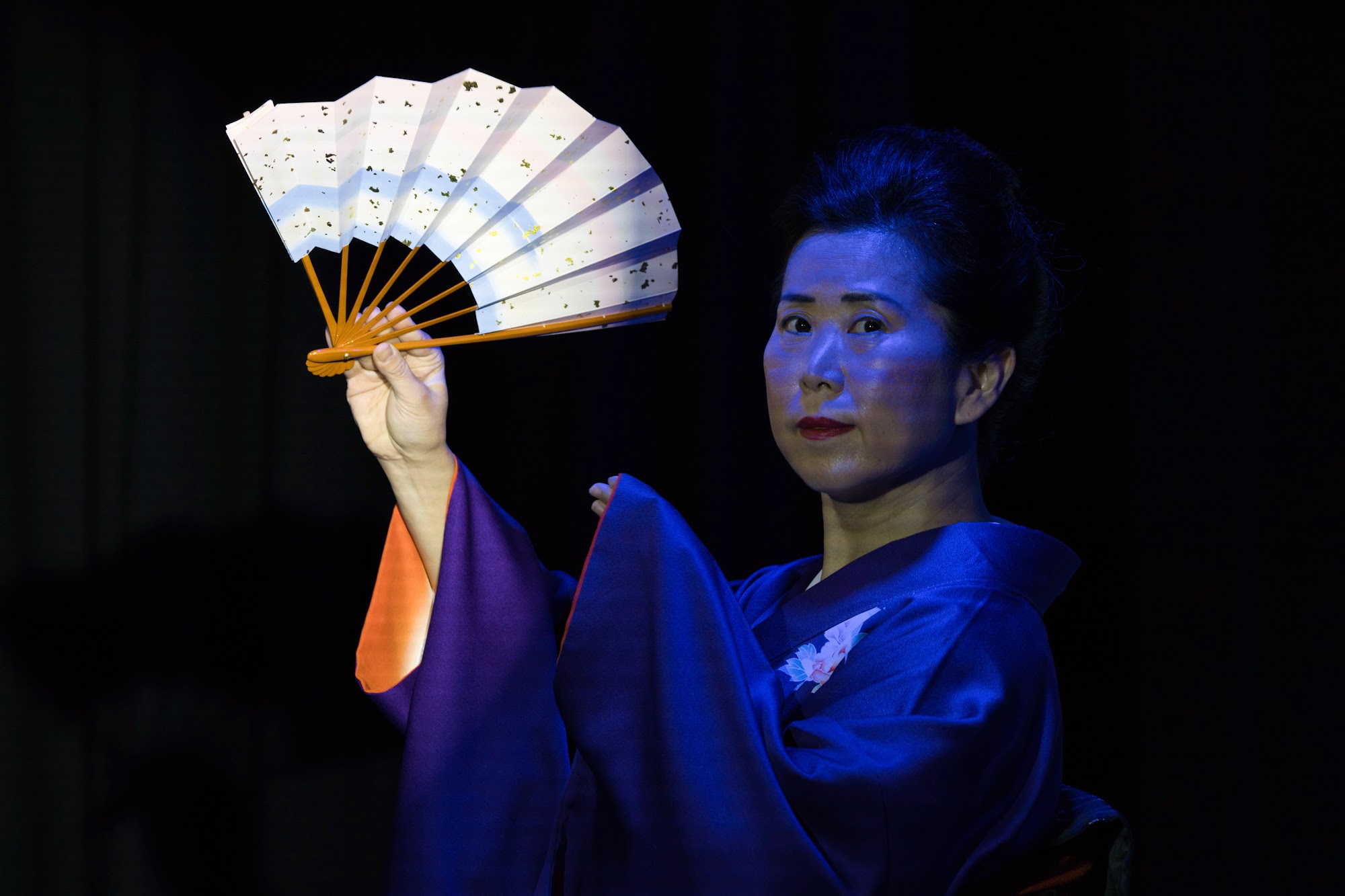
Photo by Taka Umeda (Jurassic Parrot)
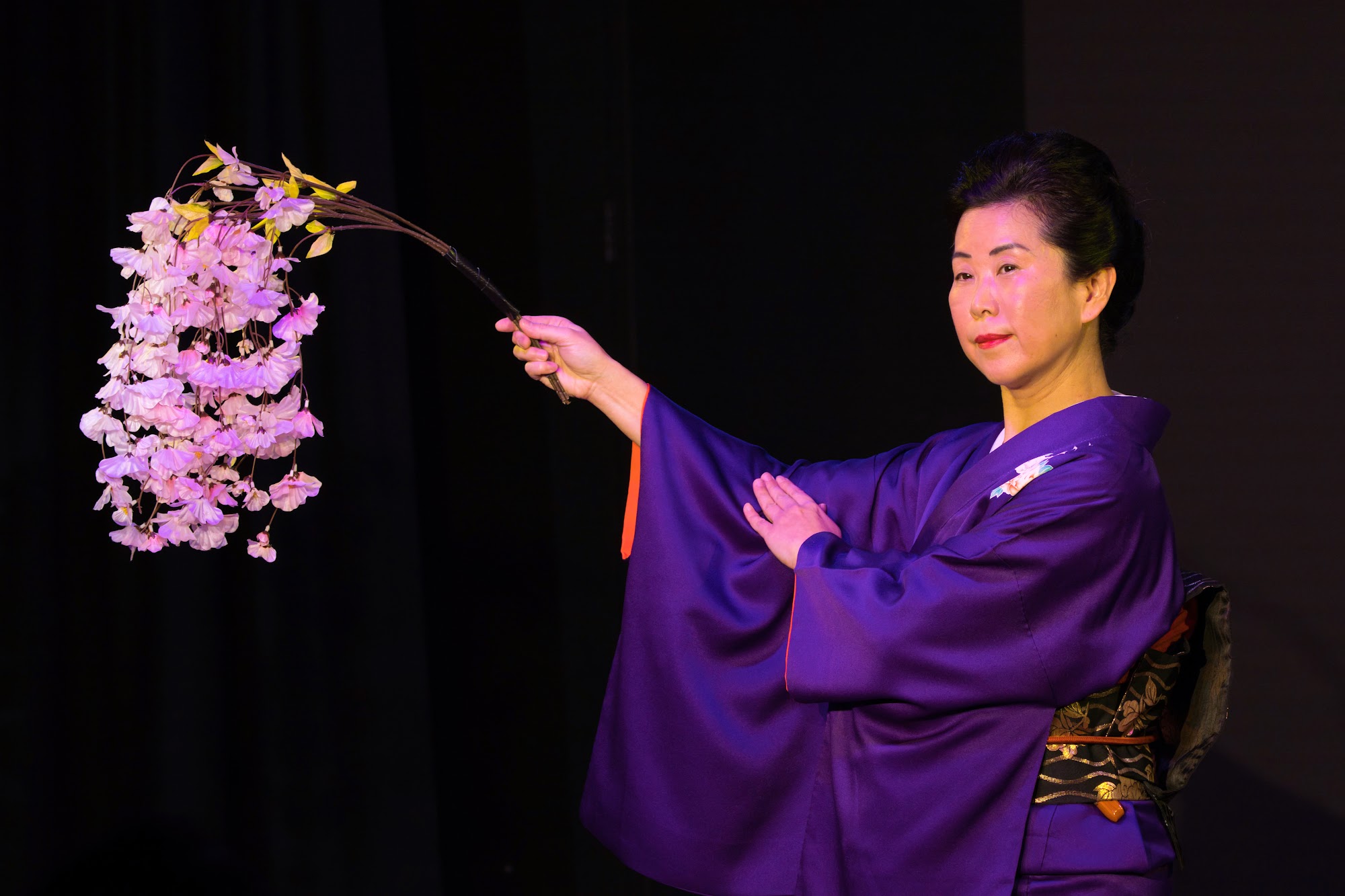
From behind the curtains at the back of the stage, Junko Hirabayashi enters into the cool, blue light. She moves through a sequence of cultural props — a Japanese umbrella (wagasa, 和傘), cherry blossom branches, and a drum jutting from the obi at her waist, its sticks used to direct movement rather than strike, an instrument repurposed. Each is introduced as if building a new vocabulary for the audience, pedagogical in nature.
As someone encountering this form live for the first time, I found myself interpreting each sequence not through prior knowledge but through the precision of its execution.
To her left sit a taiko drum, a gong, and a bamboo flute. To her right are two chairs with microphones at eye level. This is a space for performance in the oldest sense of the word. This is Snow, Moon, and Flowers (雪月花), a world premiere by Sydney Japanese Dance at the Sydney Fringe Festival.
This show marks the 50th anniversary of the Basic Treaty of Friendship and Cooperation between Australia and Japan. Building on that historical context, it is inspired by three pioneering Japanese immigrants — one in Australia and two across the diaspora — and tells their stories via a blend of Japanese classical dance, live music, and spoken narrative, structured around the ancient metonym of snow, moon, and flowers.
These words come from a Tang Dynasty Chinese poem, symbolising Japan's four seasons and, for Japanese immigrants, the grief over their eventual disappearance, accelerated by climate change.
Photo by Taka Umeda (Jurassic Parrot)
Three lives, three losses
These are largely untold stories, and Snow, Moon, and Flowers is a careful, passionate attempt to tell them through remembrance. Yet there is also a serenity in experiencing and learning from them.
The three movements are separate. Snow tells the story of Morgan O-Yuki, Moon of Jiro Muramatsu, and Flowers of Nobuko Sakuramoto, also known as Cherry Parker.
Cherry Parker's story sits alongside the wider community of Japanese war brides who moved to Australia following World War II — over 650 women whose presence in this country has gone largely unacknowledged. Each story is connected culturally but not narratively: three lives and three losses, held together by the same poetic framing and carried by the spoken sequences.
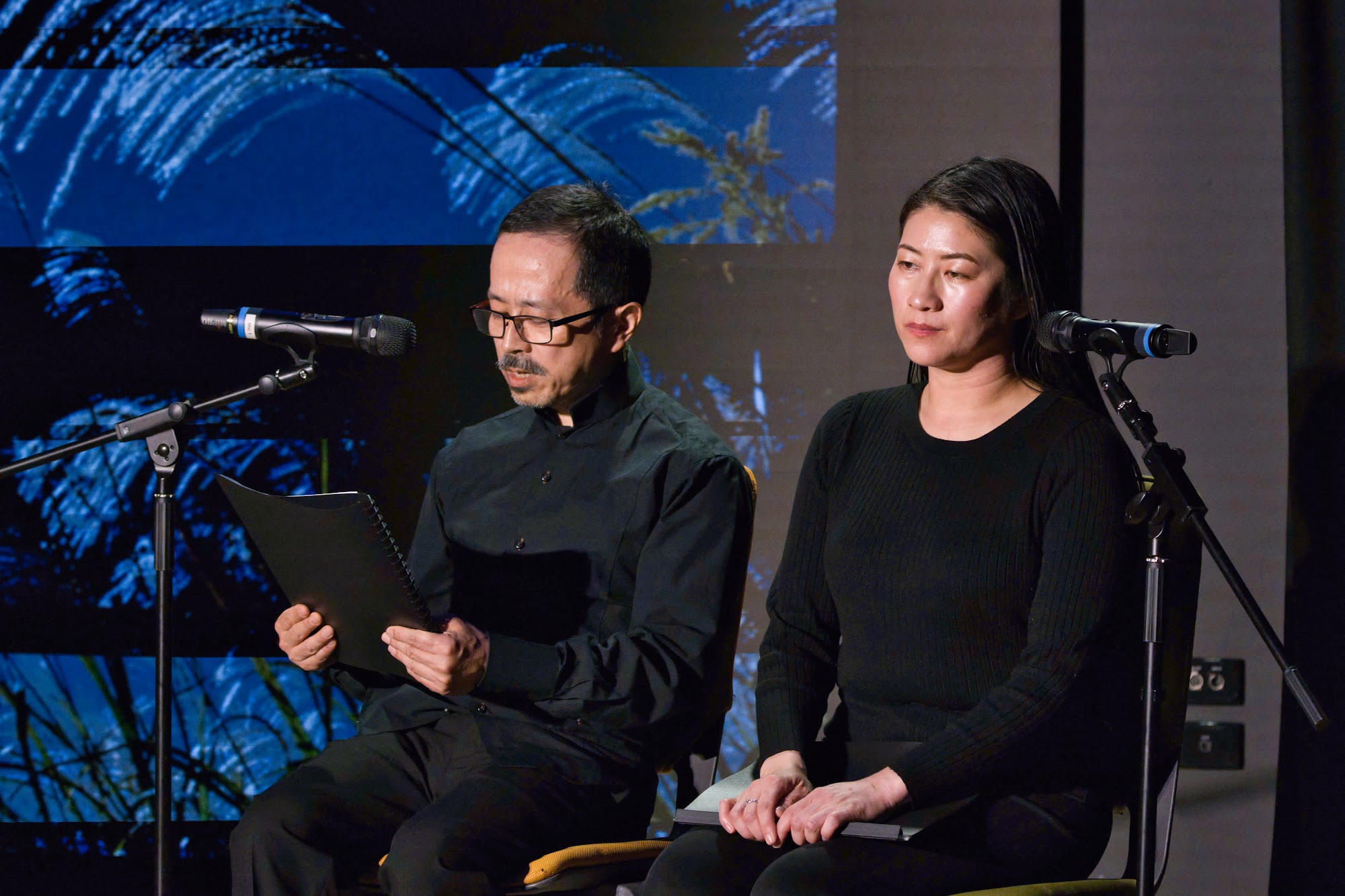
The show opens with the spoken word, delivered in English by Ryuichi Fujimara and Azusa Kawamura, who are seated at the two microphones. From there, the audience shifted most noticeably, with audible gasps when the deaths of the prisoners of war were communicated. Each story was briefly punctuated by silence, like the intermission between seasons, before moving on.
Photo by Taka Umeda (Jurassic Parrot)
Sorrow legible through restraint
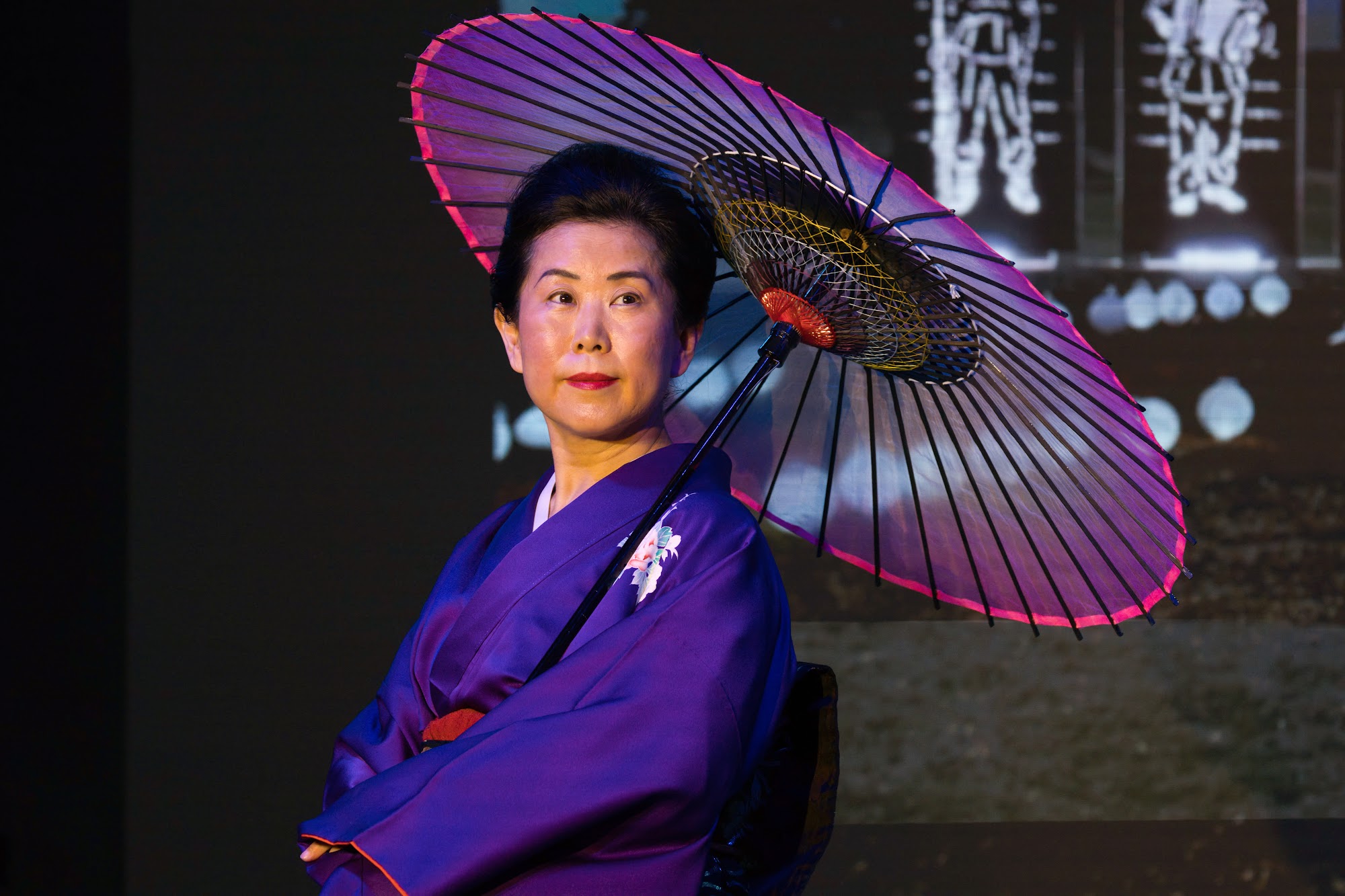
Junko Hirabayashi then enters the stage, where she commands everything. From the spoken word, the performance moves into dance; dressed in a gorgeous purple kimono, her clear expertise in this craft allows her to project profound emotion through her expressive hands and graceful footwork. In the final dance, her eyes and eyebrows carry a mourning — whether for a person or the seasons — before her face turns to the ground. This sorrow becomes legible not through melodrama but through restraint, earned over the show's 20-minute arc.
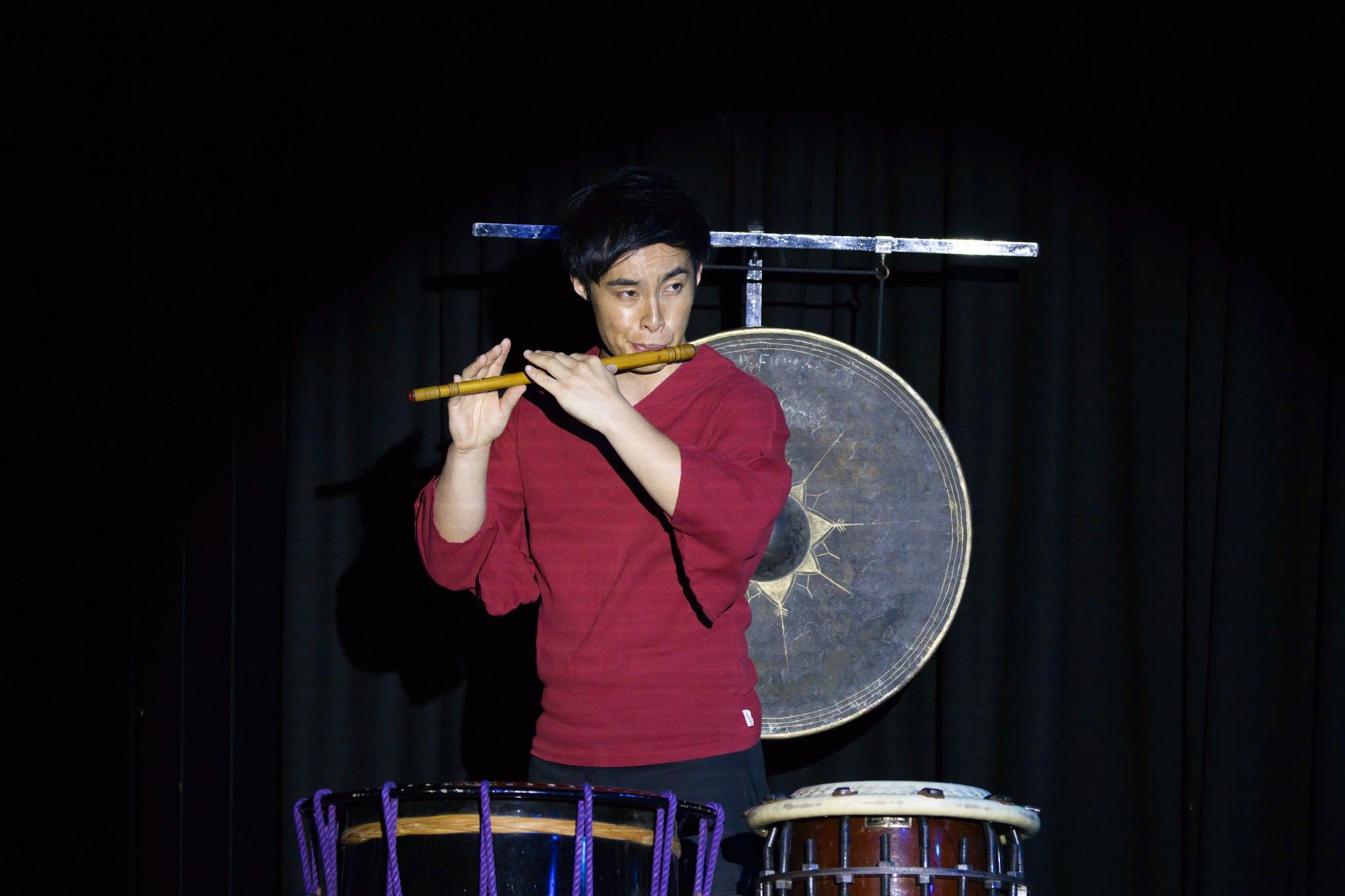
To Hirabayashi's left, musician Ryuji Hamada moves through the taiko drum, a gong, and a bamboo flute, with each instrument denoting a shift in the emotional register. The music is traditional in nature — sometimes calming and at other times sorrowful — with peaks of tension coming through the drum. It does not accompany the dance so much as intertwine with it, the two forms building together as a single expressive unit. Silence marks each transition, and sound and light shift together — the choreography extending to the technical elements throughout.
The staging creates a visual triptych — dance, music, and spoken word each occupying their own third of the stage. The performers never cross into another's space until the closing bow, a spatial choice that maintains a respectful balance among the three disciplines.
Each part is equal before the eye, each necessary and doing work the others cannot. From cool blue to pink, the lighting spotlights Hirabayashi in the centre during the dance sequences as she moves through pools of light rather than being followed by it. The projections on the back screen change with the spoken-word sequences, images accompanying the historical stories.
Photo by Taka Umeda (Jurassic Parrot)
A window and an invitation
As a minor technical detail, the audio transitions between movements could have been smoother, with a slightly longer fade to avoid noticeable cuts. This is a minor imprecision in an otherwise well-crafted experience.
We were close enough to the performers to read every detail in their faces, and yet the distance felt culturally authentic. This performance invited us to lean forward and learn, to engage with history and tradition, and to peer into the lives of those who have not received enough attention in the Australian education system. Even sitting in the front row, I wanted to move closer.
Snow, Moon, and Flowers (雪月花) succeeds as a focused act of remembrance, granting a window into a largely unacknowledged chapter of Australian history while engaging the universal human experiences of 'mono no aware' (物の哀れ, 'the pathos of things') — of loss and the passage of time.
The climate change thread adds urgency; the seasons that stir this nostalgia are themselves disappearing, and the show holds that loss alongside those of its three historical figures without forcing the connection. It extends the cherry blossom branch to the audience, an open invitation to cultural learning and historical reckoning.
The applause at the end was warm and sustained, and deservedly so.
Photo by Taka Umeda (Jurassic Parrot)
Snow, Moon, and Flowers (雪月花) — a world premiere by Sydney Japanese Dance blending Japanese classical dance, live music, and spoken narrative. Sydney Fringe Festival, seen 2 September 2026.


%402x.svg)

.webp)


