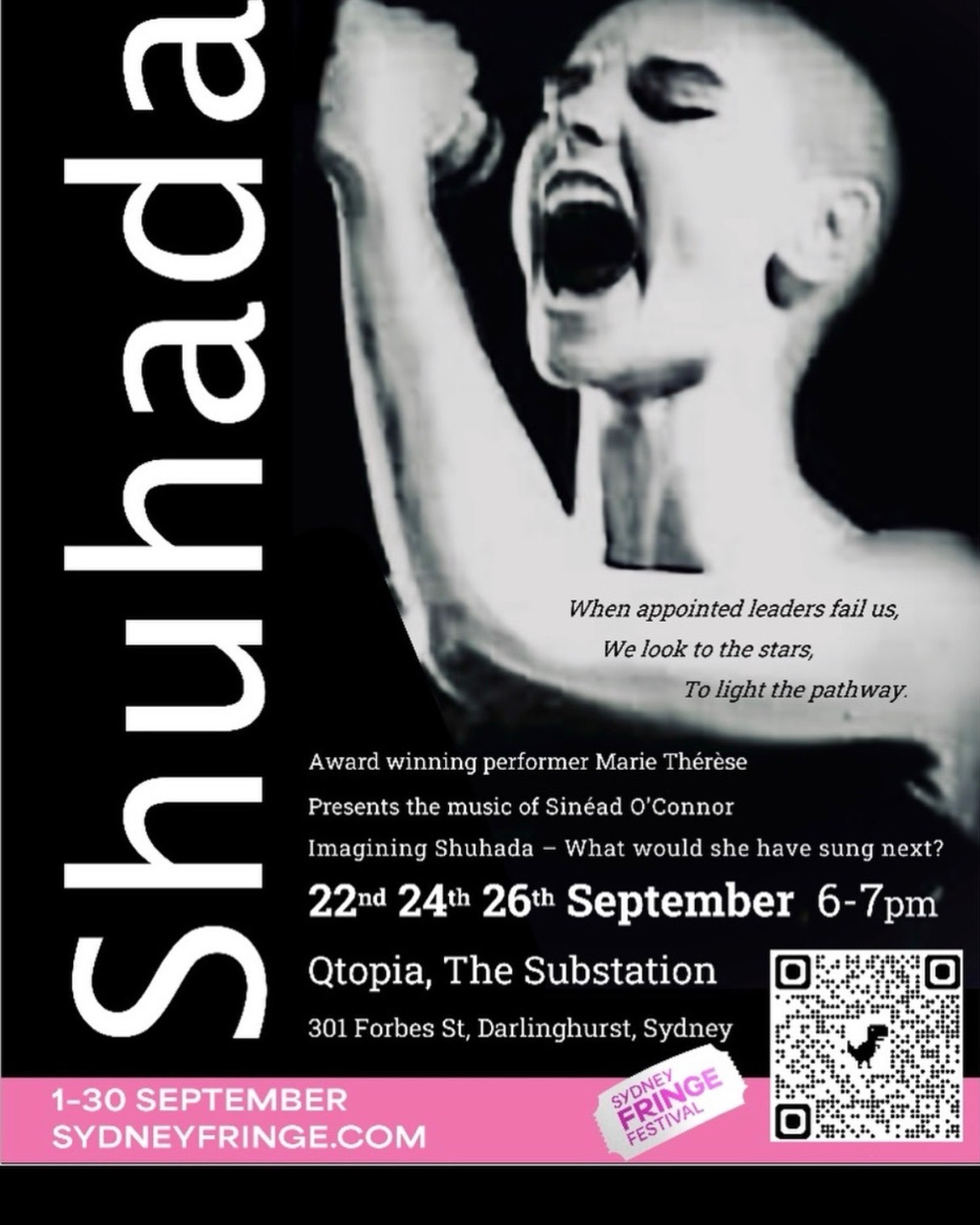
SHUHADA Review — MT McInerney at The Substation, Sydney Fringe 2026
This was not mere imitation or impersonation. MT's journey through SHUHADA was a strong and gentle odyssey: a craic, a backpack, a eulogy and a love poem to and for Sinéad O'Connor. Cathy Bray reviews MT McInerney's SHUHADA at The Substation (Qtopia), Darlinghurst, Sydney Fringe Festival, 24 September 2026.
SHUHADA — an odyssey, not an impersonation
MT McInerney's homage and deep dive into the life of Sinéad O'Connor.
This was not mere imitation or impersonation. MT's journey through SHUHADA was a strong and gentle odyssey: a craic, a backpack, a eulogy and a love poem to and for Sinéad O'Connor. At The Substation under Qtopia, Darlinghurst, for Sydney Fringe Festival 2026.
Reviewed by Cathy Bray.
Sinéad took the name Shuhada' Sadaqat in 2018 when she described herself as reverting (not converting — she felt as though she was returning home) to Islam. The name Shuhada represents martyrdom and self-sacrifice, but for Sinéad it embodied her rage against the Catholic Church, the British government, the medical establishment, and the complacency and opposition she faced in confronting all three.
Underground
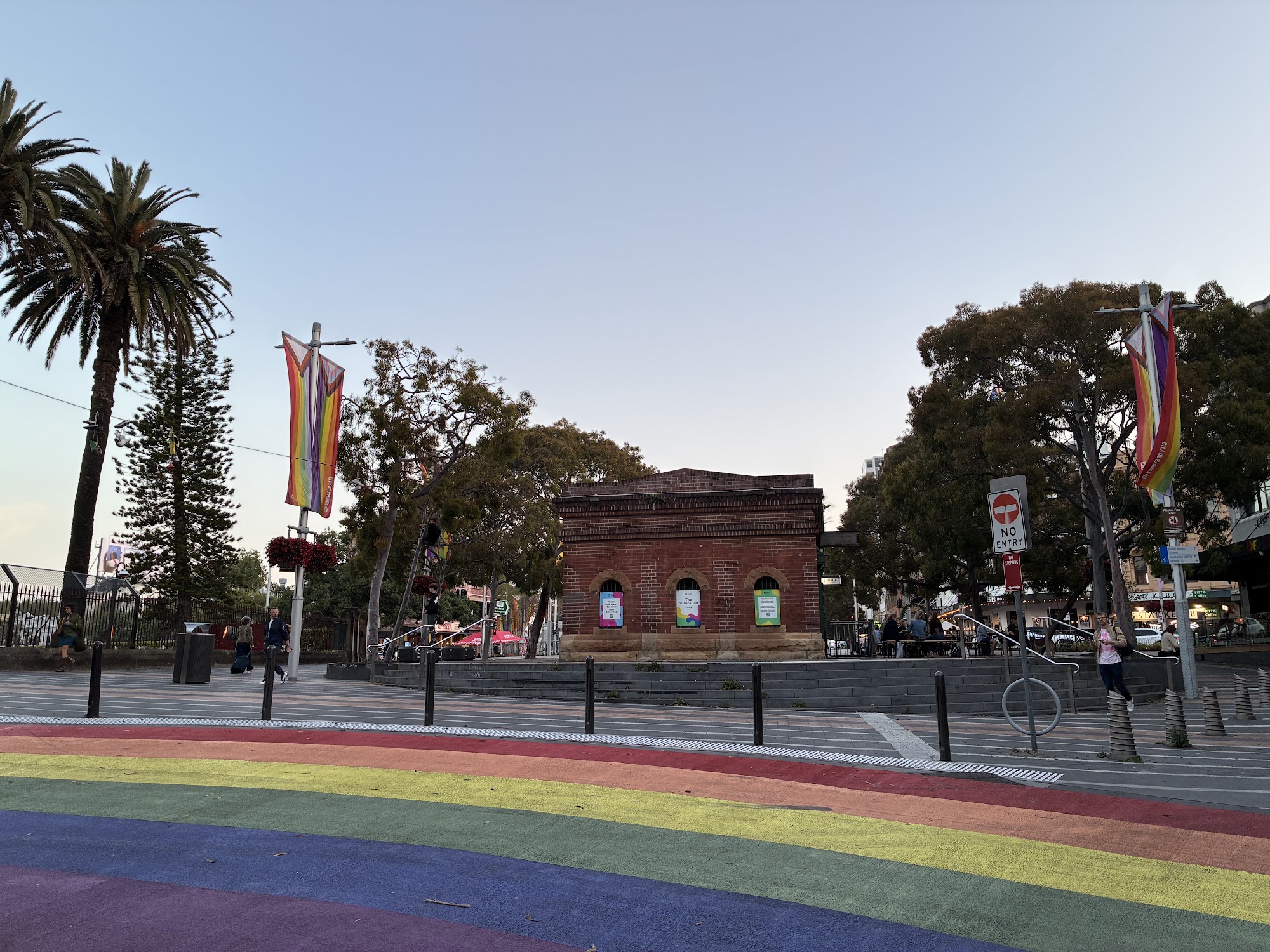
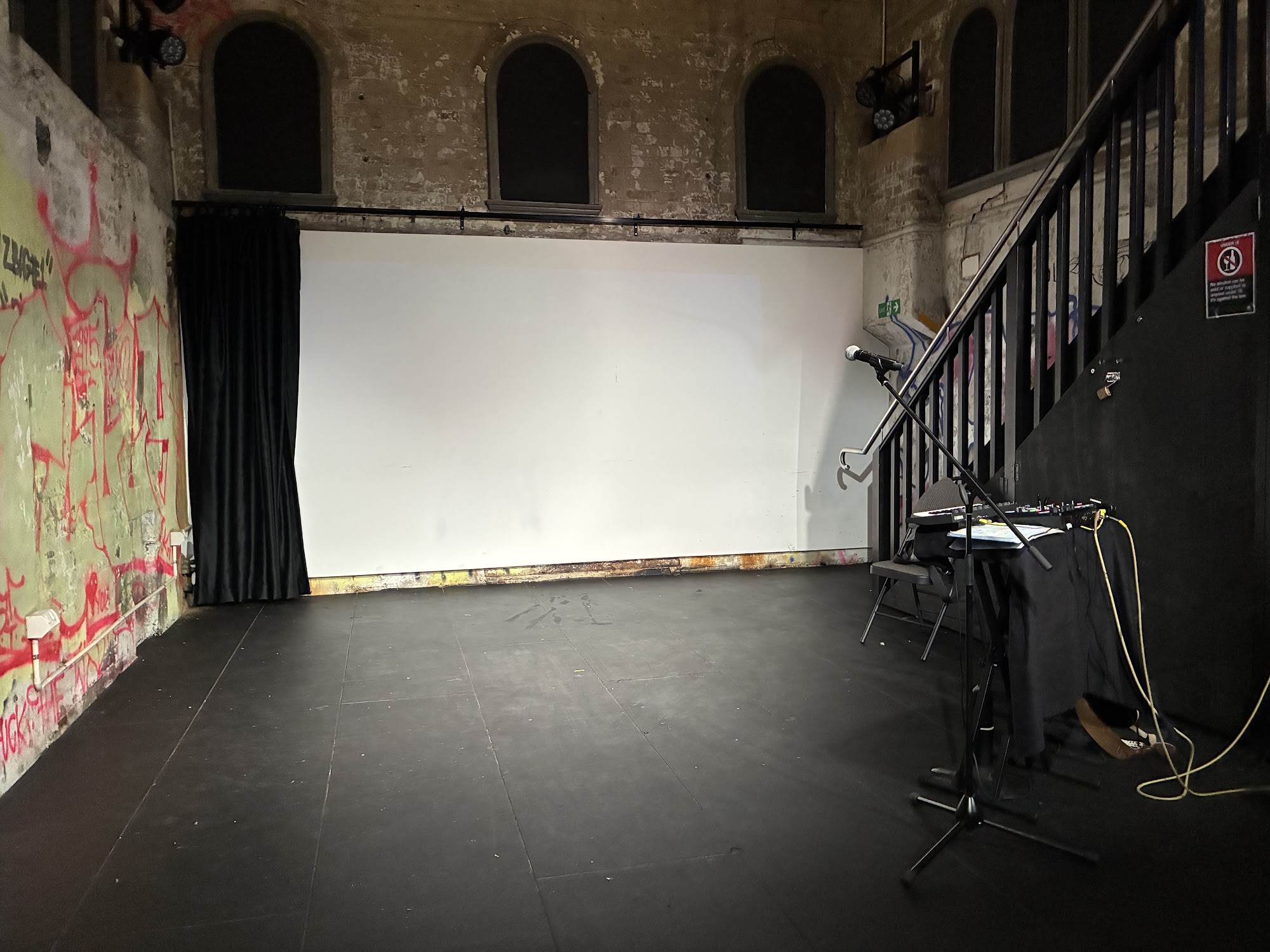
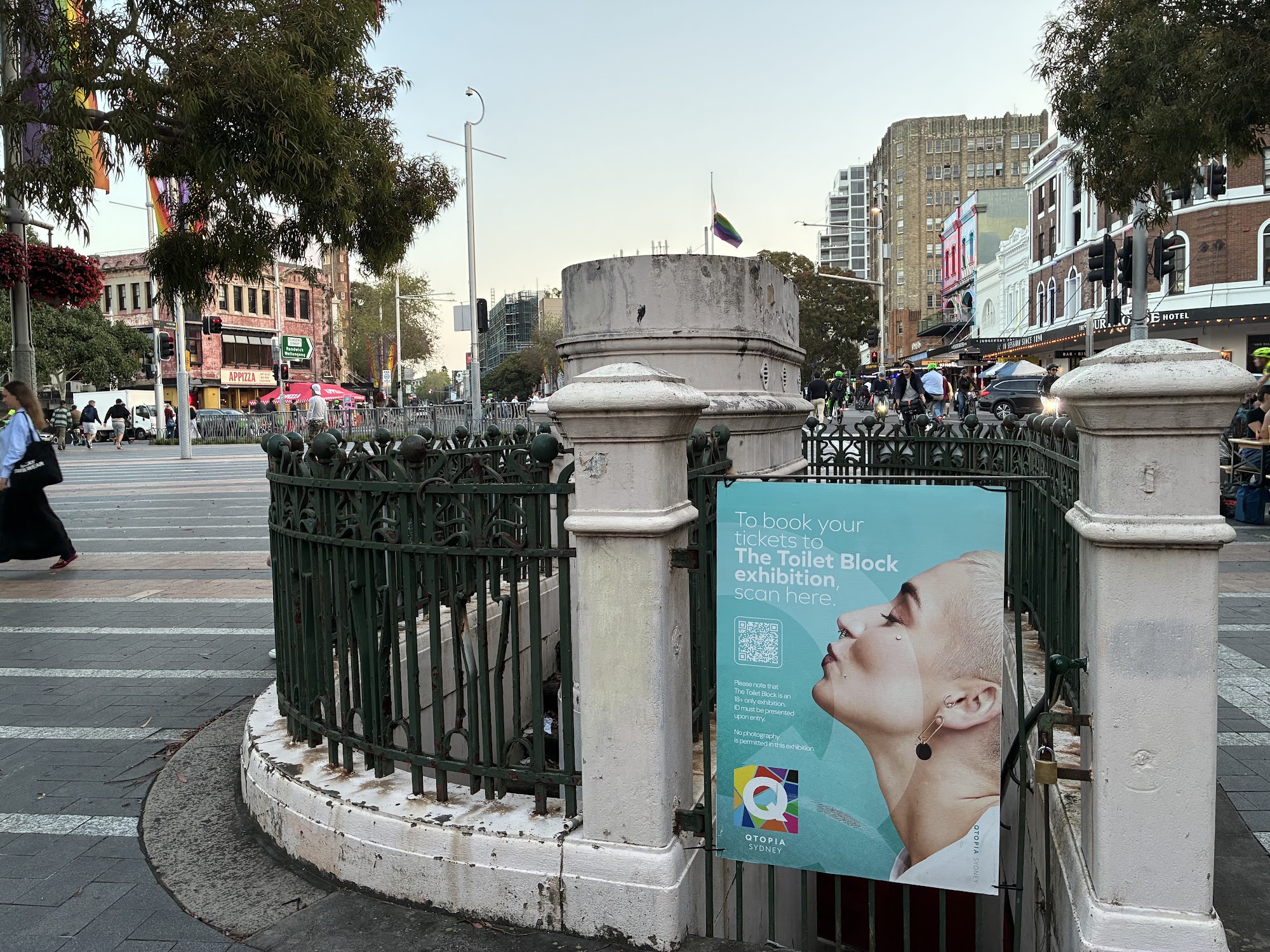
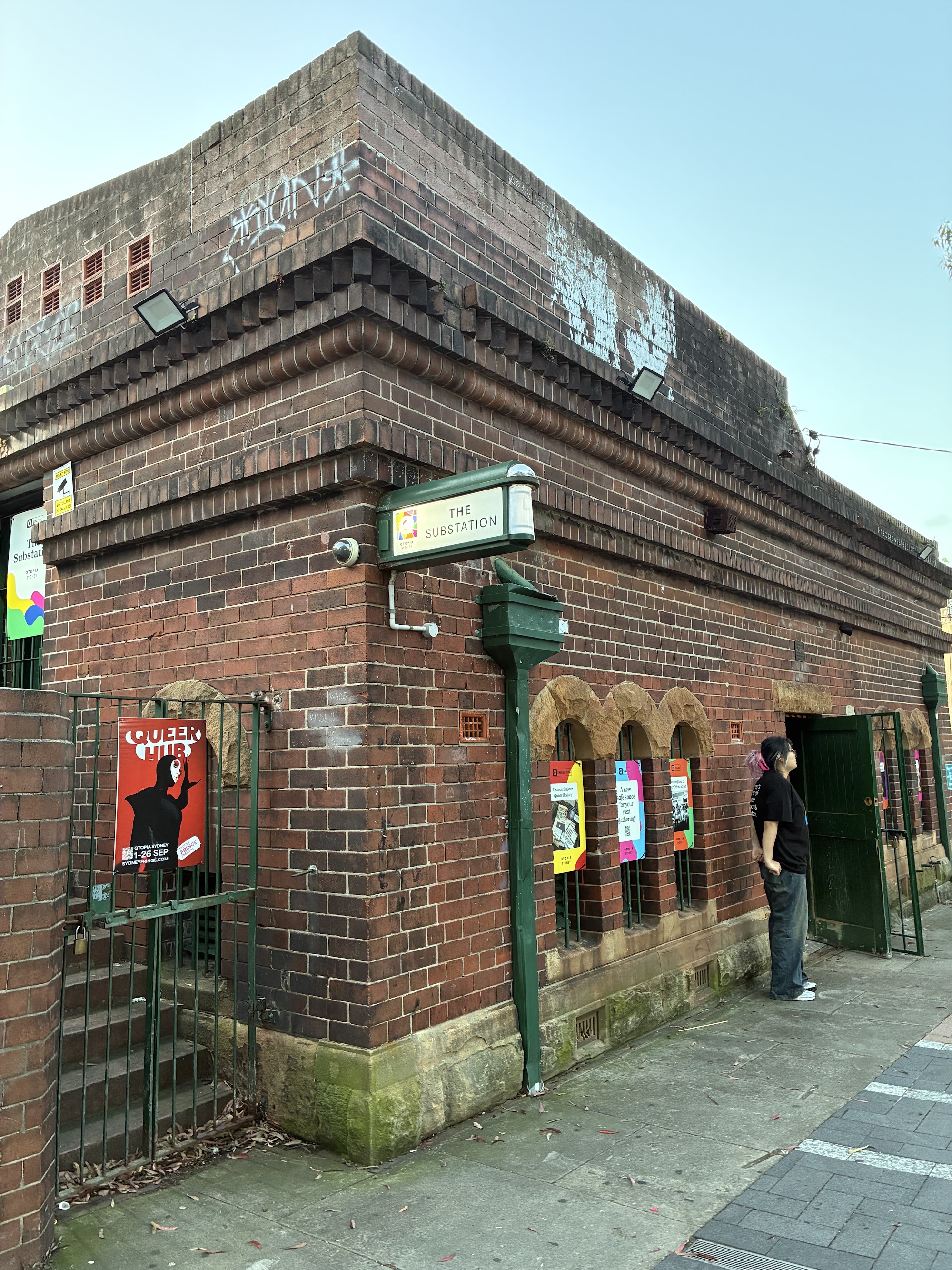
The Substation was the perfect venue for SHUHADA. First, we had to assemble at Qtopia headquarters and enjoy a wander around their exhibition Loving — a photographic history of love 1850s–1950s, plus a bar and the other rooms in the LGBTQIA+ Museum. Then we were escorted up the hill and across the rainbow brick road, ducked our heads under the very low doorway to the old electricity substation, down the steep metal stairs, and found ourselves underground.
This is the type of venue (maximum of about 40 people) that is perfect for a show where the artist needs our undivided attention and is often making eye contact with her audience.
When we arrived, MT and her sole assistant were sitting under the stairs still organising things but looking so relaxed that I just thought they were a couple of very experienced roadies. Sure enough, early on in the show, the microphone failed and MT suggested helpfully that the battery might be flat, and the guy just walked calmly over to a box of tricks, put in new batteries and handed it to MT, who had not stopped performing — because that's how it has to be in a Fringe show. The audience want the unexpected. It's code chill and wonder.
Three questions
MT says there are three questions she is always asked before this show:
1. R u gonna shave yr head? (She hadn’t) 2. R u gonna rip up the Pope? (She didn’t) 3. R u gonna speak in an Irish accent? (Only a couple of times)
She could easily have done all three, but this is an odyssey, not an impersonation. MT brought Sinéad/Shuhada to life with her pure voice, her wit, her intriguing reflections on how they both coped with their Catholic childhoods, and her own past and current political observations.
I hate audience participation, especially in a small, intimate space, but MT McInerney aka Mary Trees uses it to create conscious contact. She doesn't demand it, she doesn't harangue us; she just suggests that if we had the faintest desire to get on board, she would be quite delighted.
McInerney has a voice of such purity and a face of such warmth and engagement that I didn't have any difficulty in going along with her request for high-fives, foot stomping and droning (with our mouths firmly shut). Later, I wasn't so keen on the footie-crowd-style arm swaying because it distracted me from the important stuff MT was in the middle of telling us about Sinéad — not one other person in the audience shared my reservations.
MT left Australia in 1997 at the age of 19 to go to Ireland in search of herself and long-lost Irish cousins like Sinéad. Her preambles to each song took us over the hills of County Clare, back to Sinéad's Dublin childhood and Thatcher's London, overlain with occasional flashbacks to MT's own Catholic childhood in Australia.
Butcher Boy
The traditional Butcher Boy, a folk song about a young, pregnant girl, was recorded by Sinéad in 1997 and sung with such poignancy by MT: a girl wishing herself unpregnant till apples grow on an ivy tree.
MT asked if we'd heard of The Magdalene Laundries, where pregnant and 'unruly' girls — including Sinéad, who had suffered with an alcoholic and abusive mother — were sent and forced to work. And said, as an afterthought: 'There was no contraception allowed in Ireland. So there were a lot of laundries.'
'She was a lightning rod,' an Irish friend of mine who grew up in Athy, County Kildare, told me, 'for people losing their fear of investigating the Catholic Church — way ahead of her time, pilloried for it, but proved to be right and just.'
Droning, not humming
The beautiful song Jackie — in the form of an ancient Irish dirge (but in the style of 'I met him at the candy store aka LEADER OF THE PACK') for a long-lost sailor husband, written by Sinéad and released in 1987 — was immediately misinterpreted by my brain (the shallow end) as the name of Sydney's most famous female shock jock. Jackie O. Jackie O. Jackie O.
Drone Song, written in 2025 (after Sinéad's death in 2023) by Ahmed Muin & the Gaza Songbirds, was followed by Shalom Chaverim, a traditional Israeli folksong. At this point, MT showed us the ease of droning along with her. She could have used the word 'humming' but she was introducing songs about peace and reconciliation and forgiveness and children living in terror in Gaza, and she's a wordsmith, so she still had a lot of work to do.
Later MT held the door open for us to come in and tap along with her like we were in that Irish pub outside Limerick, which she had found after a day of back-packing and cycling. Suddenly, a very old woman (MT was 19 at the time so the very old woman could have been 45) just turned and stood up and started singing. No one blinked. It was as though she did this every night, as the whole crowd stopped what they were doing and joined in, enveloping her with their singing.
Nothing compares
MT recalled Nothing Compares 2 U (written by Prince in 1984 and covered by Sinéad in 1990) and the CD being played in a share house in Melbourne where one of the residents had just gone through her first traumatic break-up and 'may' have driven other residents to the edge by singing it 10 times a day. I heard a non-romantic interpretation of the song: when she sang it, Sinéad was also thinking of her violent, abusive mother, who died in a car accident in 1985 when Sinéad was only 18.
Fight the real enemy
In 1992, Sinéad performed WAR on Saturday Night Live and tore up her mother's picture of the Pope. MT had hand-printed the lyrics to WAR on A3 paper as the back of her 8-page, hand-folded program.
I didn't know that WAR had been written by Emperor Haile Selassie of Ethiopia in 1963 and delivered by him in a speech to the United Nations, then covered by Bob Marley in 1976, and by Sinéad in 1992. It was sung by MT as strongly as Sinéad — though Sinéad changed the eighth-last line in her SNL performance from 'We Africans will fight' to 'CHILDREN! CHILDREN! FIGHT!' Then she tore up the photo of the Pope and said: 'FIGHT THE REAL ENEMY!'
With children cruelly punished for speaking in their own Gaeilge, we were getting the importance of this singing as such a primal and political need. MT revealed Sinéad's incorruptible passion for truth and joy, her fearless exposure of those in power in the Catholic Church and the British government, and her inspirational leadership in confronting complacency in her own people.
In a 2014 interview with Fredrik Skavlan, Sinéad said she had been 'striving to be ordinary'. 'Growing up in Ireland there was no therapy, so music was therapy for me — we didn't even have cappuccino till 1995.'
'An odyssey, not an impersonation.'
MT's musical biography was not about impersonating Sinéad; instead she took us on her strong and gentle SHUHADA odyssey: a craic, a backpack, a eulogy and a love poem to and for Sinéad O'Connor.
SHUHADA — written and performed by MT McInerney (aka Mary Trees). The Substation, Qtopia, Darlinghurst NSW, Sydney Fringe Festival, 24 September 2026.