Pigeon Review — Liron Peer at Qtopia Sydney, Sydney Fringe 2026
Alicia Wang Sin on Pigeon, Liron Peer's absurdist meditation on shadows, mountains and the loneliness of the rat-race, staged at Qtopia Sydney — The Substation, as part of Sydney Fringe 2026. Being lost, Pigeon reminds us, is a necessary part of the process to find ourselves, our nests, and figure out life.
Pigeon: What is life but a fleeting shadow?
Being lost is a necessary part of the process
Alicia Wang Sin on Pigeon, Liron Peer's absurdist meditation on shadows, mountains and the loneliness of the rat-race, staged at Qtopia Sydney — The Substation, as part of Sydney Fringe 2026. Being lost, Pigeon reminds us, is a necessary part of the process to find ourselves, our nests, and figure out life.
Reviewed by Alicia Wang Sin.
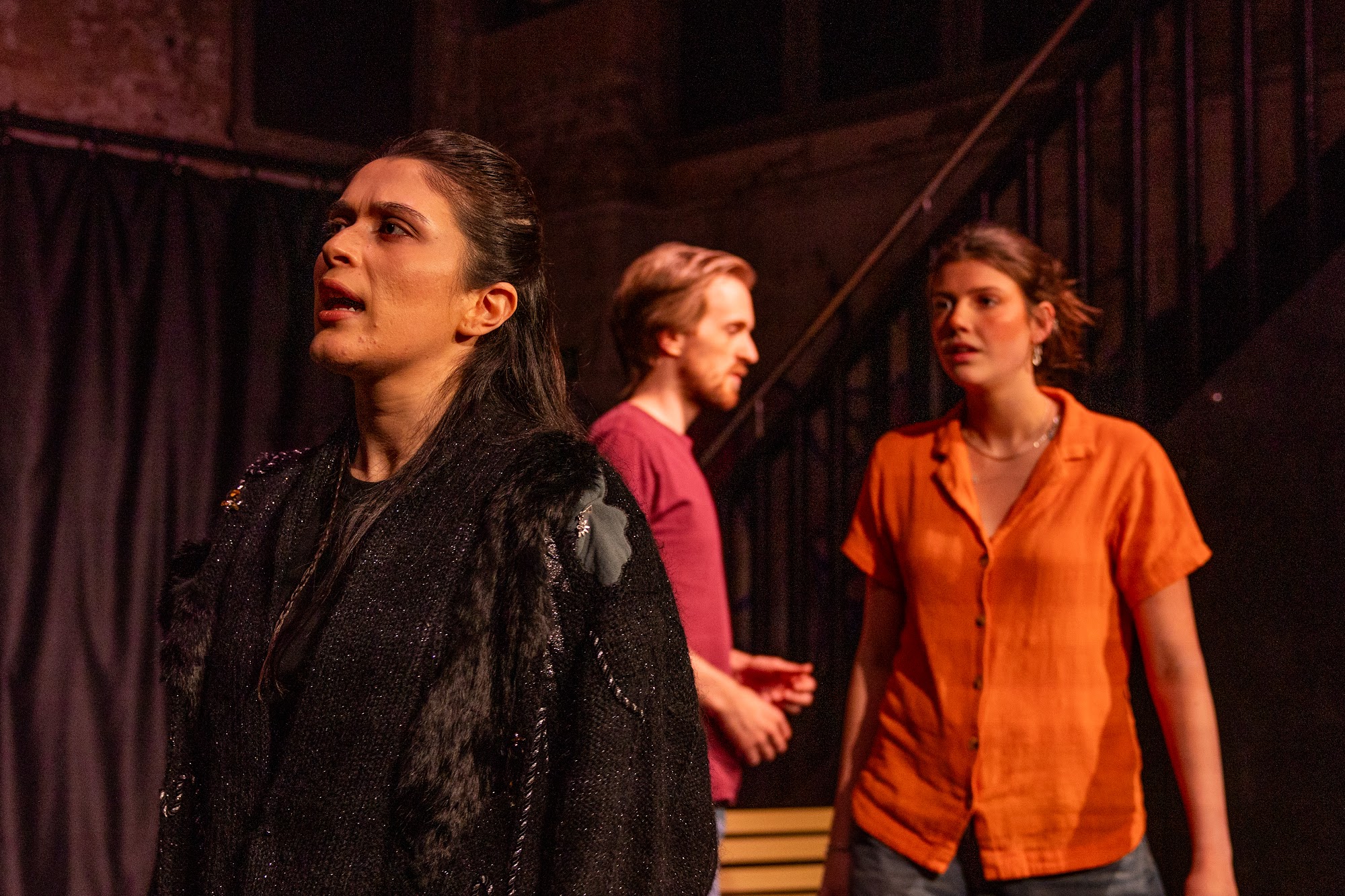
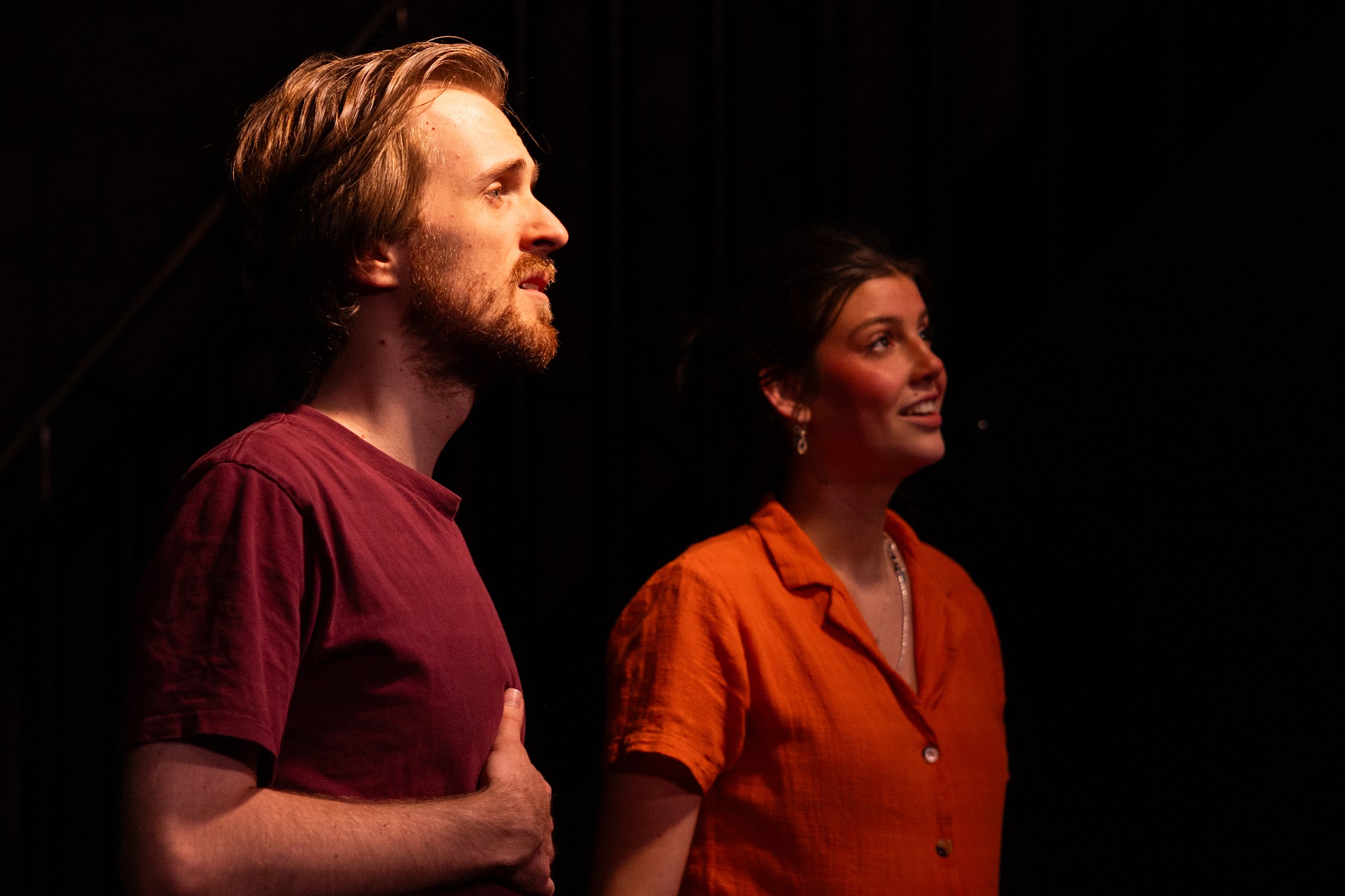
I'm not particularly fond of pigeons. Thankfully, the absurdist play Pigeon, directed, produced and written by Liron Peer, with Cara Underhill, Frasier Tucker, and Andrea Mudbidri, is not just about pigeons. Staged as part of the 2026 Sydney Fringe Festival at Qtopia Sydney — The Substation, Pigeon revolves around three main characters: Yuli, the jobless art graduate stuck in the rat-race of life; Elijah, the carefree, ex-nine-to-fiver (though not six feet) corporate turned influencer; and Rhea, the one who arrives from the shadows. Yuli begins the play feeding pigeons before meeting Elijah at the peak of a mountain. Both of them quickly form a bond before Rhea abruptly joins them, insisting that Yuli returns her wings.
Suddenly, they find themselves stuck on the top of the mountain with no way to leave. For me, this is where everything and everyone starts unravelling. How does one gain freedom from the mountains? Where are Rhea's wings? While Yuli tries all ways to find a way to climb down the mountain, Elijah makes his peace and bed, digging a hole in the dirt. When faced with themselves, all three of them begin asking existential questions that are not unfamiliar to many of us. When did we forget how to think for ourselves, and how can we remember? How can we gain freedom if we are locked in a system? Who are we, really, without our jobs, talents, ambitions or desires? The play poses the questions, but they are for us to find out, like an itch waiting to be scratched or a thread waiting to be pulled from a yarn of wool.
Shadows are a big part of the answer
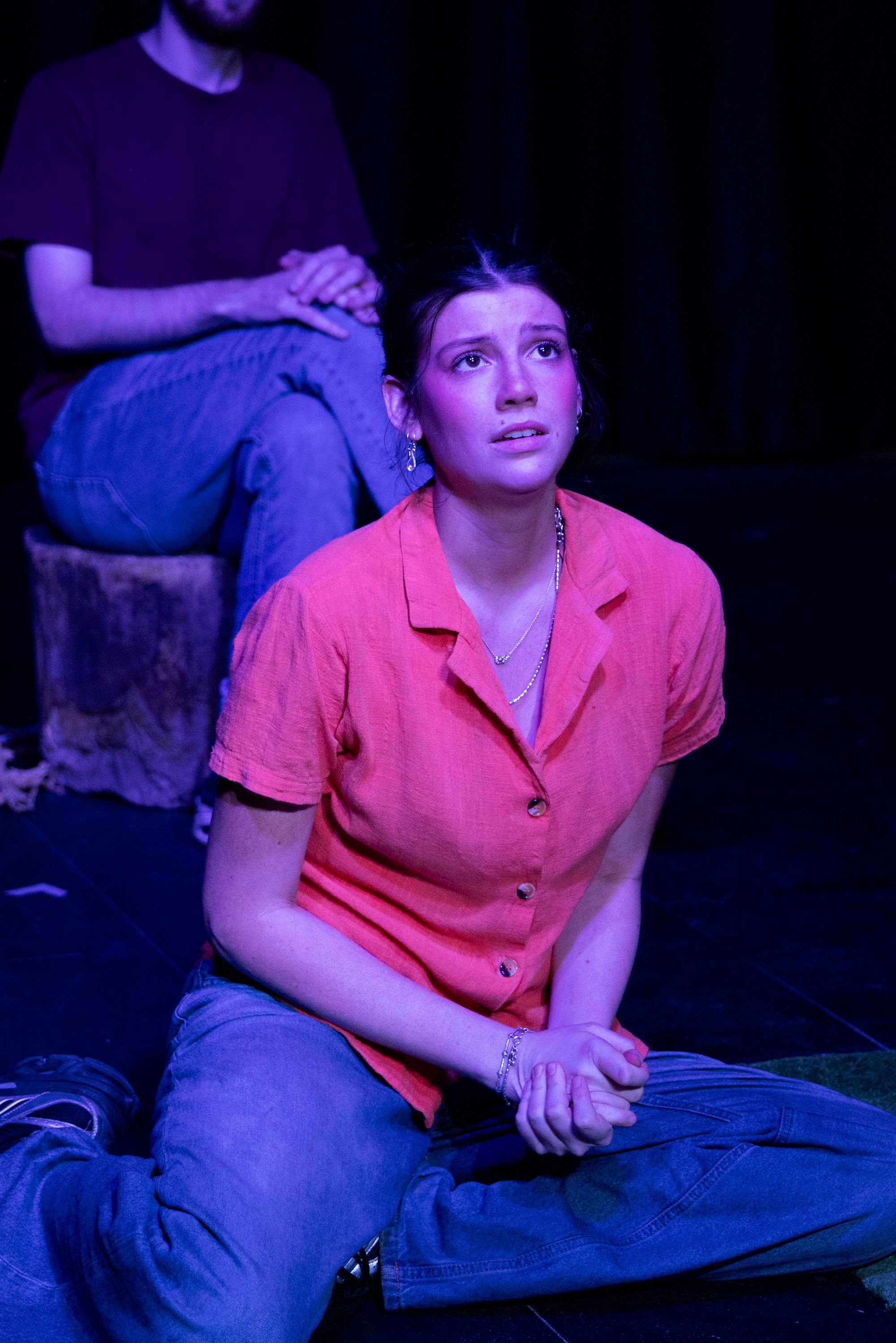
This is also where the play shines in its shadow work. It is not afraid of playing with the dark; rather, it has the courage to embrace negative space. The set is sparse (just a bench, logs, and some dirt) but Peer's clever light work does the heavy lifting. Dim lights accentuate the claustrophobic nature of the set, reflecting how the characters are trapped not just physically, but also mentally. Most times, the characters are shrouded in dark but as they open up to each other, light creeps in. Light not only shows the progress of time, casting long shadows as the sun starts setting, but also signals key moments of character growth. When Yuli realises that the key to embracing her fears, her mistakes, her past was not to resist it but dance with her shadow — here is where Pigeon shines the brightest, telling us, with no words, but a dance, that perhaps what we fear are nothing more than fleeting shadows.
Pigeon is fast-paced and dialogue-packed. Blink and you'll miss the intent behind the action. However, it is confronting because it reminds us that we all have a shadow, whether we like it or not. Shadows follow us everywhere; they are inseparable from us, almost suffocating. Yet at one point, Rhea-the-shadow screams at Yuli: "I am protecting you!" The thought that shadows protect us appears unfathomable since we grew up being afraid of shadows, which are full of cobwebs and spiders (and maybe a dead body). But there is only one condition where shadows appear — when we stand in the light. The tension between darkness and light is that both require the other to exist. Pigeon tells us we need not choose between either, but we can learn to thrive in both states.
Pigeon also grapples with themes of religion, societal norms and expectations, and consumerism. Elijah came to Yuli in a way that she thought he was "G O D". But he turns out to be an ordinary man, searching for meaning like Yuli. His name implies spiritual liberation, but it turns out Elijah was very much still in his wilderness, pulling Yuli into it as well. Yuli gripes about being jobless, and the apparent uselessness of her art degree in comparison to corporate ones. She knows about labubus, the epitome of consumerism.
My favourite moment
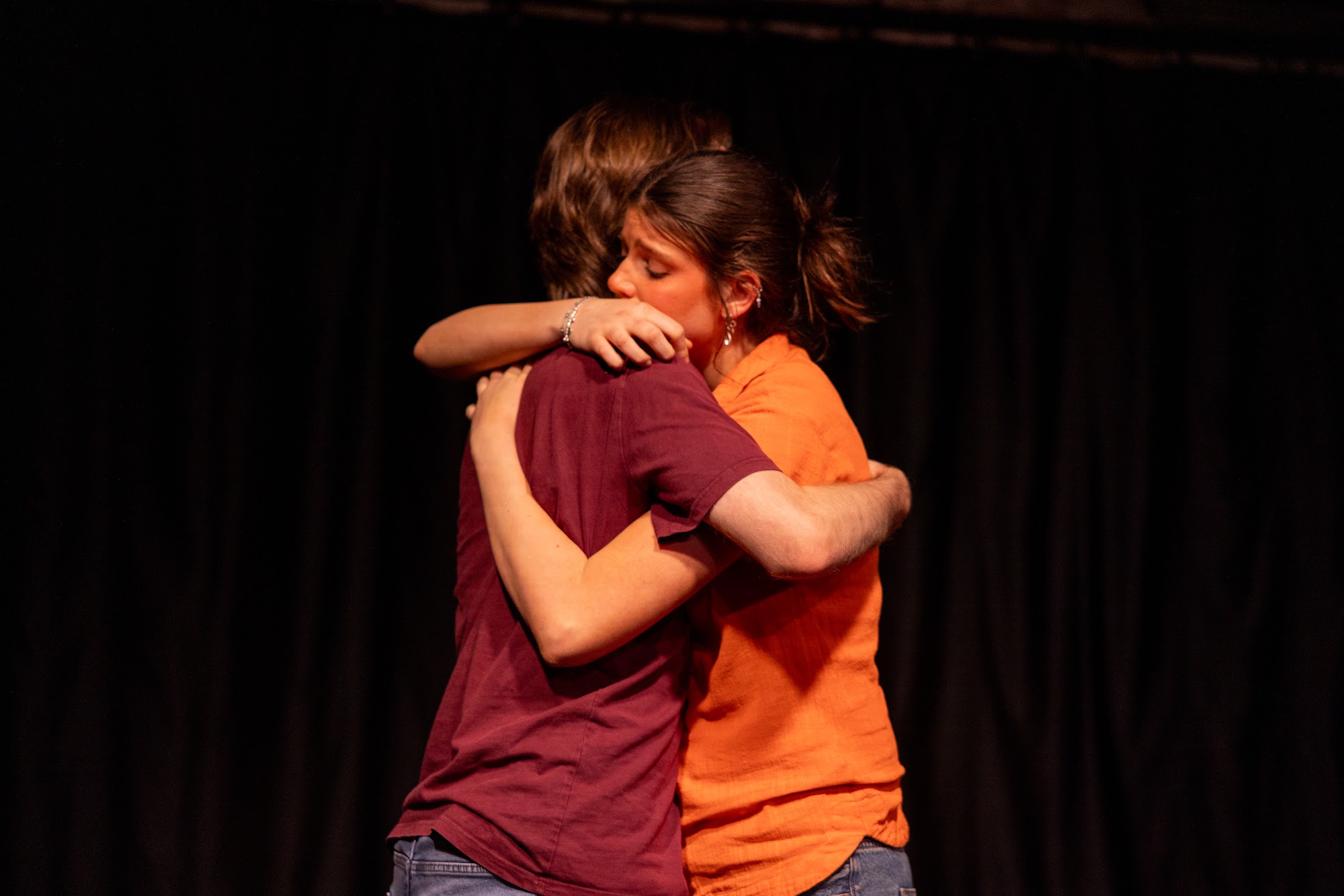
My favourite moment was when Yuli hugs Elijah. Elijah responds awkwardly and afterwards, he comments that it was "fleeting" but that only reminds him to remain in the present. Pigeon uses something as simple as a hug to demonstrate that the biggest impact often begins with the smallest action. A hug was all Yuli needed to break down the defenses Elijah had built up around himself, closing in an instant the gap that exists between them. For me, it speaks to the loneliness epidemic, where one feels alone in a world populated by 8 billion other people. But perhaps, not a word is needed to close the yawning chasms between humans if we only put down our pride, like Yuli did, to reach out to someone or allow someone to reach us. In an abstract set, Pigeon manages to bring to life such poignant moments that we often take for granted.
Beneath the absurd elements of this play — like finding muffins in the soil — are keys to breaking free of the cages we climbed ourselves into, while realising at the end the door had always been open. It is also critically relevant in a world where AI threatens to isolate and dehumanise, but Pigeon affirms what is fundamentally human: our search for connection, meaning and purpose, even if it appears futile. It was thus only apt that the play ended with all three of the actors screaming into our faces, I mean, the void.
By the end of the play, I still did not warm up to pigeons, but one line resonated with me: "the pigeons are circling above us." A quick internet search tells me pigeons circle because it enables them to navigate and locate the smell native to their destination through their keen sense of smell. The title now clicks. Like pigeons, all three of the protagonists were lost, trying to find their way home in a maze called life. Like pigeons, numerous but overlooked, the play truly does more than meets the eye.
I highly recommend Pigeon if you are seeking more than entertainment because of its ability to hold depth in light comedy, something difficult to achieve considering its abstract plotline. It gives you an absurd take on life, but not without making you laugh and sigh at the same time. It is a play that will continue to befuddle us throughout only to realise at the end that, maybe like its title, we are all just pigeons, trying to find our footing on earth, or our way back home, or back to who we originally were before the world told us who we should be. Being lost, as Pigeon reminds us, is a necessary part of the process to find ourselves, our nests, and figure out life. But for now, we circle.
Pigeon — written, directed and produced by Liron Peer. Qtopia Sydney — The Substation, as part of Sydney Fringe 2026.
Writer, Director & Producer: Liron Peer Cast: Cara Underhill, Frasier Tucker, Andrea Mudbidri
Reviewed by Alicia Wang Sin.
Venue: Qtopia Sydney — The Substation, Darlinghurst NSW (Gadigal Country). Event listing: sydneyfringe.com/events/pigeon.