Pretty Ugly Review — Theo Chen at Qtopia Substation, Sydney Fringe 2026
Theo Chen's autobiographical cabaret Pretty Ugly transforms personal struggles with isolation and self-esteem into relatable, dignified reflections on identity and resilience. Reviewed by Jaynie Ng at Qtopia's heritage-listed Substation, 1–5 September, Sydney Fringe 2026.
Pretty Ugly Review
Theo Chen's autobiographical cabaret finds its highlights, and reveals the show it could be.
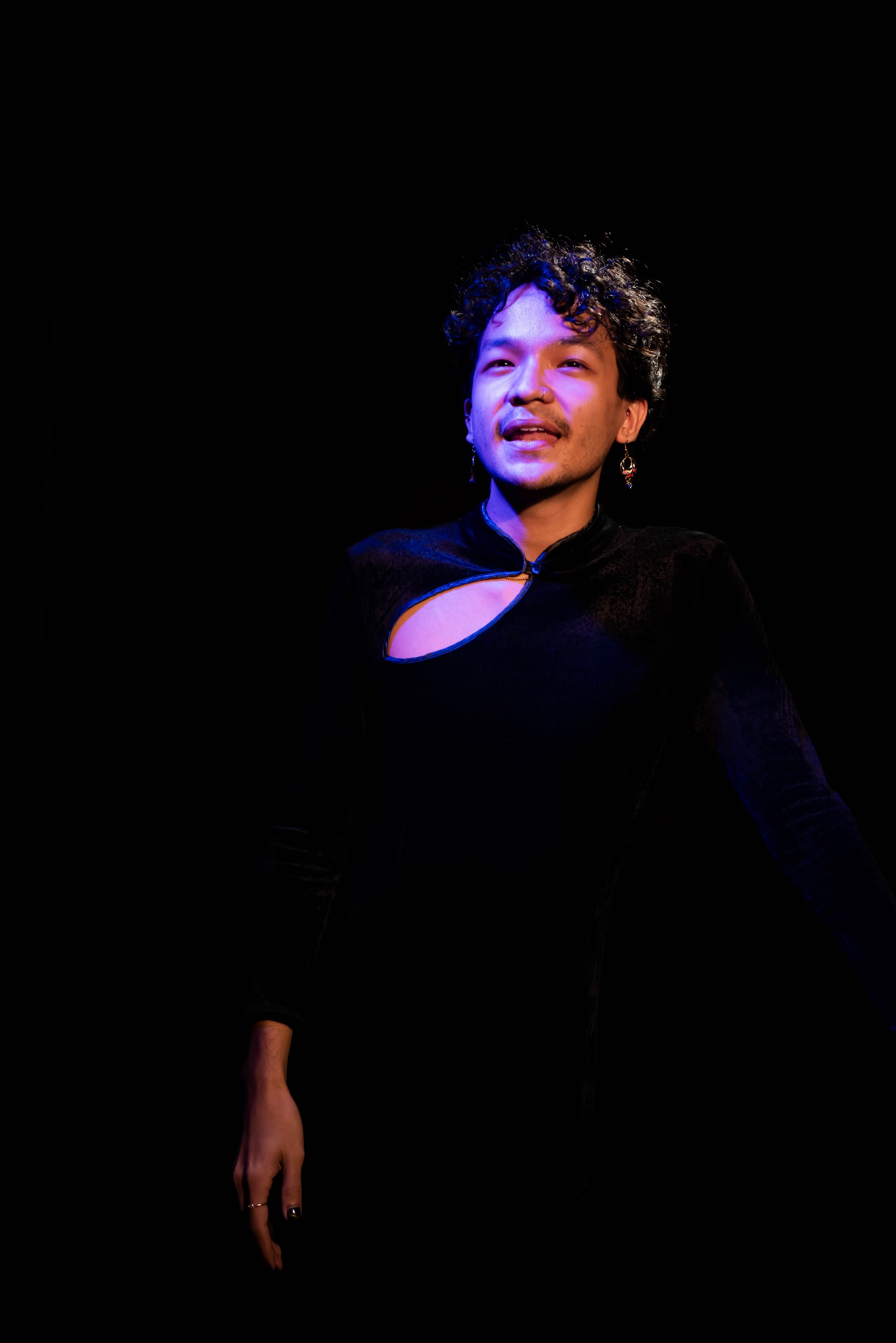
In Pretty Ugly, Singaporean performer Theo Chen takes us through their experience of reclaiming beauty, self-esteem and belonging in an autobiographical solo cabaret. Directed by Lim Shien Hian and presented at Qtopia's heritage-listed Substation as part of Sydney Fringe 2026, the show transforms Chen's personal struggle with isolation into relatable, eloquent and dignified reflections on identity and resilience.
Reviewed by Jaynie Ng.
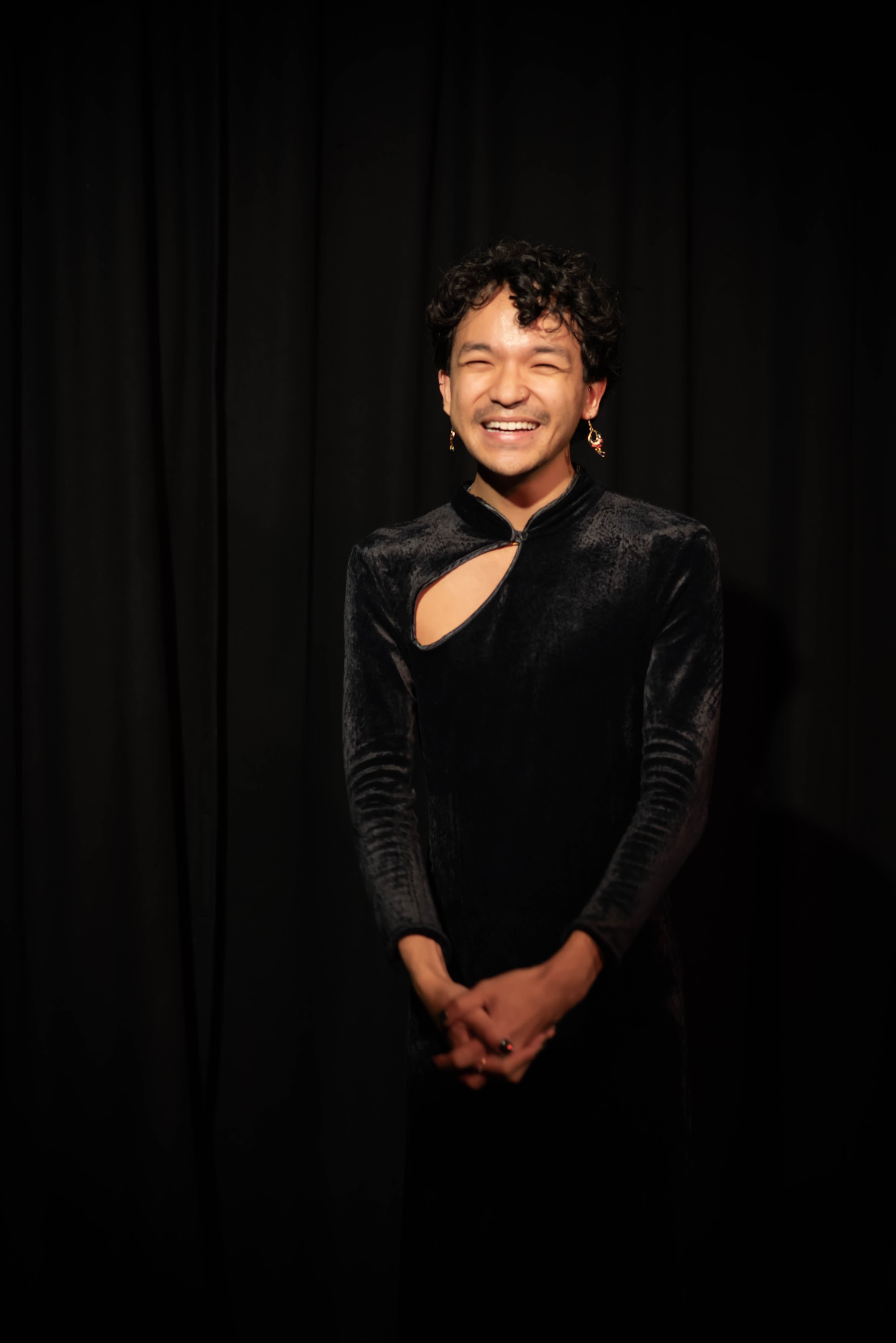
Photo by Jessi Ann Rogers.
"Being ugly was not something I could live with for the rest of my life."
In Pretty Ugly, Singaporean performer Theo Chen takes us through their experience resolving this tension in an autobiographical solo cabaret. They self-describe the show as "a very personal, very intimate blend of storytelling and song… around the experience of not feeling good in one's own body". The result is an intimate work with a sense of purpose, though like its subject, is still finding its fullest expression.
Photo by Kenneth Sze.
"My relationship to Singapore has changed so much as I grew older. I have worked through a lot of the resentment I felt about Singapore. I increasingly see that in parts of myself in terms of my interest in the new, my interest in diversity, in looking for solutions, in knowing how to scramble to survive or make possible with little resources…"
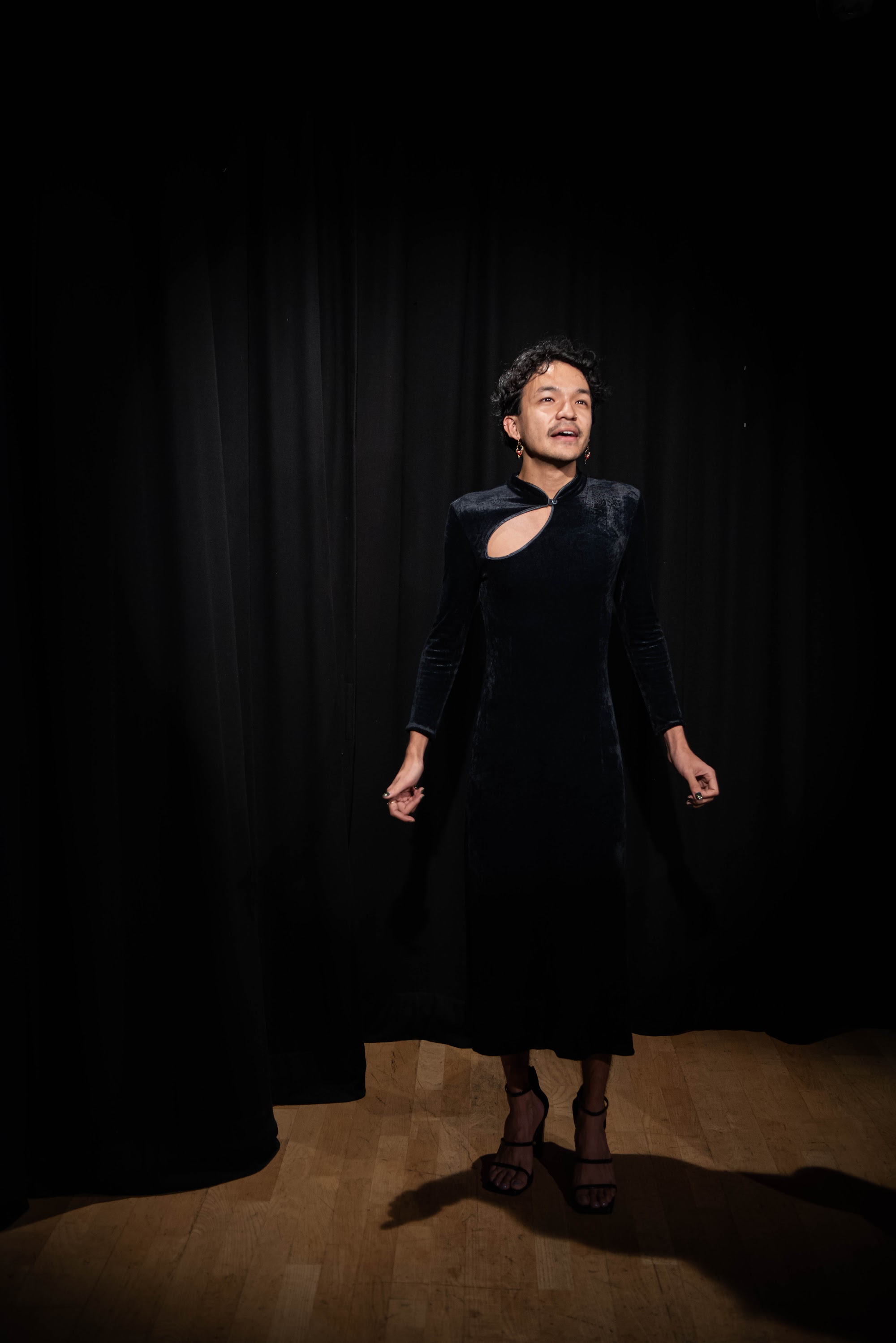
While Chen describes reconciliation, Pretty Ugly more clearly enacts resilience. It emerges throughout the show, as experiences of judgement and insecurity become moments of strength and self-affirmation. Childhood shows where dress-up and makeup are initially humoured before being admonished leave a scar of insecurity. Years later, Chen's decision to continue donning dresses in the Singaporean stagings of Pretty Ugly, despite a government warning, becomes an act of defiance.
Similarly, recurring mixed signals from a former best friend trigger feelings of inadequacy until Chen sets a firm boundary and refuses to accept treatment that diminishes their self-worth. Chen's difficult experiences become part of the resourcefulness and resilience they describe as distinctly Singaporean — in the face of adversity, identity is reclaimed and forged.
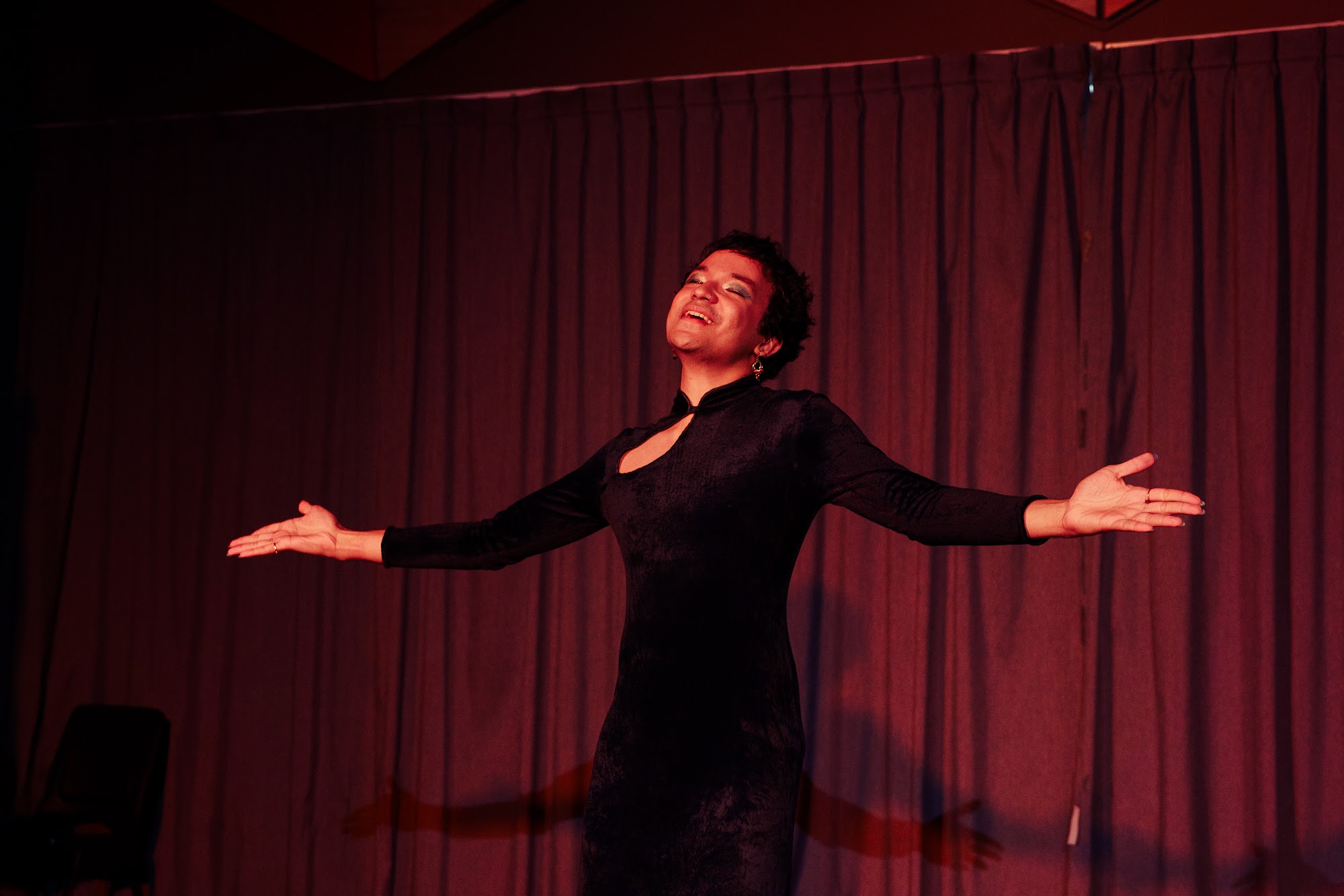
Photo by Jessi Ann Rogers.
The show succeeds at making Chen's personal experiences broadly relatable, but that universality also leaves cultural specificity underdeveloped. One of the more interesting cultural threads left unexplored was when Chen shared briefly that they were asked if they were "fully Chinese" on a dating app. In this, we get a glimpse into a specifically Singaporean experience of race and desirability, but aren't given enough time or context to examine it. Expanding on this could have enriched Singaporean cultural context in an international setting.
As Chen predicts, the show does find more resonance for individuals who don't fit "within the constructed boxes handed to us as children". Yet, the show provides evidence that socially conservative Singapore is evolving through an increasing awareness of gender diversity — in a moment that feels like reconciliation where Chen's mother independently states that "Theo is non-binary".
Photo by Kenneth Sze.
"It's quite deliberately non-chronological so that we don't just replicate an A to B kind of childhood into adulthood sort of structure, but something that mimics the kind of circularity of dealing with these issues of self-esteem and self-confidence and how it often can feel like you have to circle back on something."
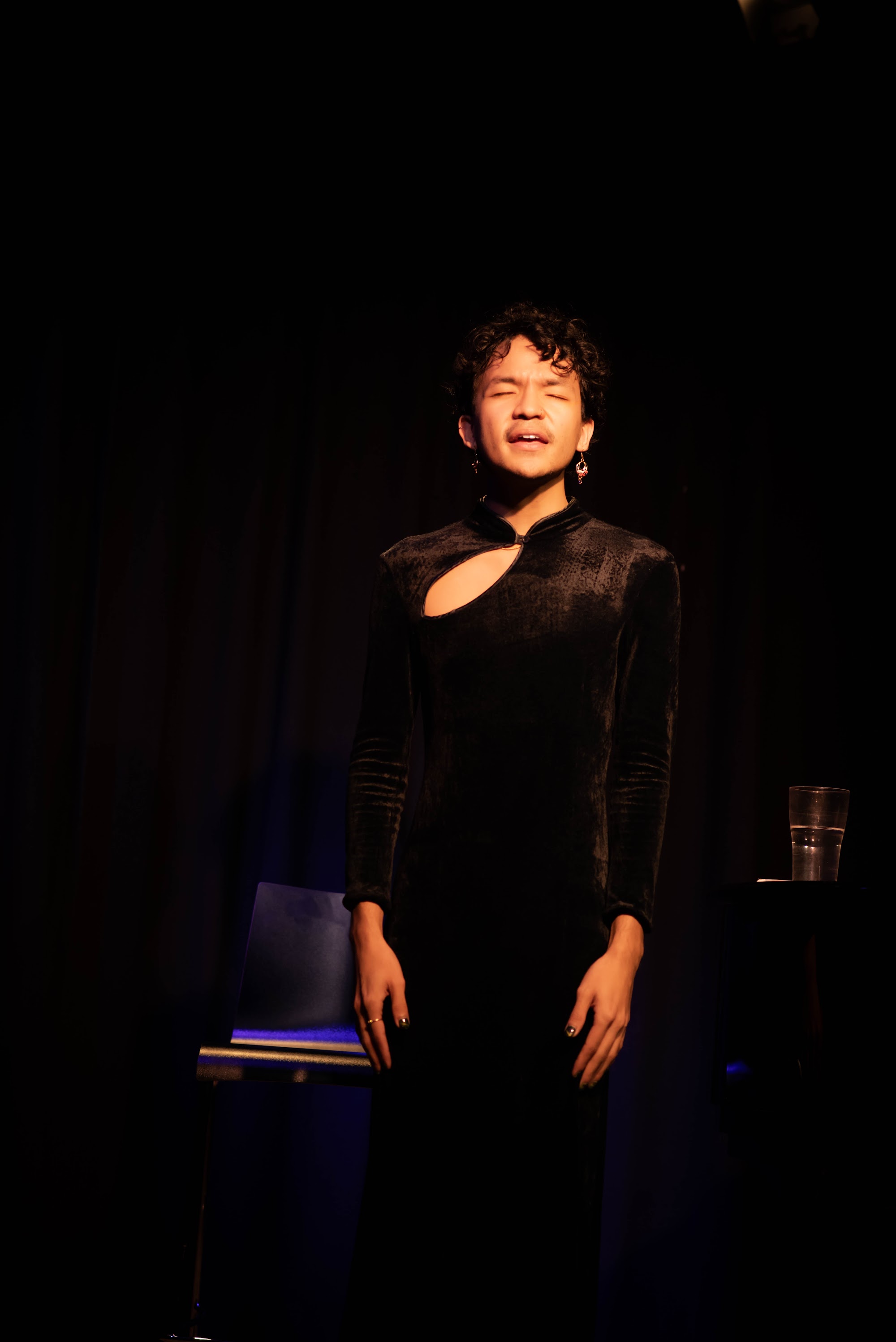
At the beginning of the show, Chen invites audiences to close their eyes, before asking us 'when was the last time you felt beautiful?'. This frames our expectations of the show through physical beauty, romantic love and gender expression. Often, it's easy to start by viewing one's worth through the lens of romantic validation.
As the show progresses, Chen's intentions are displayed. Each scene offers new reflections that build towards a holistic view of self-acceptance through resilience, and the non-linear narrative successfully reflects this natural process.
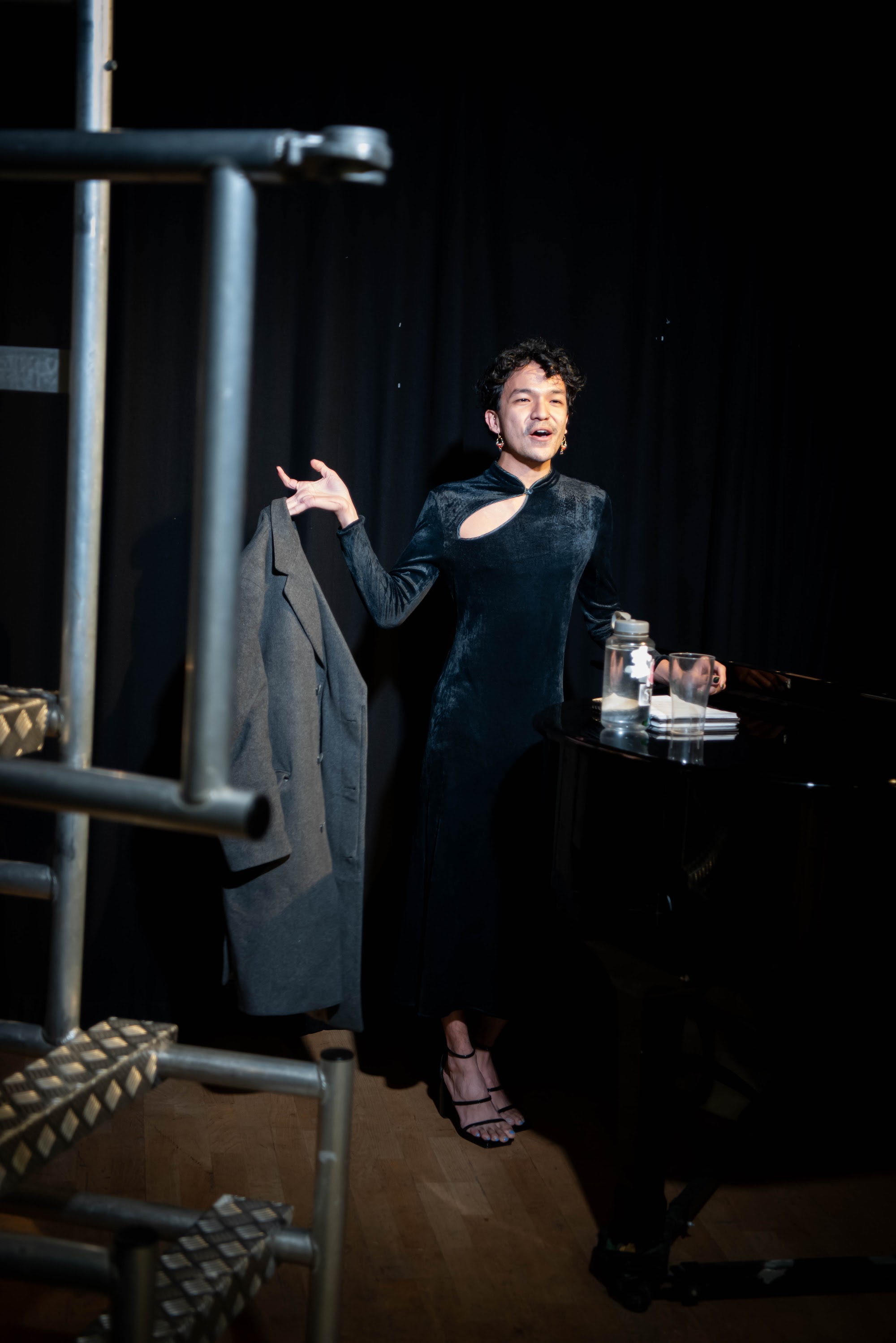
Photo by Jessi Ann Rogers.
Pretty Ugly reenacts a moment from Taylor Mac's 24-Decade History of Popular Music where the audience joins Chen on stage in a prom setting. As Chen sings Mitski's 'Two Slow Dancers', we are asked to embrace discomfort and given the option to slow dance with another person of the same gender or to hold ourselves. The intention behind inciting discomfort felt ambiguous — is it in sharing intimacy with someone of the same gender, or is it in embracing solitude? Chen's lengthy introduction also cushions our discomfort, paradoxically softening the result the exercise aims to provoke. While tender and memorable, this moment didn't provide a clear connection to move the self-acceptance theme forward.
Photo by Jessi Ann Rogers.
It makes a lot of sense that this show began as a transcript of a performance, with the setlist at the forefront and improvised stories bridging numbers, preserving the intimate, song-led structure of a traditional cabaret. From The Baker's Wife's 'Meadowlark' to 'They Just Keep Moving The Line' from the TV musical Smash, many of the songs leaned towards a similar emotional register.
Greater variation in tone and tempo would have injected levity to the repertoire, as the succession of earnest numbers slowly began to blur together. This is evident in the first half of the show — the latter half features audience interaction moments influenced by Mac and Oh that inject variety absent from the opening. A greater dose of humour could also give welcomed contrast to the succession of serious scenes, giving Pretty Ugly the playful energy it promises while anchoring it more firmly in cabaret's theatricality.
Photo by Kenneth Sze.
"I didn't expect [performing as myself] to feel like such a seamless transition. I don't feel like I'm playing a character."
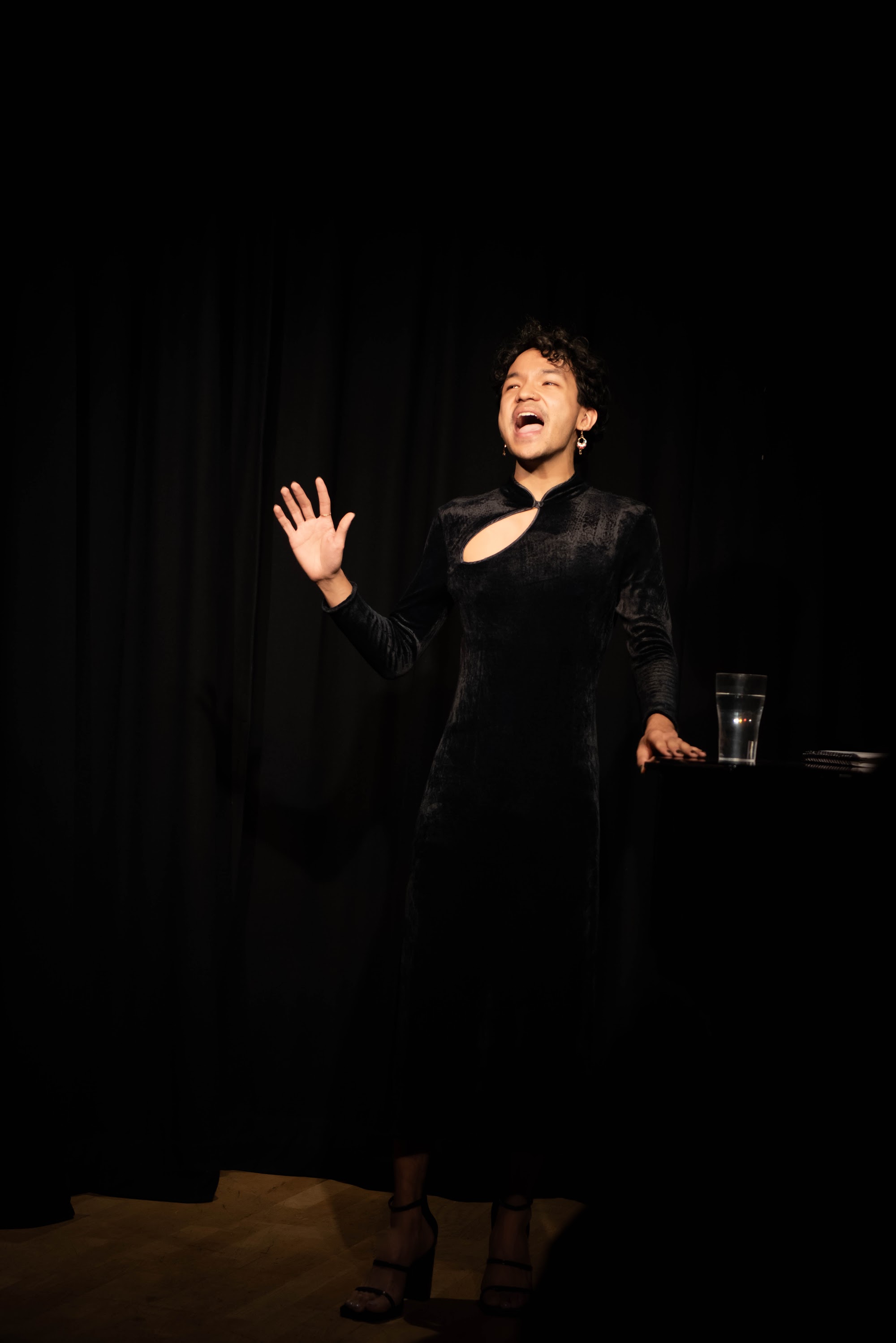
'Another Hundred People' from Company gives us one of the highlights and a glimpse of the show's full potential. The number is woven with stories of Chen's first visit to New York — a hub synonymous with musical theatre and queer pride, and importantly, the physical manifestation of Chen's long-held reverence for theatre. With each repetition of the chorus, the story evolves, drawing us further into Chen's New York, seamlessly weaving the number and narrative, making it a distinctive moment for the show.
Chen's authenticity keeps us captivated as they tenderly confide in us like old friends, supplementing their personal anecdotes with splashes of Sondheim. 'Another Hundred People' offers a glimpse into what Pretty Ugly could achieve when the narrative and number are strongly unified, whilst also highlighting the potential for greater cohesion throughout the show.
Photo by Jessi Ann Rogers.
Another instance where the show's full potential feels unrealised is in the order of the finale — the penultimate number 'The Best of Times' from La Cage aux Folles followed by 'They Just Keep Moving The Line' from Smash. The influence from Diana Oh's immersive work is prevalent when Chen encourages the audience to sing along to 'The Best Of Times'. Reciting the simple lyrics and being reminded to remain in the present was cathartic. This would have been a spirited and satisfying end to the production.
However, concluding with 'They Just Keep Moving The Line' deliberately rejects the neat resolution and leaves the show on an emotionally unresolved note. In our interview, Chen shares that the show "keeps [them] accountable", and along with the non-linear structure, this selection feels intentional as a reflection of the ongoing nature of self-acceptance.
This artistic rationale makes sense, but I'm not convinced the resulting emotional effect serves the show. The final lyrics "please give me some direction 'cause they just keep moving the line" read less like resilience and more like exasperation. Additionally, the song's vocal demands and Chen's delivery are not matched, ending the production on a weak note.
Photo by Jessi Ann Rogers.
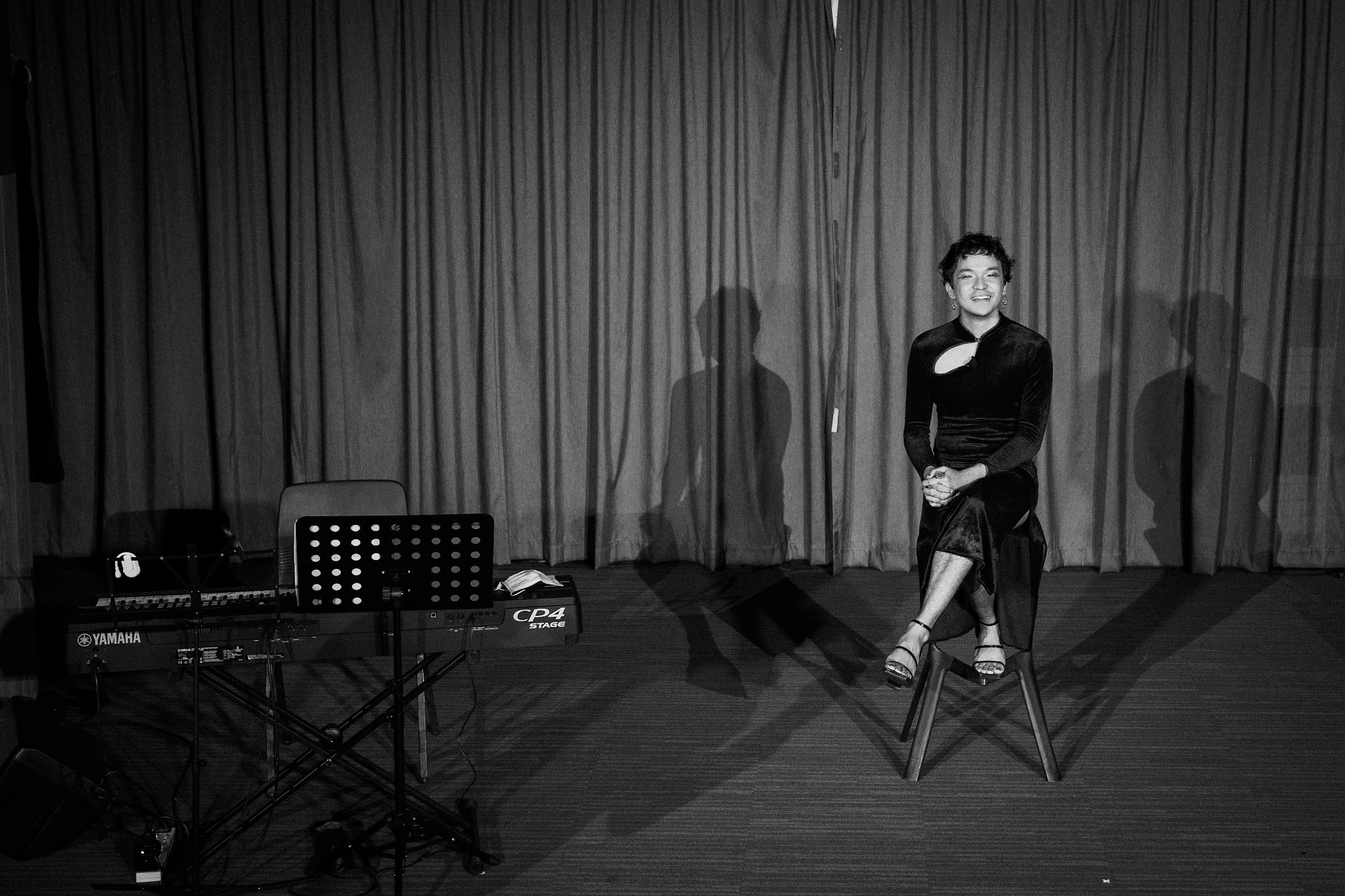
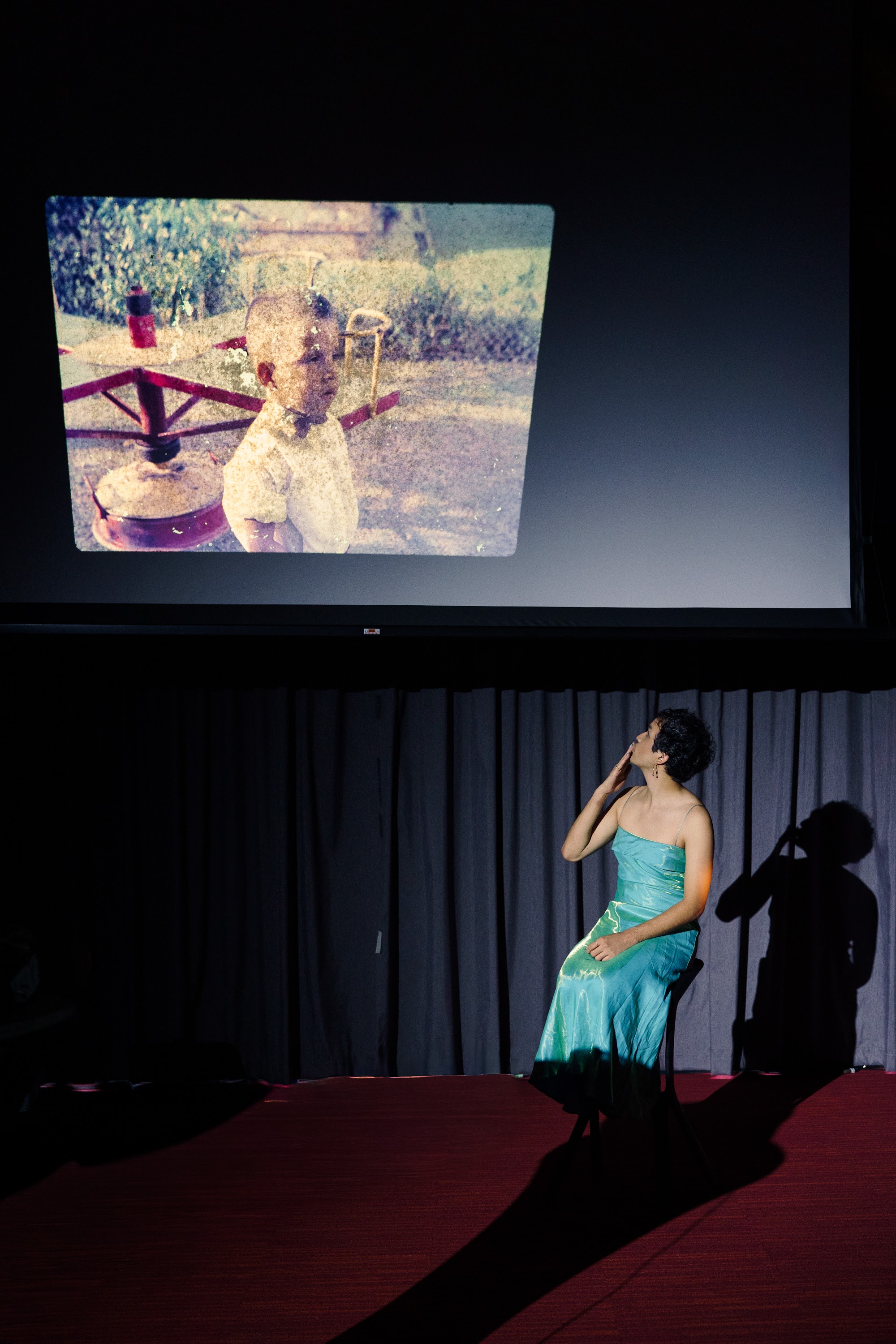
Qtopia's Substation is well suited to the intimacy of Pretty Ugly. With around 40 seats, the space brings Chen up front and personal, extending the conversational nature of the performance. The quiet whirr of an analogue slide projector fills the small space with nostalgia, as Chen shares anecdotes of inspirational late family members and covers 'Bridge Over Troubled Water' by Simon & Garfunkel. However, the poor soundproofing at Qtopia's Substation did distract both us and the performer, detracting from this moment.
Photo by Jessi Ann Rogers.
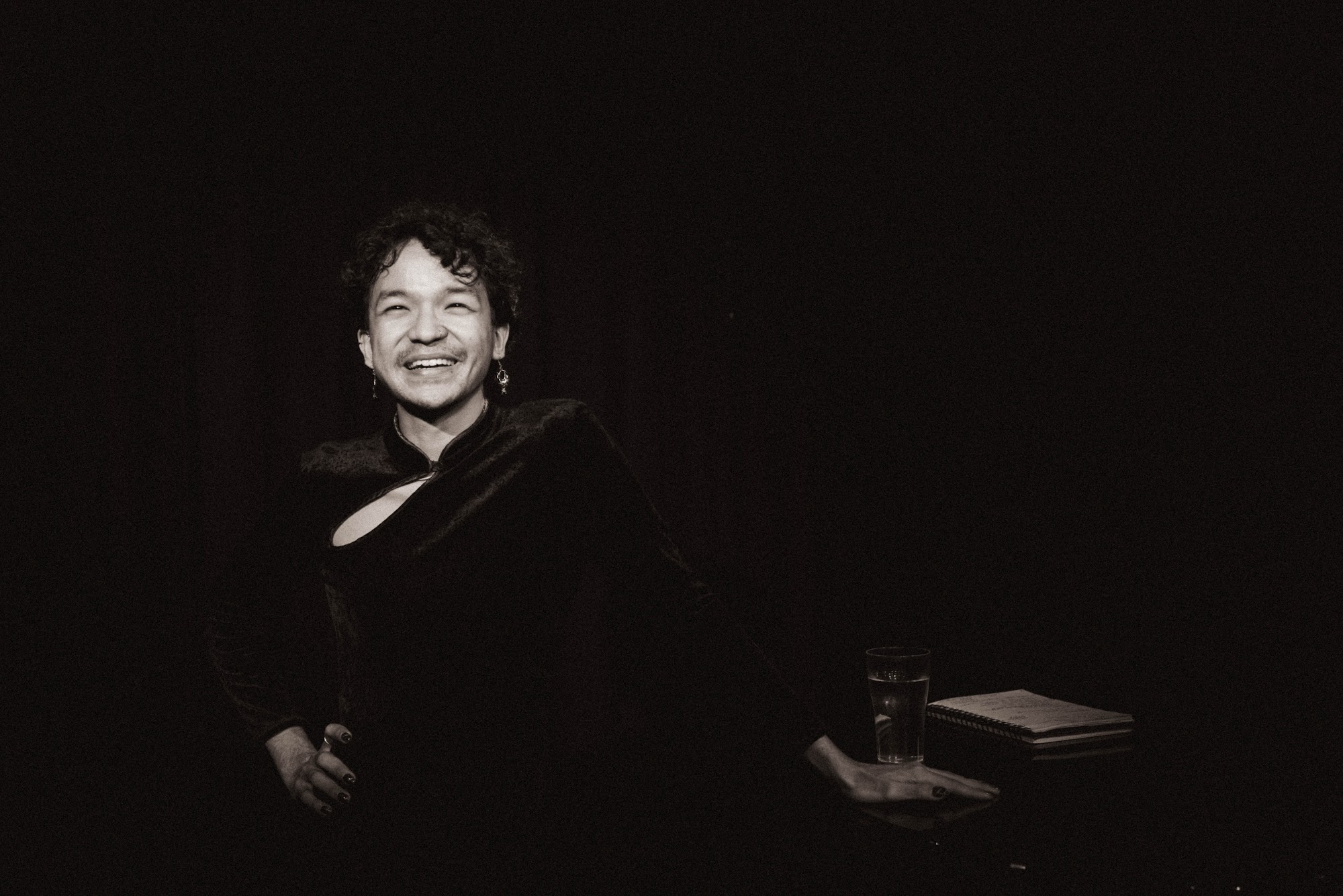
Pretty Ugly transforms Chen's personal struggle with isolation and self-esteem into relatable, eloquent and dignified reflections on identity and resilience. In its current iteration, Chen's charisma carries the raw source material, but the show's highlights reveal a performer with a compelling story and a form that capably supports it. With further development and refinement focused on cohesion and clarity, Pretty Ugly could be a truly special, distinctly Singaporean autobiographical cabaret.
Pretty Ugly — a solo cabaret written and performed by Theo Chen, directed by Lim Shien Hian. Qtopia Sydney — Queer Hub (The Substation), 301 Forbes Street, Darlinghurst, 1–5 September 2026.
Playwright / Performer: Theo Chen (he/they) Accompanist: Reika Suzuki-Macklin (she/they) Director / Producer: Lim Shien Hian (he/him) Photography: Jessi Ann Rogers, Kenneth Sze
Australian Premiere. Presented as part of Sydney Fringe 2026. Rated PG. Running time 1 hour. Optional audience participation.


%402x.svg)

.webp)


