The Suitors of Helen Review — Squibb at New York Drama Department 2026
Aubrey Naur reviews The Suitors of Helen by Stephen Squibb at the New York Drama Department, New York, 2026 — a lesbian retelling of the Spartan myth that risks ugliness in pursuit of truth, carried by Addie Guidry's fearless Helen.
The Suitors of Helen
By Stephen Squibb New York Drama Department Directed by Stephen Squibb
★ ★ ★ ★ ☆
Reviewed by Aubrey Wang
The New York Drama Department has a freight door on West 30th Street, somewhere in the gray zone between the Fashion District and the end of the world, and inside the freight door there is a bespectacled producer with a clipboard and a cooler of Modelos, and above the producer there is a long flight of stairs, and at the top of the stairs there is a loft that cannot decide whether it is a rehearsal space, a yoga studio, or a tiki bar run by people who have not yet discovered tiki.
Blue LEDs are mounted in what appear to be the reflector domes you clamp over a bearded dragon's terrarium. There is an IKEA stationery trolley. There is, I am almost certain, a draft eight-oh-eight sub-bass pulsing up from somewhere underneath us; the director mentions it in his curtain speech, apologetically, and then shrugs, as if to say: this is downtown, this is Midtown, this is wherever we are, let it in.
Downstairs, in a bar I have not seen but can hear clearly through the floor, Mets fans are responding to something. Upstairs, Helen of Troy is about to be born out of a swan.
The Suitors of Helen — a lesbian reimagining of the matter of Sparta that opened in invited-dress preview on Wednesday night. For a play that will spend the next two hours and ten minutes arguing that the organization of female desire is the hidden armature of Western political history, the enterprise is both grandiose and precarious — one freight door away from being a reading in somebody's apartment.
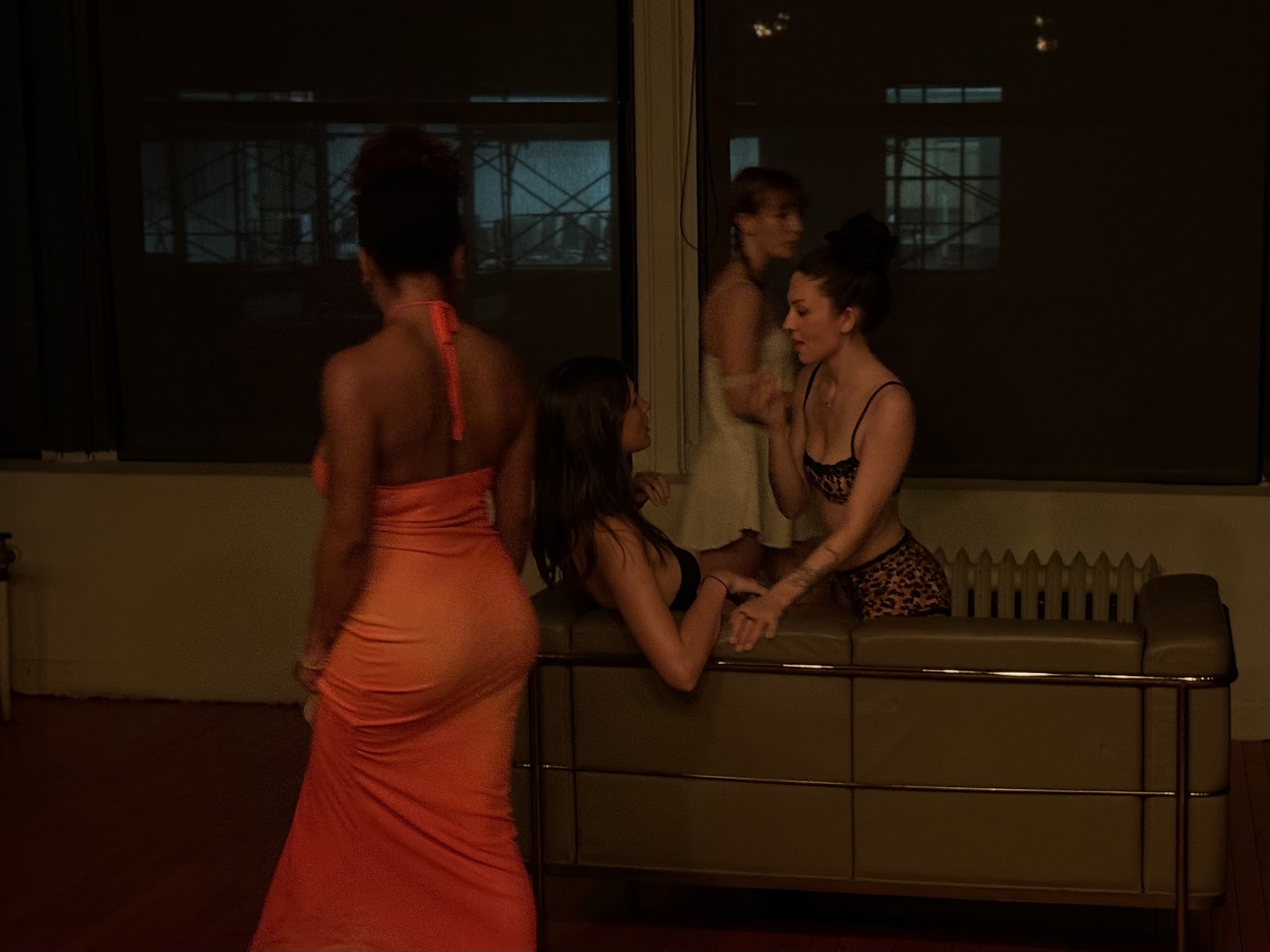
On stage, the women of myth — Helen, Clytemnestra, Penelope, Atalanta — scheme, fuck, and psychoanalyze each other with the subtlety of an HBO after-hours special. It’s giving Immortan Joe’s harem, but with agency, wit, and, crucially, everyone’s gay.
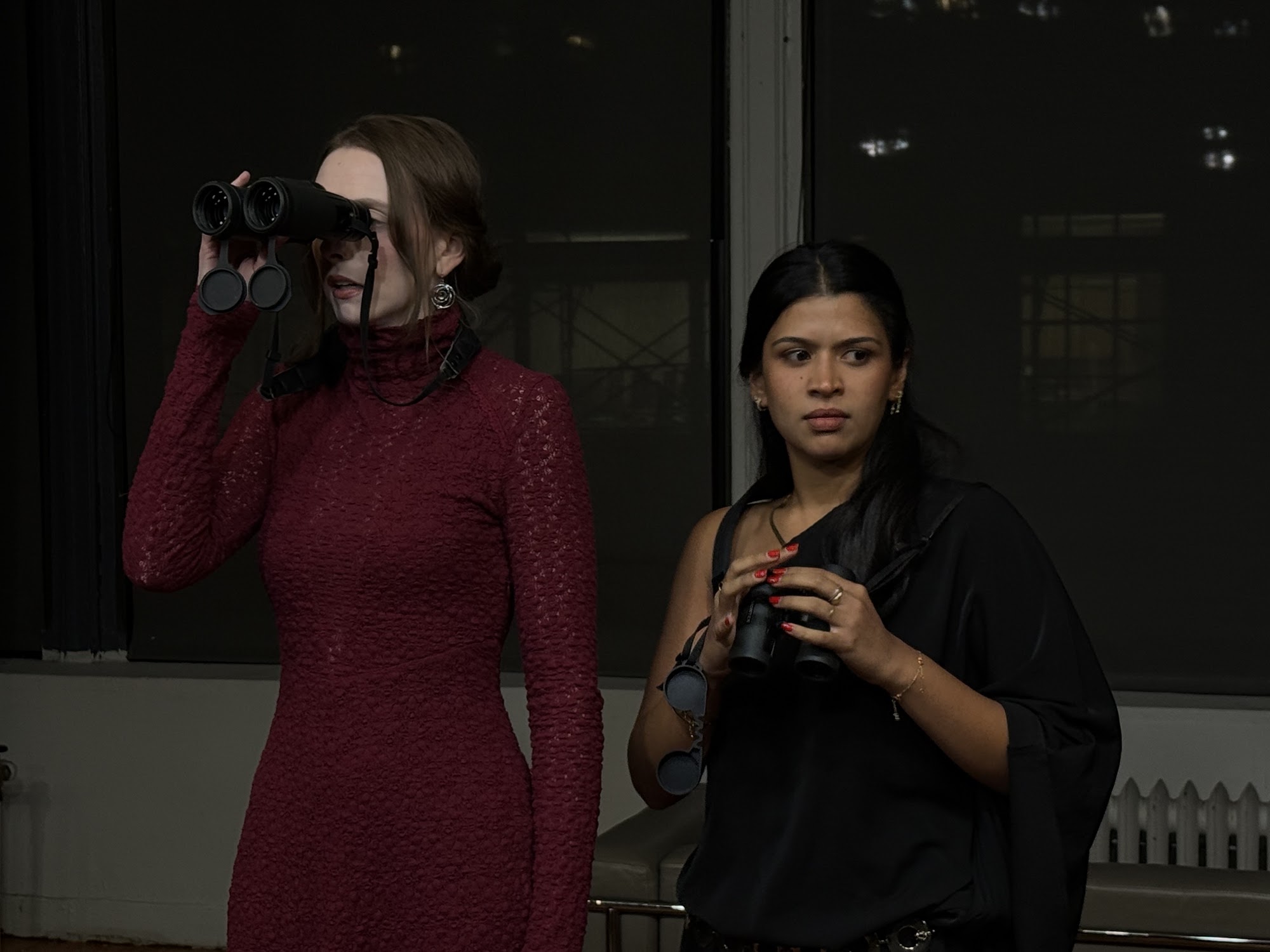
In Squibb's Sparta, King Tyndareus is dying. His daughters are getting restless. Clytemnestra (a steely Laurel Williamson) has decided she wants a baby, and specifically she wants Agamemnon's baby, which she hates herself for wanting. Her younger sister Helen (Addie Guidry) has decided she will not let that happen; she will stage a suitor contest of her own in order to force Agamemnon to compete for her, trapping Clytemnestra in Sparta. Penelope (Jessica Burbank), the cousin, is sleeping with the priestess Atalanta (Irina Liss), and the two of them, between kisses, are reverse-engineering a constitution.
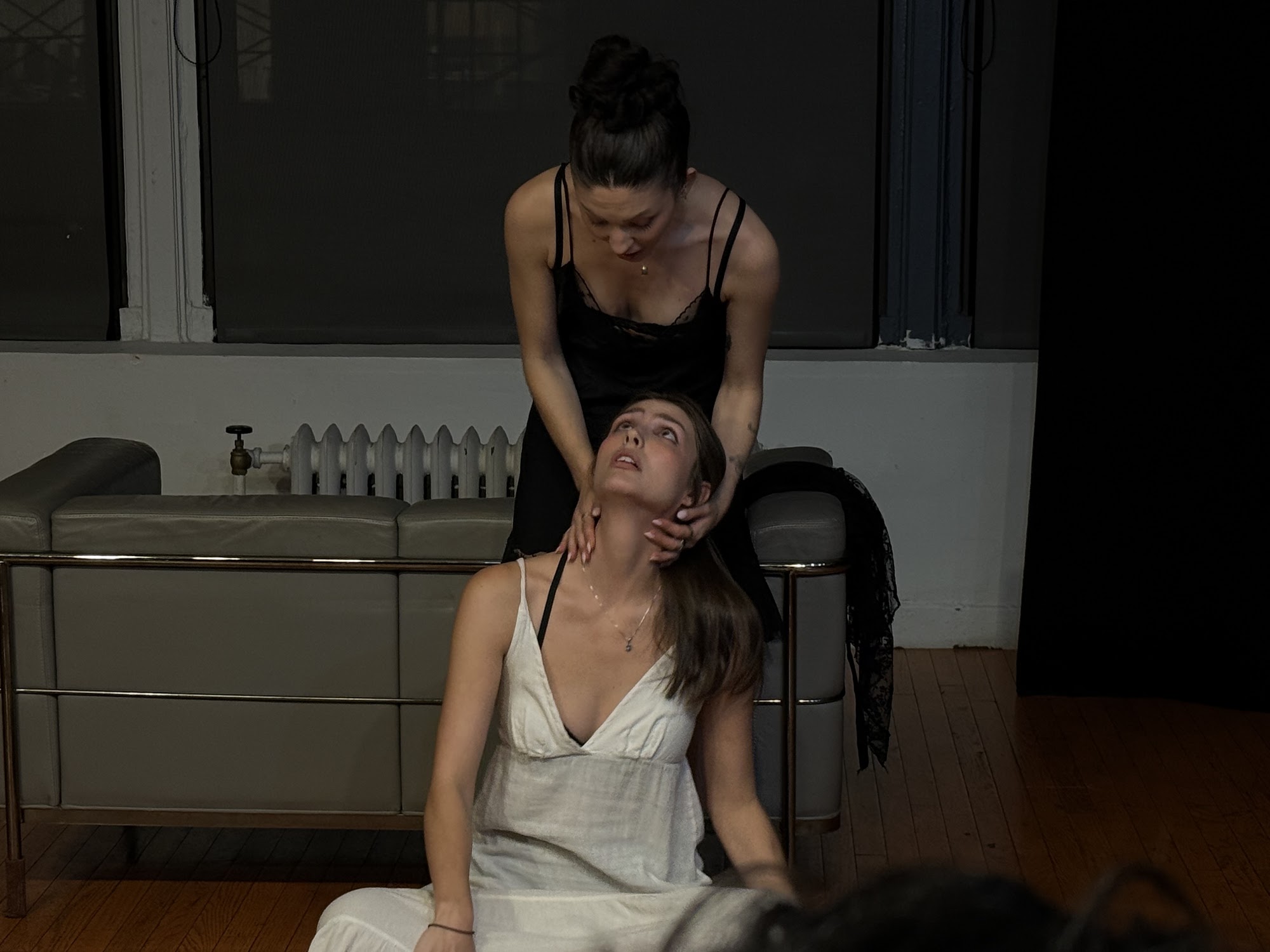
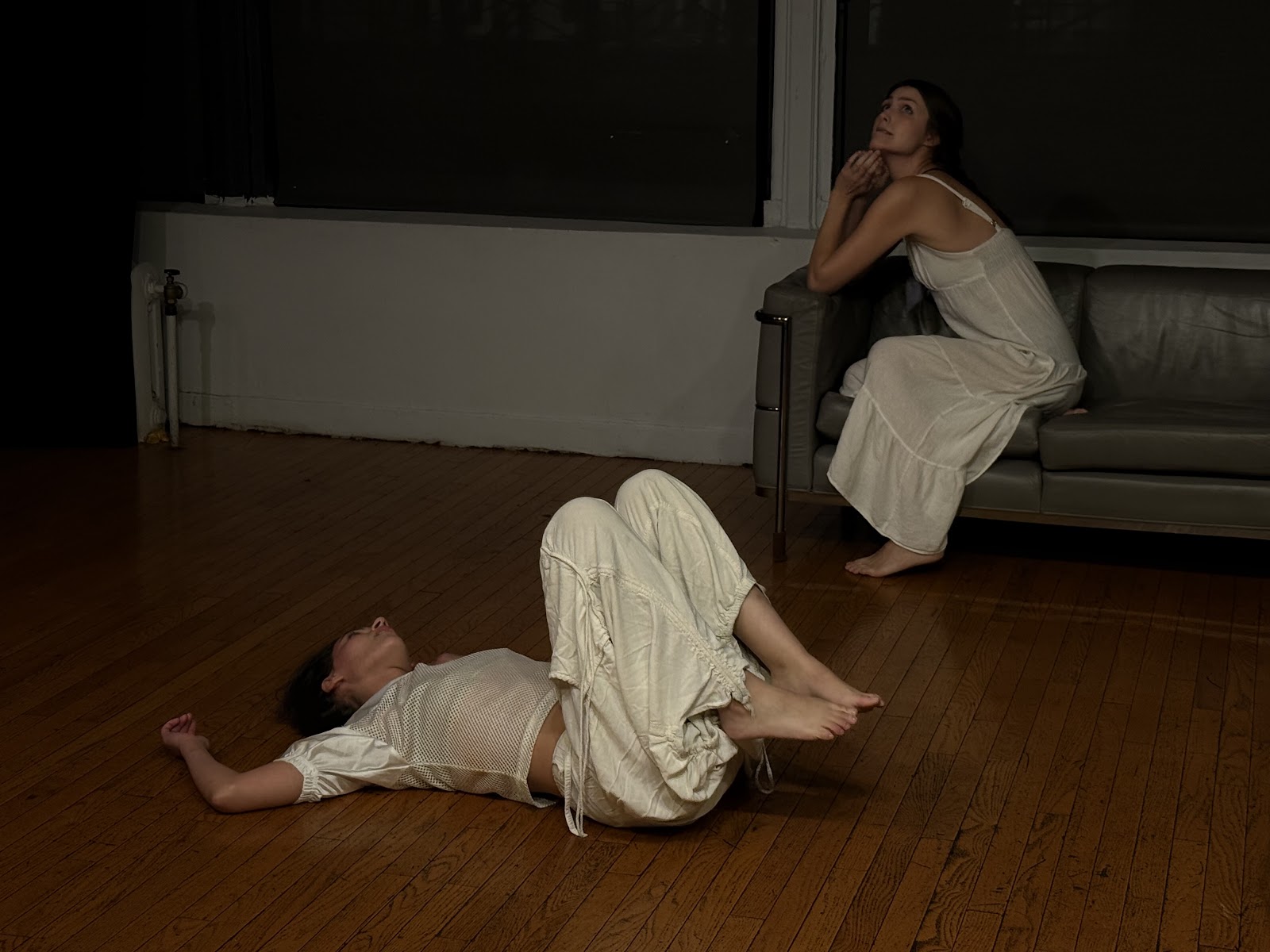
Leda, the mother, floats in and out, long since violated by the swan, a woman shaped by her own worst memory into something glacially sad. Aithra (Raina Soman), the dowager slave-queen of Troezen, Theseus's mother, Helen's handler, Leda's confidante, is also somehow still a serious political philosopher; she thinks sadness is survivable, and rage isn't. The suitors, when they come, will come as cattle thieves and oath-takers.
The Trojan War is already baked in; everyone onstage knows it; the question of the play is whether any of these women, loving one another in the small time left, can hijack the mechanism that will send their husbands and brothers off to kill each other for a decade. The answer, give or take, is: almost.
The founding document of Greek political life
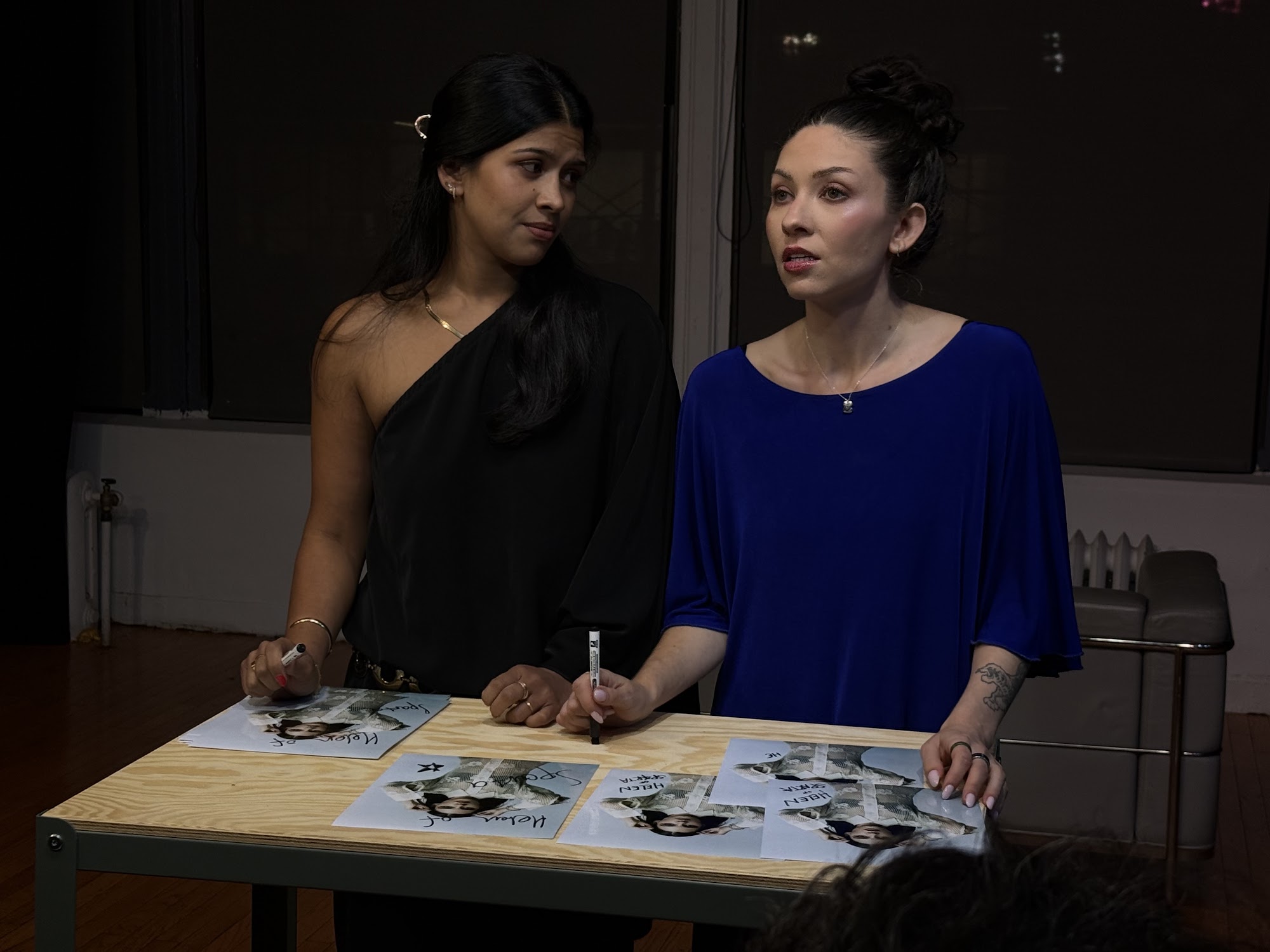
Squibb has grasped something about the Helen story that productions since Euripides have mostly declined to notice, which is that the suitor oath is the founding document of Greek political life. Before Helen chooses, there is no Greece; there is a scatter of kings on a peninsula, cheating each other at cattle contests. After Helen chooses, every man in Hellas is sworn to make war on anyone who crosses her.
The oath is what makes Agamemnon the leader of a coalition rather than merely the warlord of Mycenae. It is what makes a hobbyist like Odysseus mobilizable. It is, Squibb seems to be arguing, the first time in Western history that the regulation of women's desire is formalized as the organizing principle of the state — and, in a sly dialectical twist, the women in his play are the ones who devise the oath.
I need to tell you about Irina Liss and Addie Guidry
A production lives or dies by its willingness to get messy, and this is where The Suitors of Helen reveals a fascinating tension. On one side is Apollo: the dialogue is baroque and literary, the blocking sculptural. Women are arranged in graceful tableaux, braiding hair and applying perfume in clichéd gestures of intimacy. Penelope, in particular, moves with a balletic, controlled grace, her body a beautiful, formal object.
On the other side is Dionysus. As one of my notes puts it: “Theatre belongs to DIONYSUS. If you are graceful and poised and trying to be beautiful then a fashion shoot, not theatre, is the place for you. In theatre you have to risk being ugly.”
Two actors have offered themselves to this god. Guidry is Dionysus. Liss, as Atalanta, is also Dionysus — a lanky, wry, roughly-exquisite classicism, like a kouros that just rolled a cigarette. When Liss delivers Atalanta's "molten wine" aria, a flirtatious piece of mock-metaphysics in which she tells Penelope that her thoughts are hot liquid molten wine, she manages the almost impossible trick of making the language sound both heightened and sincerely horny, as if the person speaking has read Sappho and also wants, with no small amount of urgency, to bust a nut.
You can't fake that double register. Most actors give you one or the other: the Attic diction without the body, or the body without the diction. Liss has both. Irina Liss’s Atalanta is hot, dirty, and classical all at once.
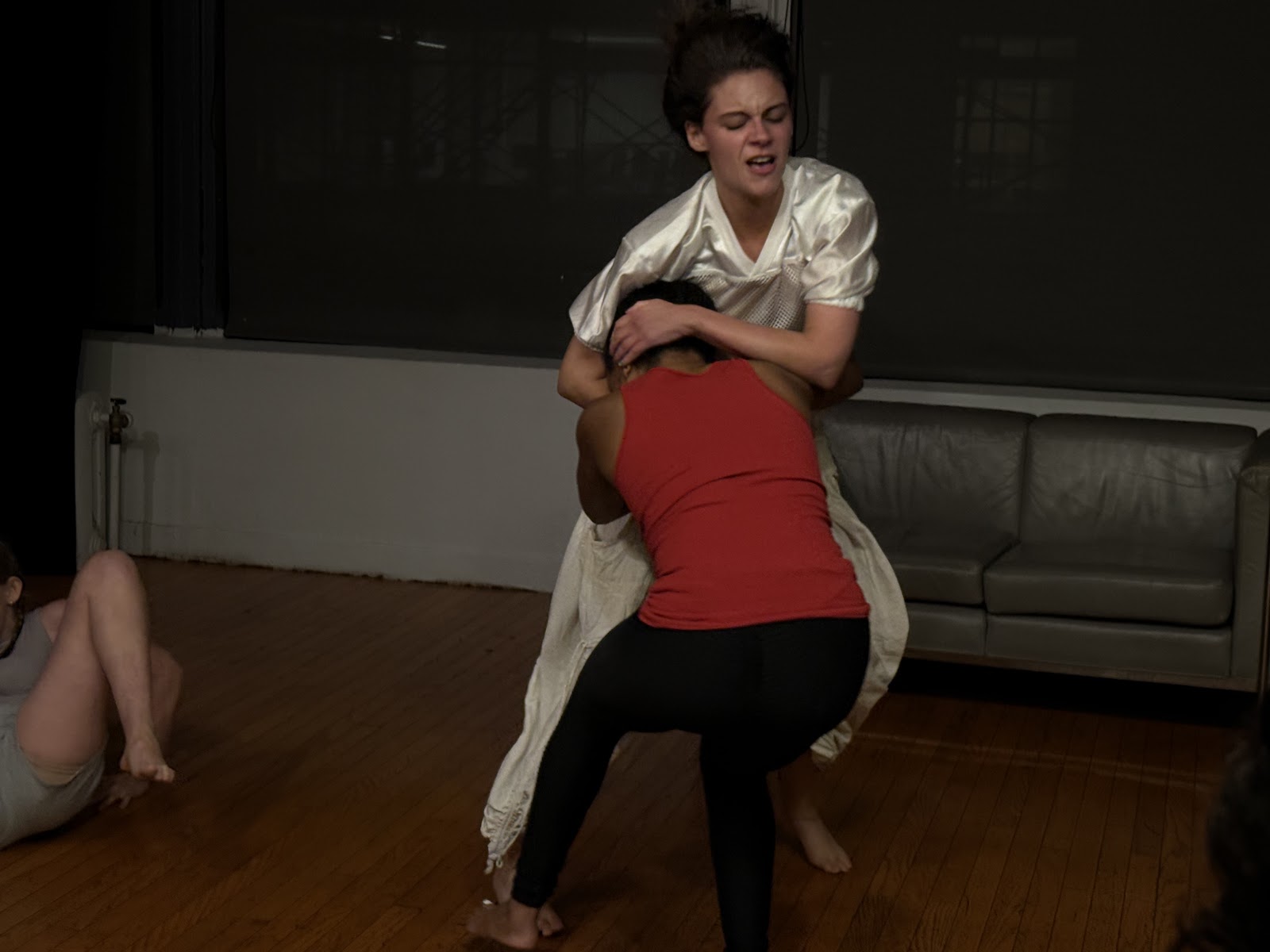
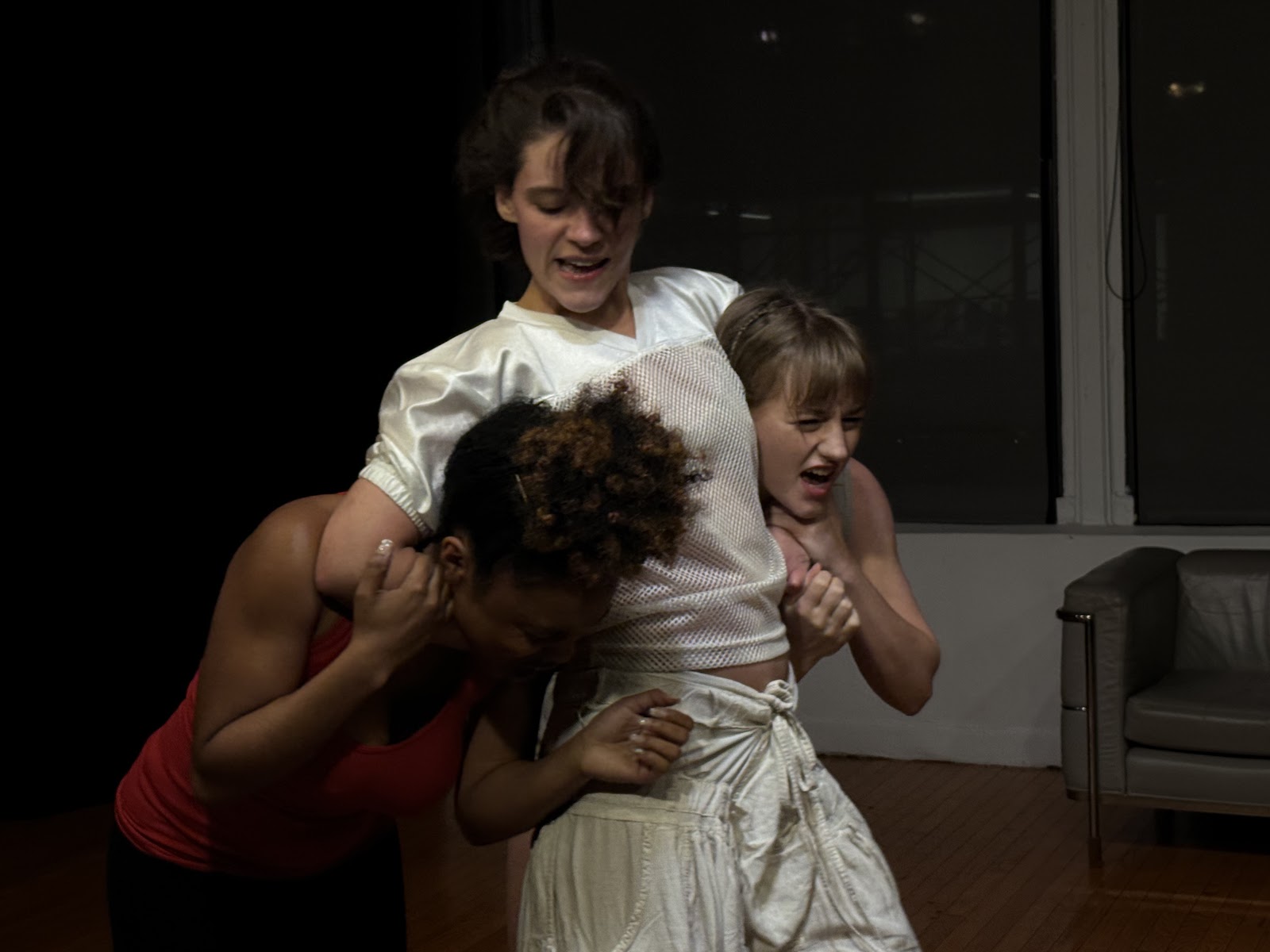
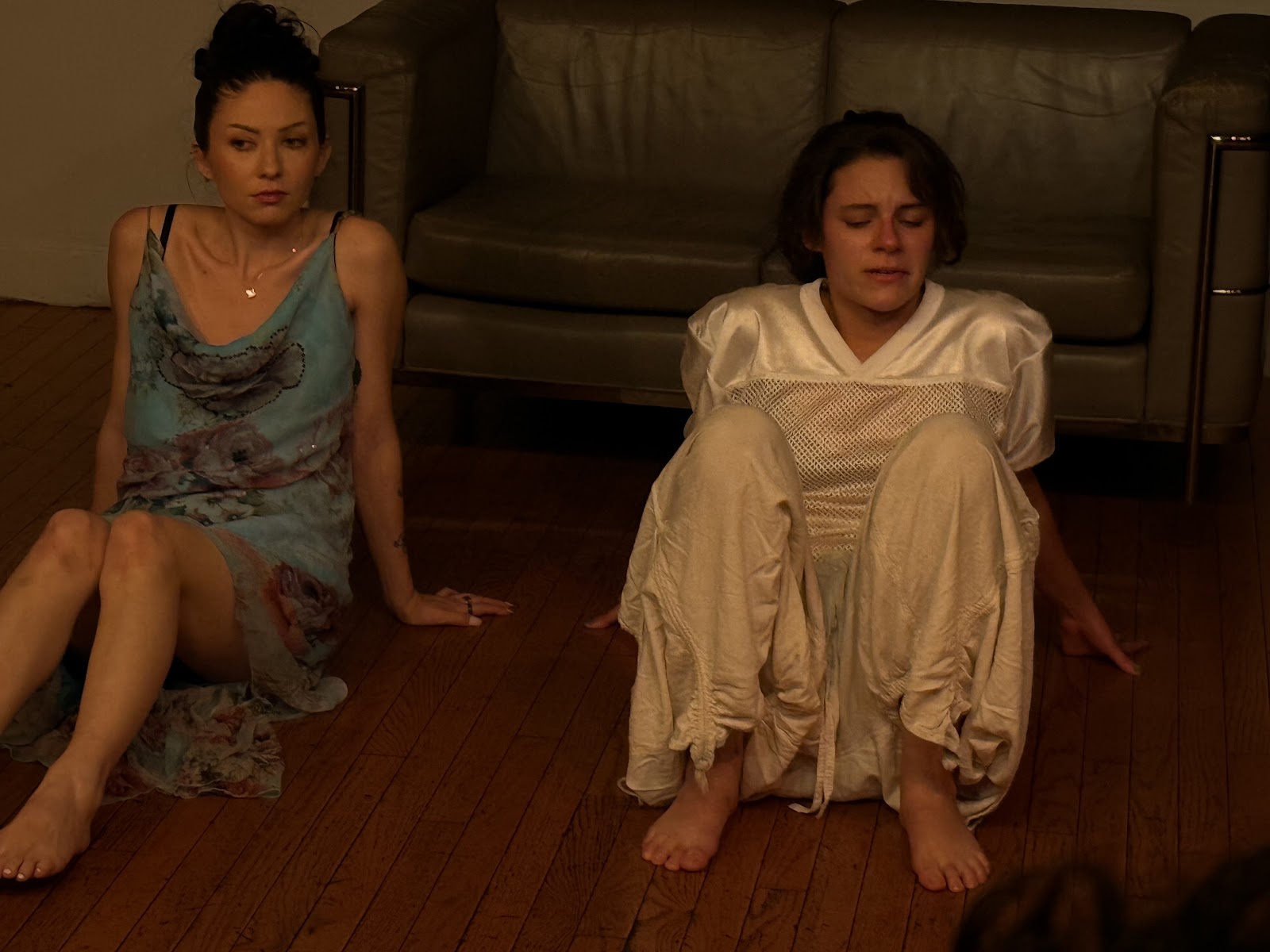
And then there is Addie Guidry. Holy shit. When she enters, it’s as if a different play has begun. She is not acting; this is presence. She sweats. Her nose reddens. Her bangs fall into her face. The lines are just the raw soundtrack to what the situation is doing to her voice, her body. Suited in a wrestling outfit for much of the play (while the rest of the cast move in various gradations between dressed and lingerie), she is somehow the most naked person on stage. The rest of the cast sometimes seem to be hiding behind their lines, still learning to risk that same ugliness for truth.
Guidry's Helen is a disclosure. She wrestles her sisters. She reconciles with her sister. When the two little sisters, in a scene of staggering strangeness, confess that they come at the sight of Helen's beauty, Guidry holds the air so completely that the entire play reads as a children's game that has slipped its moorings.
I kept thinking about something a dance teacher told me once, which is that the difference between a good student and a dancer is that the dancer is willing to be the ugliest person in the room for about forty-five seconds in order to be the most beautiful for the next ten. Guidry lives in those forty-five seconds. She permits herself to look stupid, to look winded, to look like a nineteen-year-old who has had an idea she can't yet articulate, which is of course what Helen is.
I don't know where this performance comes from (though all signs point to actor training at Adult Film). I don't know if it is reproducible. I would pay full price for a ticket, which at thirty-five dollars is a bargain compared with the Mets game audible through the floor.
Too long and sometimes too much
The play is also, let me be honest, too long and sometimes too much. It’s a writer’s play, full of intricate debates on power and trauma that can feel like a philosophy seminar. The production desperately needs more silence, more space for the relationships to breathe and for the dense lines to land.
Squibb is a maximalist, and a very funny one — the cattle-thieving subplot involving the twins Castor and Pollux, who lose Sparta's entire herd to a swamp-dweller from Messene in an eating contest, is a comic set piece worthy of early Stoppard — but his script is a torrent, dense and brilliant and occasionally punishing.
There is a scene in which Aithra and Leda discuss the metaphysics of melancholy versus rage ("Nothing grows from anger. It churns the fields and destroys the shoot. It is an endless circus of fear") that is one of the finest short dialogues I have heard in a theatre this year; there is also, immediately after it, another scene making a similar argument in slightly different vocabulary. The play would like to have both. The play, at present, has both. It needs neither.
There are relationships here I had to draw a diagram to track, which I take as a formal failure; my own note, uncharitable, reads, if I have to draw a diagram to keep track of everything then the relationships aren't clear enough in their scenes. On a second viewing I would probably forgive this, because the architecture is genuinely intricate (this is, after all, a play with four protagonists and eight suitors and an offstage dying king and a swan and a sea god) but on a first viewing it means that some of the political stakes are undercooked.
We should feel, in our body, what Clytemnestra will lose if her sister wins. We should feel what Penelope has already given up, and what Atalanta has sworn against. The ensemble, uneven on this preview night, sometimes left those stakes for the text to carry alone, and the text, however gorgeous, cannot carry them without ugliness, without the willingness to risk ugliness.
What I most want from this production, as it goes into its run, is silence. The script does not yet trust how much silence the ensemble, and its audience, can bear. There is a sequence late in the second act, after the oath has been sworn, in which the four women stand together and look at the war they have inadvertently invented in the course of trying to prevent one, and the current version of the production fills that moment with lines and lines, too many lines.
Cut the lines. Let them look. Let the audience sit with the cheering Mets fans downstairs for ten seconds and understand that this is the hinge where myth becomes history, where private desire is converted into public violence, where Helen's choice is sacralized and therefore killed. If the production trusts its silences, it will be devastating. On the night I saw it, it was merely remarkable, which is still, by any sane standard, more than you deserve from a Wednesday-night invited dress above a sports bar on West 30th Street.
The beginning of something
I want to say one more thing, which doesn't belong in a review, which is that I walked out of the New York Drama Department into a cold October night and down the stairs past the bespectacled producer who was now drinking one of the Modelos himself, and the Mets had either won or lost, and I did not know, and on the sidewalk I thought about the Yeats sonnet Squibb had used to open the play ("A sudden blow, the great wings beating still") and I thought about Guidry's face when she said I am Helen, and I thought about what Aithra tells Leda, which is that no one is lucky until she is dead.
I had the uncanny sense, as one does maybe twice a year in New York, of having seen the beginning of something. Squibb has written a play that is too long and too clever and too crowded and alive. Guidry is somebody. Liss is somebody. The company, placeholder name and all, is making work that nobody else in the city, at the moment, has the nerve to make.
Give them a month. Give them silence. Give them, if nothing else, a sign on the freight door. "The Suitors of Helen" is at the New York Drama Department, 247 West 30th Street, Suite 2F, through October 26th, Wednesdays through Saturdays, Mondays by exception, eight o'clock, thirty-five dollars, elevator, accessible restrooms, strong language, nudity, references to sexual violence, approximately two hours and ten minutes with no intermission. Four stars out of five, and the fifth withheld only because I think, on good evidence, that it is coming.
Reviewed by Aubrey Naur
The Suitors of Helen
A play exploring how Helen of Troy first married when she was still Helen of Sparta, set in Ancient Sparta a little over a decade before the Trojan War.
Written and Directed by Stephen Squibb Produced by Will Steinberger Associate Producer & Dramaturg Alleese Eldridge Fights and Intimacy Jose-Maria Aguila
Penelope Jessica Burbank Helen of Troy Addie Guidry Clytemnestra Laurel Williamson Aithra Raina Soman Leda Kaitlin Ruby Atalanta Irina Liss Timandra MaZariah Green Phoebe Madeline G. Miller Understudy Hadley Brown
Content notice Strong language, nudity, references to sexual violence Running time Approximately two hours and ten minutes with no intermission
Dates October 7 – October 26, 2026 Schedule Mondays and Wednesdays through Saturdays at 8:00 PM (Doors at 7:30 PM) Price $35.00 general admission (limit 6 per order)
Venue New York Drama Department 247 West 30th Street, Ste. 2F, New York, NY 10001


%402x.svg)



.webp)


