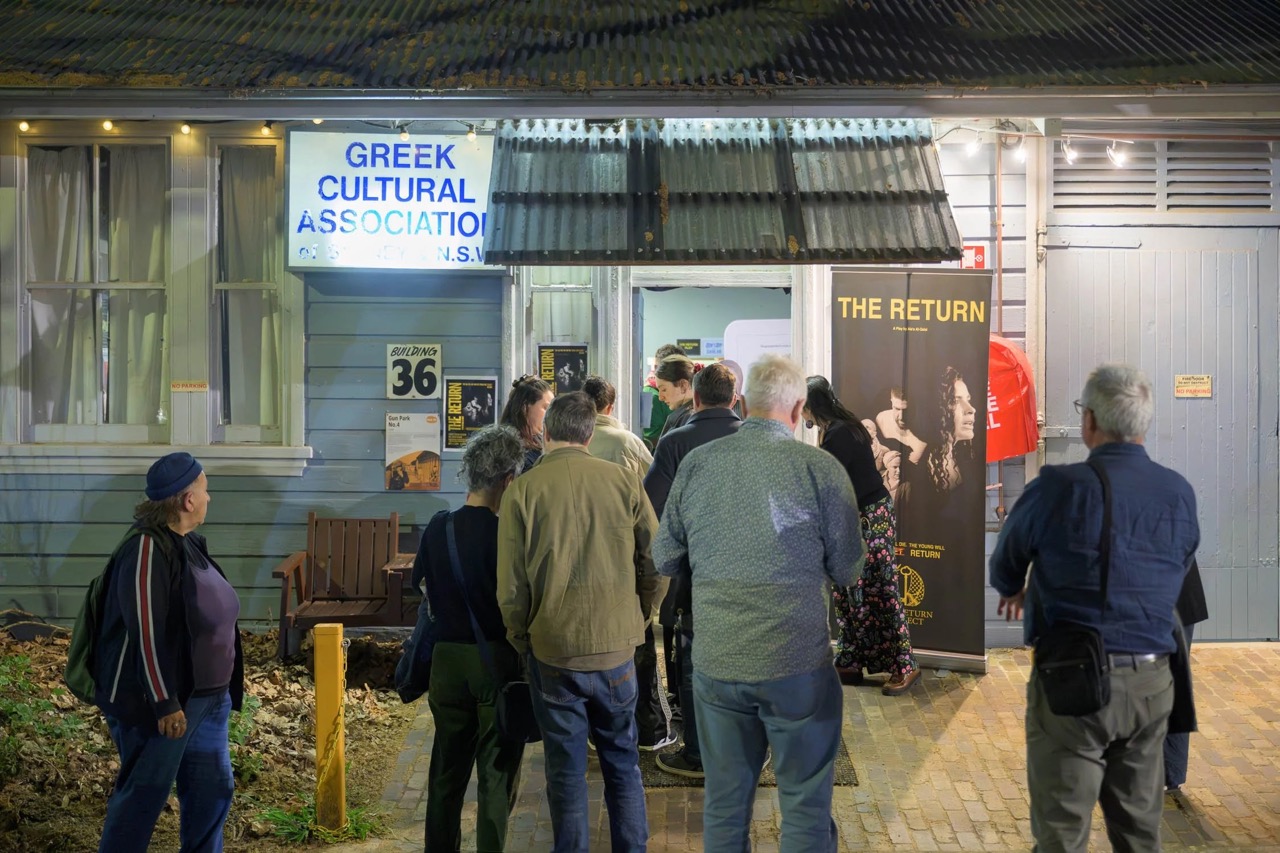
In The Return, Palestinian‑Jordanian writer‑director Ala'a Al Qaisi stages a father waiting beneath the clouds for his martyred daughters to descend. The play ran 1–3 September at The Greek Theatre at Addi Road as part of Sydney Fringe, and tours to Melbourne and regional Victoria from 15–22 September.
Waiting for the Clouds
Ala'a Al Qaisi on The Return, magical realism, and making art in the middle of a livestreamed genocide.
In The Return, Palestinian‑Jordanian writer, director and performer Ala'a Al Qaisi stages Marwan, a father in Gaza who sits beneath the clouds waiting for his martyred daughters to descend. The play ran 1–3 September at The Greek Theatre at Addi Road as part of Sydney Fringe, and tours to Melbourne and regional Victoria from 15–22 September.
Tour dates
Tue 15 Sep 2026, 6:30pm — Brunswick Mechanics Institute, Melbourne Wed 16 Sep 2026, 6:30pm — Brunswick Mechanics Institute, Melbourne Thu 17 Sep 2026, 6:30pm — Brunswick Mechanics Institute, Melbourne Fri 18 Sep 2026, 6:30pm — Ballarat Performing Arts Centre Sat 19 Sep 2026, 6:30pm — Chandler Community Centre, Keysborough Sun 20 Sep 2026, 6:30pm — Brunswick Mechanics Institute, Melbourne Tue 22 Sep 2026, 6:30pm — Phee Broadway Theatre, Castlemaine
Ala'a Al Qaisi began writing The Return after watching a video of Marwan Abu Samra, a Palestinian father who lost one daughter, Rozan, in an Israeli strike, and then lost her sister Nagham (a karate champion who represented Palestine internationally) days after finally reaching a hospital in Egypt. Al Qaisi, a Sydney‑trained filmmaker who has since moved between projects as documentarian, playwright, director and performer, travelled to Egypt to meet Marwan, kept in touch, and slowly turned his grief into a script into the strange work that is the Return, more dream eschatology than reportage.
The play uses magical realism to deal not just with the brute realities of the war, but with the deeply human and spiritual dimensions of catastrophe.
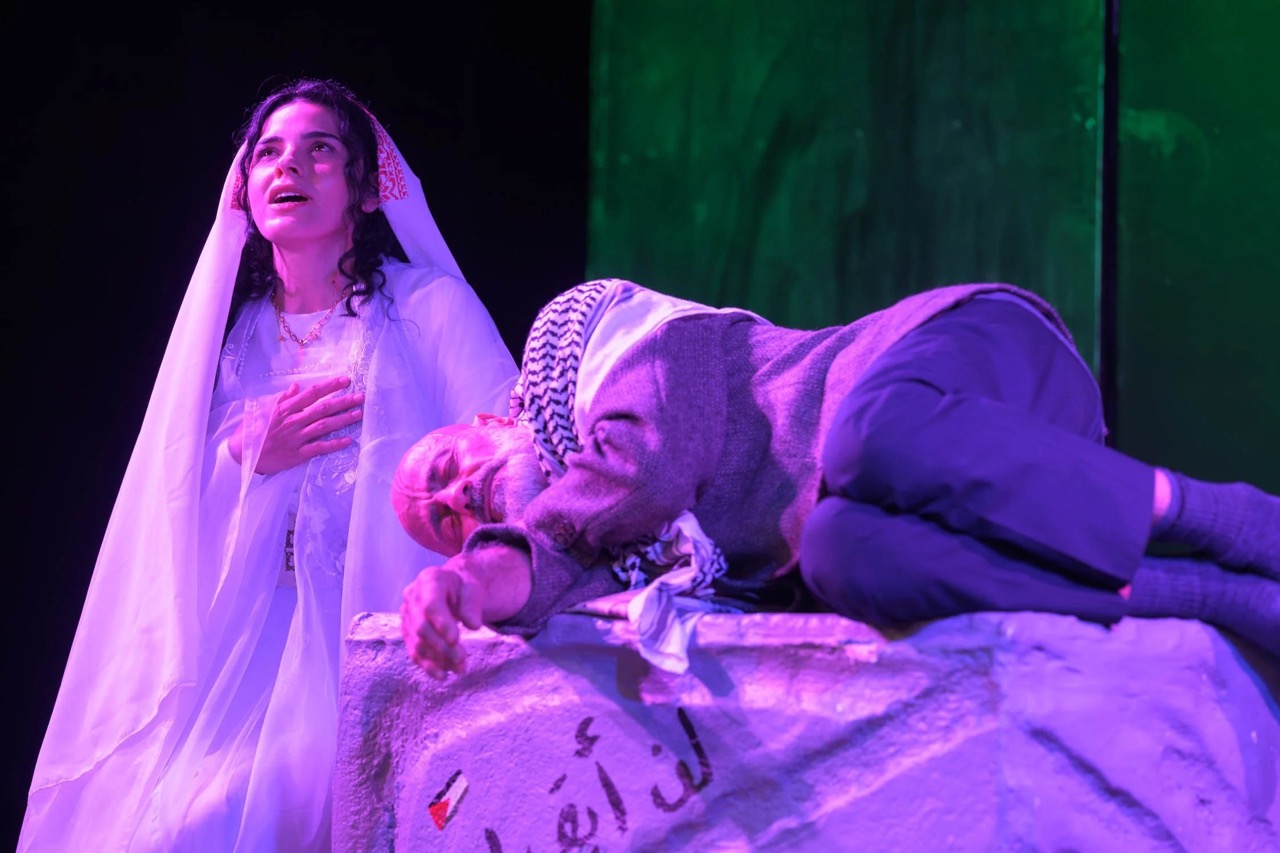
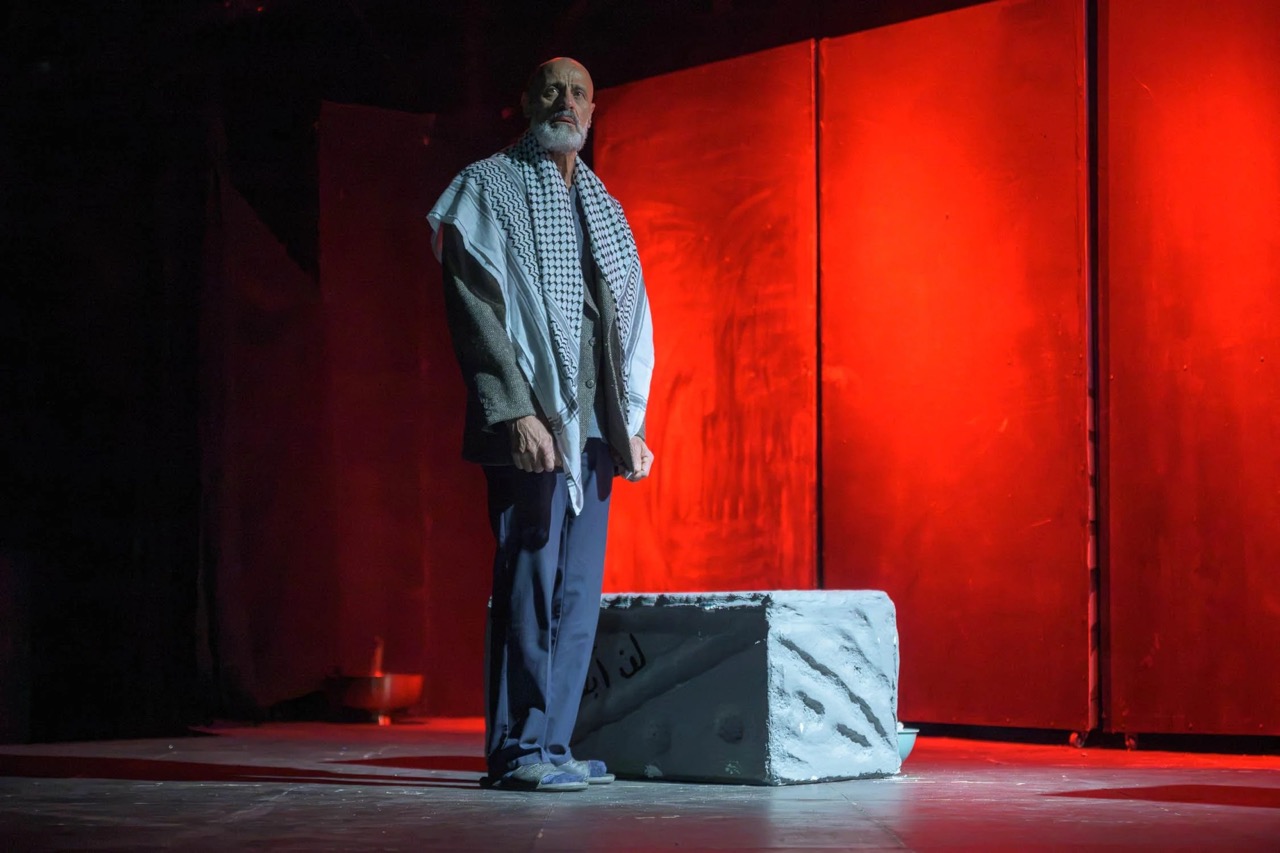
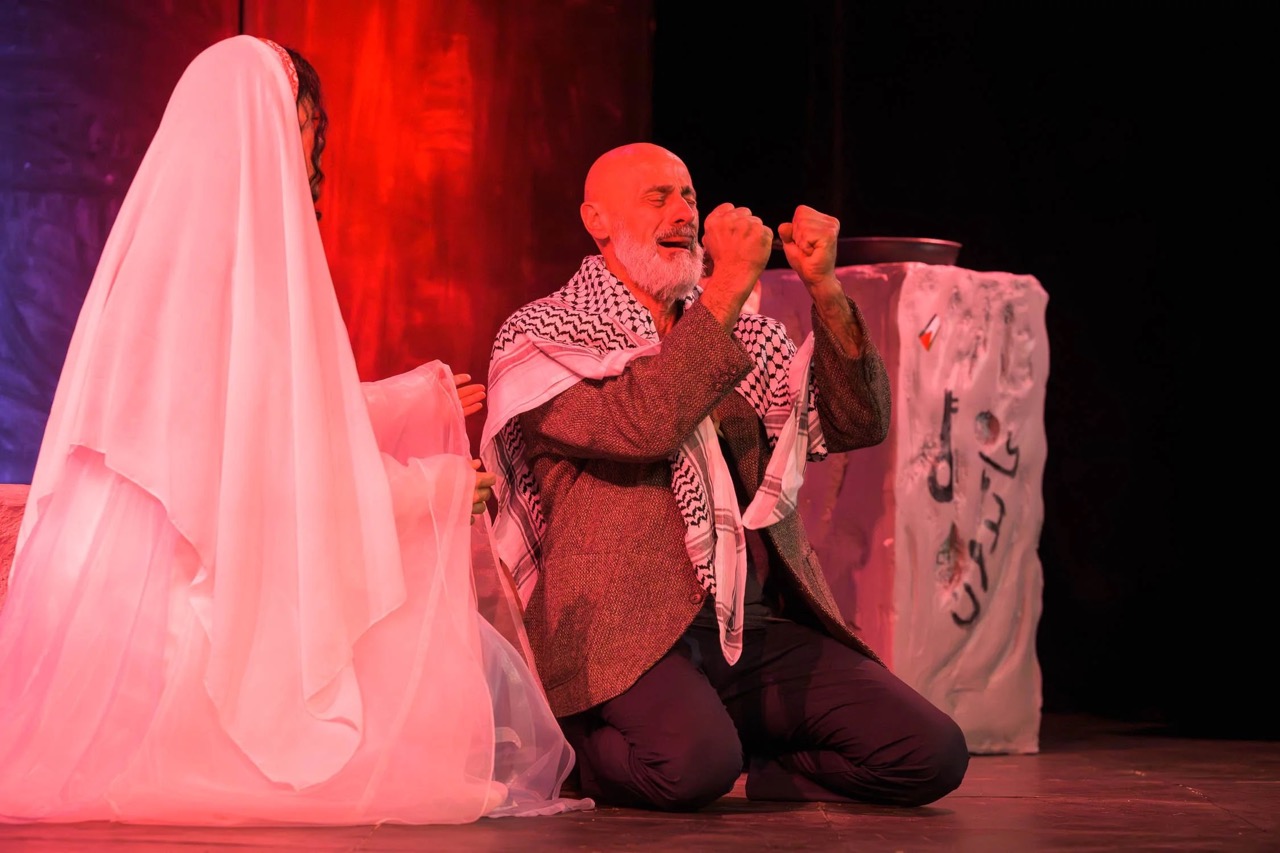
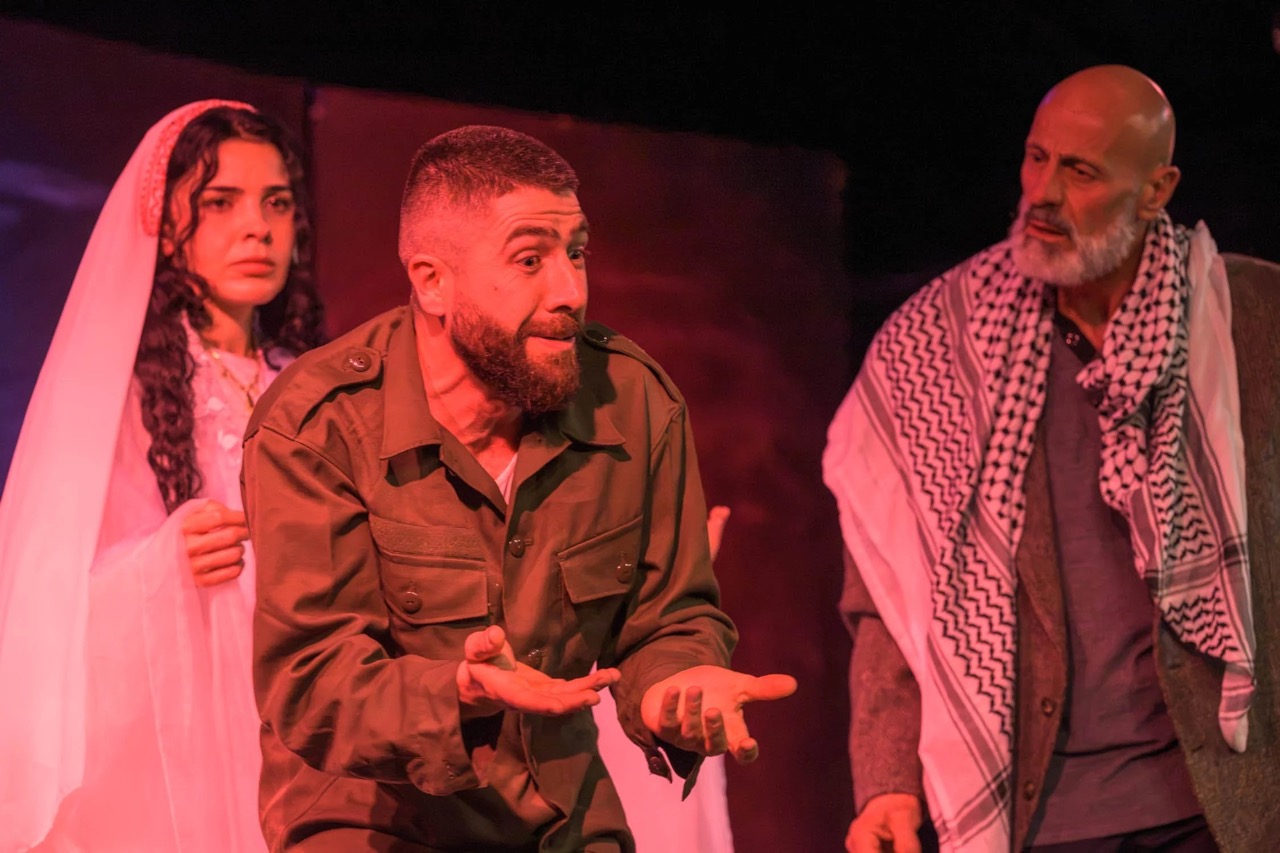
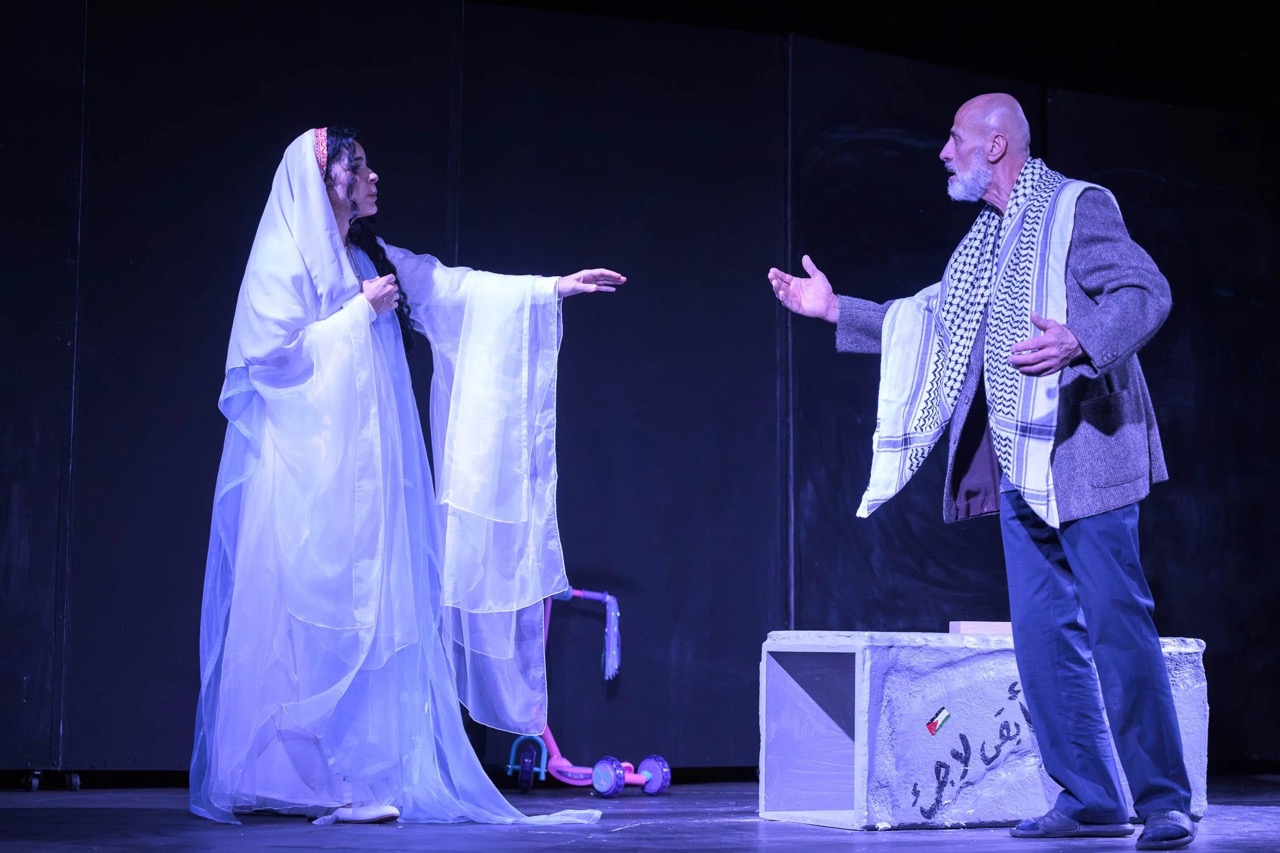
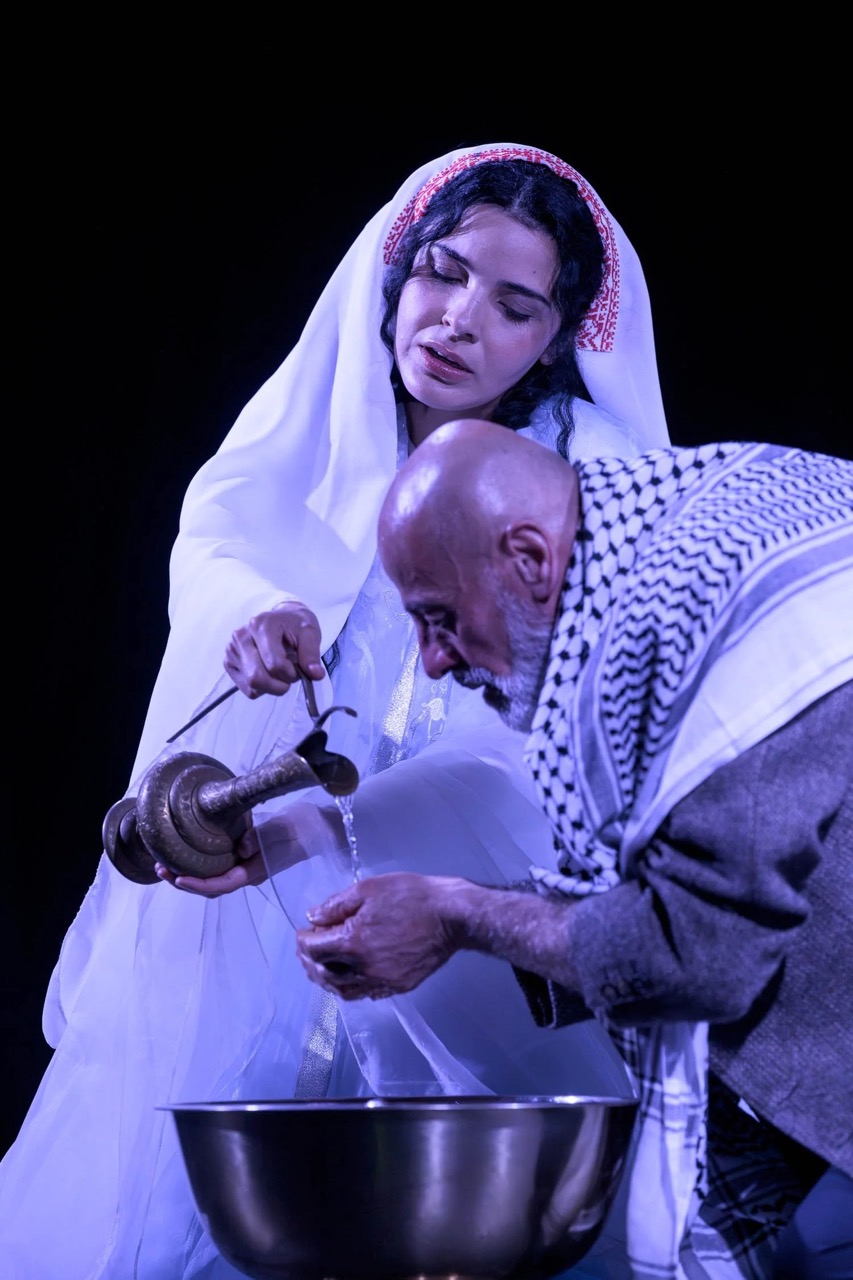
In the play, the father (Marwan, played by Rachid Taki), believes God has issued a decree that all the martyrs are returning through the clouds, and so he waits for his daughters. And despite those who believe that he has lost his mind, his daughter returns. Al Qaisi plays the martyred daughter; Mohammed El Kesm plays both a Palestinian man and, later, the Israeli soldier who killed her.
The confrontation between Marwan and the killer is the closing scene of the Iliad transposed into 2026 Gaza: Priam in Achilles' tent, the grieving father in the presence of the man who killed his child (although it's important to note that Rozan was killed in her home, not in combat.)
It is a small production which ran to almost full houses at The Greek Theatre at Addi Road, and, as Al Qaisi points out, received effectively no coverage from the Sydney arts press.
This conversation has been edited for length and clarity.
The Sydney Season
Why a play, and not the documentary you'd already started?
The documentary is still coming. But I felt I needed to speak directly to people. As a human being, I wanted to bring this reality closer, through live acting, in a room. Theatre is such an intimate space. You see people being vulnerable in front of you. I wish I'd started with theatre a long time ago — every performance is a different energy. Every night the audience is someone new.
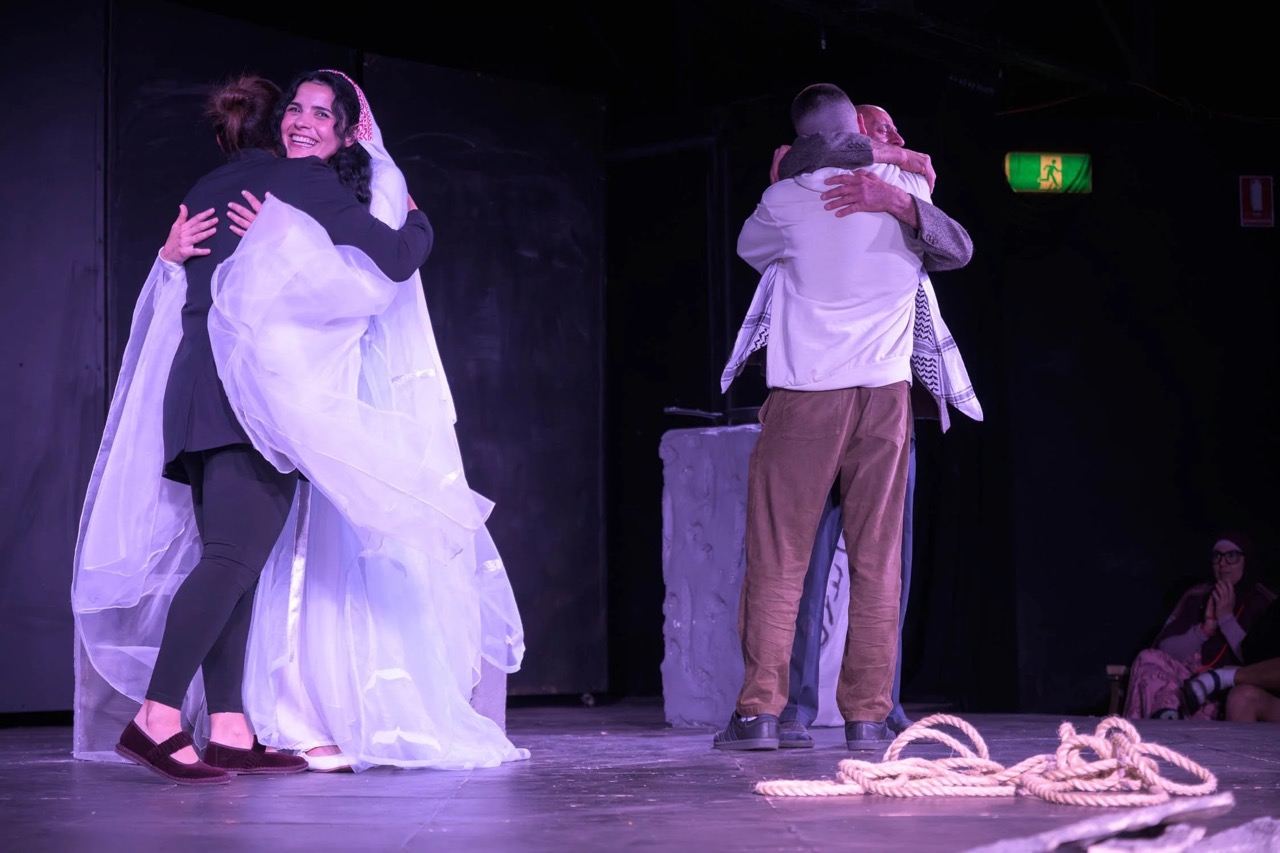
And the cast — we're Palestinian, Jordanian, Lebanese, Syrian. All of us are affected by the war, and we all wanted to do something. Theatre gave us a space to communicate the grief and the helplessness together, even though it's exhausting, emotionally charging. When people come and hug you and cry with you afterwards and say you opened their eyes, it's worth every minute.
Tell me about the origin. Who is Marwan?
Marwan Abu Samra is a Palestinian father from Gaza. His daughter Rozan was killed by an Israeli strike on a building where families were sheltering. At that moment he was in a hospital in Gaza beside his second daughter, Nagham — a famous karate champion from Gaza who represented Palestine internationally.
Nagham was in a coma, her leg amputated, fractures in her head. Marwan was pleading with humanitarian organisations, with the whole world, to help him save her — she had a chance to survive. But the Israelis wouldn't let basic medical equipment or medications into Gaza, let alone food, water, electricity. He got her to Egypt eventually. She survived a few more days, then succumbed to her wounds.
I looked him up on social media and told him I wanted to tell his story. He trusted me. I went to Egypt (he was there after burying Nagham) and I started making a documentary. But I felt I also needed to express it in writing. He let me inside his grief. He gave me access. And the script started from that: an attempt to release the pain I was carrying for him, and for Gaza.
Photo: John Janson‑Moore
Meditation, then Script
Once you got back to Sydney, what was the writing process actually like? What did the first days look like?
I would start with meditating. Long hours. I really wanted to make sense of a reality that doesn't make any sense. We're not meant to witness this, to watch it on our phones, livestreamed, twenty‑four hours a day.
I would sit and ask God for answers. What should we do? How can we stop this? Why is the whole world helpless? Everyone with a phone on this earth has seen images from Gaza that no one should ever be prepared to see, and the social media platforms are letting us see them because there is a plan behind it: to make the world afraid to speak.
So I created a whole new reality, to try to look at us as humans from the outside. How could we, in 2023, let this happen for that many years? We thought we had international law. We thought we were more civilised. We thought we had human rights. What we've seen in Gaza is the opposite. It shows you how monstrous a human can be — and I refuse to believe that's what we are. I still believe in goodness. We're born to be good to one another, not to kill.
Photo: John Janson‑Moore
The Ensemble
The cast is drawn from across the region. What has making this together been like, compared to other Australian theatre you've worked on?
Very different. We're not making theatre for theatre, or to build careers. This project is close to our heart. All of us were trying to use art as a vehicle for the pain. It's not something I wanted to write — it's something I had to write, and I had to act, and I had to find people who shared that feeling. We're also making a documentary about the ensemble, our healing journey through the work: recording rehearsals, discussions, the days we doubted whether any of this was meaningful at all.
Doubt in what sense?
Watching a livestream genocide and then trying to make art — sometimes you need it, and at the same time you doubt it. We felt helpless. Art at least helped us go through the pain and bring more people to the stories. We brought in mental health specialists, meditation practitioners, exercises to look after us. It grounded us. It helped us cling to the meaning — that we were actually doing something — which helps with the helplessness. But the reality was cruel for everyone. Nothing we made stopped the genocide or saved anyone. What I hope for is soft resistance: that more people care, more people think, more people stop pretending it's far away. Australia is complicit. Australia is aiding the genocide in Gaza. Whatever happens there could happen here, and it did happen here, to the Indigenous people of this land.
Photo: John Janson‑Moore
Rumi, Darwish, and a Room Full of Confusion
Magical realism is a big tent. Are you writing inside a specific tradition — Rumi, ta'ziyeh, Ghassan Kanafani's Return to Haifa?
Rumi's poetry has influenced me a lot. Sufism in general. All that Sufi poetry — it calms me, it takes me to a place where the divisions between us feel unreal, where we can reach that divine love by really reflecting inward and finding God within ourselves. Mahmoud Darwish is always in my mind when I want to enter that state of writing. But The Return is a bit strange — it isn't quite like anything I've read. It has its own identity. I love magical realism because it lets me make what's normal to people strange again. And really, it was a healing journey — maybe me trying to create a whole new reality, to escape a reality I couldn't do anything about. You can only know what I mean when you come and see it. Everyone is confused: is it dream? Is it real? Where is this happening? I keep playing on that.
Photo: John Janson‑Moore
The Israeli Soldier
Without spoilers: is there a moment you've watched land differently each night?
There's always a very interesting discussion around the Israeli soldier character. Many of our audience are pro‑Palestine; they know what Israeli soldiers have shown of themselves, how they've boasted about their crimes. In the play I dig into that soldier's psyche, his PTSD, his denial. And people ask: how come you humanise an Israeli soldier who has committed these crimes? They boast about them. They don't hide — they actually tell you, "we kill babies, and we don't care."
So me, as a Palestinian, bringing an Israeli soldier onto the stage and speaking about his mental health, always provokes that conversation. Which I find healthy. I want people to think, to see both sides, to go home and reflect. If my play can live with you for a few days, that's what I want. After every show we open the mic and discuss. People feel part of it.
Mohammed El Kesm plays both the Palestinian man in the opening scene and, later, the Israeli soldier. What does the doubling do?
First of all, we don't have a budget, so we minimise cost. But for Mohammed in particular — he's carrying most of the play on his shoulders. He opens with the Palestinian man in a very powerful introductory scene, and then he returns as a Zionist soldier who commits those crimes and suffers the PTSD. Two contradictory characters in a very short time. It takes a big toll on him. Everyone has been commending his talent. We're so lucky to have him.
Directing Yourself
You wrote it, you're directing it, and you're in it. How do you find directing yourself?
Challenging. Really tough. It's hard to just play the actress and let go of the director's hat. But this one is close to my heart. I play a Palestinian martyr, and I felt I had to give it to someone who truly knew what was happening and truly cared. We have some dramaturgical assistance now — people who can come and watch and tell me how the acting reads from outside. The production itself is very small. We don't have big props or sets. We rely on the strength of the story, on dialogue, on character. A minimalistic approach, and it's working so well. When I'm on, I just try to be present, to feel the presence of Rozan and Nagham and all those martyrs who were gone for no reason, and hope I can do them some kind of justice.
Photo: John Janson‑Moore
Working Without a Net
The show has now had multiple Sydney seasons and no arts‑press review that I can find. What has your experience of the media been?
I feel like I was abandoned by the media. I sent a media release to every journalist I could find — ABC, SBS, everyone. Almost 300 emails. I got one interview, from SBS Arabic. In Melbourne, 3CR radio had an interview with me. That's it. They don't want to shed light on subjects like this. Even my Meta ads keep getting rejected — they go live for a couple of days, and then once they start picking up, Meta stops them, after charging me around $82 a day. It feels like fighting a huge system that doesn't want your voice to be heard. Which only makes me more determined.
Have you tried grants?
Many applications. Nothing succeeded. Unfortunately, we live in a place where the government refuses to take action even when it comes to its own people. Look at what happened to Zomi Frankcom, an Australian aid worker murdered by the Zionist entity while helping people survive the genocide. Two years of "investigation" — the criminal investigating themselves — and they refused to even issue an apology. When Penny Wong was asked, she said we can't destroy our relationship with Israel. They wouldn't expel the ambassador. They wouldn't do anything, and this was an Australian who was killed. So I have no hope of getting funding.
Photo: John Janson‑Moore
Faith, Unapologetically
A lot of secular audiences have lost theatre as ritual. Do you feel the making of this was a spiritual process, and is it a spiritual process for the audience?
The audience is very diverse — all sorts of backgrounds. The play touches on spiritual and religious meaning, but very authentically to Palestinian culture: how they carry faith, how they deal with grief. That's very different from the Western approach, which is what makes it interesting. I've been told, more than once, that people like that I talk about faith unapologetically — which is unusual for a Western audience who tend to be skeptical of religion. But I want them to feel something different from a Palestinian perspective: how faith was the main element that kept these people going, where others would have given up. Most of our audience are non‑believers or atheists, and they've loved how I've touched on Islamic faith, because it's based on a true story and I try to be as authentic as I can.
There's a Sufi mystical thread too, which isn't universal but draws on something universal.
Absolutely. The idea of conscience, of that innate gut feeling — everyone can relate to it. Whether you call it God, or the universe, or nothing at all, it doesn't matter. I tried my best to make people feel the same regardless of their faith, because I was digging into the psyche and the conscience of every human.
And how has the play landed with Muslim, Palestinian and Arab audiences?
Most of them cried. They said it felt healing. They laughed, they cried, they felt out of time, out of space. Sometimes you could hear people holding their breath. I hope it was a healing crying — some came and said "you made us cry," but they felt so relieved. I'm not trying to bring another sad story. I'm trying to make people think, reflect, and use their own power to change what's happening. To stop it.
Photo: John Janson‑Moore
The Return — written, directed and performed by Ala'a Al Qaisi. The Greek Theatre at Addi Road, 1–3 September 2026, as part of Sydney Fringe Festival. Touring to Melbourne and regional Victoria, 15–22 September 2026.
Tour dates
Tue 15 Sep 2026, 6:30pm — Brunswick Mechanics Institute, Melbourne Wed 16 Sep 2026, 6:30pm — Brunswick Mechanics Institute, Melbourne Thu 17 Sep 2026, 6:30pm — Brunswick Mechanics Institute, Melbourne Fri 18 Sep 2026, 6:30pm — Ballarat Performing Arts Centre Sat 19 Sep 2026, 6:30pm — Chandler Community Centre, Keysborough Sun 20 Sep 2026, 6:30pm — Brunswick Mechanics Institute, Melbourne Tue 22 Sep 2026, 6:30pm — Phee Broadway Theatre, Castlemaine


%402x.svg)

.webp)


