Antigone Review — Gaius Gracchus Society at Chau Chak Wing Museum, University of Sydney 2026
The Gaius Gracchus Society staged Sophocles' Antigone at the Chau Chak Wing Museum, University of Sydney, on 1–2 May 2026. Anastasia Dale finds a production torn between contemporary Australian delivery and classical gravitas — one whose chorus, music, and Madeleine Charters' spellbinding Tiresias point to the show it could have been.
Gaius Gracchus' Antigone Reviewed
A half-modernised return to tradition, saved by its chorus and its soothsayer
The Gaius Gracchus Society staged Sophocles' Antigone at the Chau Chak Wing Museum, University of Sydney, on 1–2 May 2026. Anastasia Dale finds a production torn between contemporary Australian delivery and classical gravitas — one whose chorus, music, and Madeleine Charters' spellbinding Tiresias point to the show it could have been.
Reviewed by Anastasia Dale.
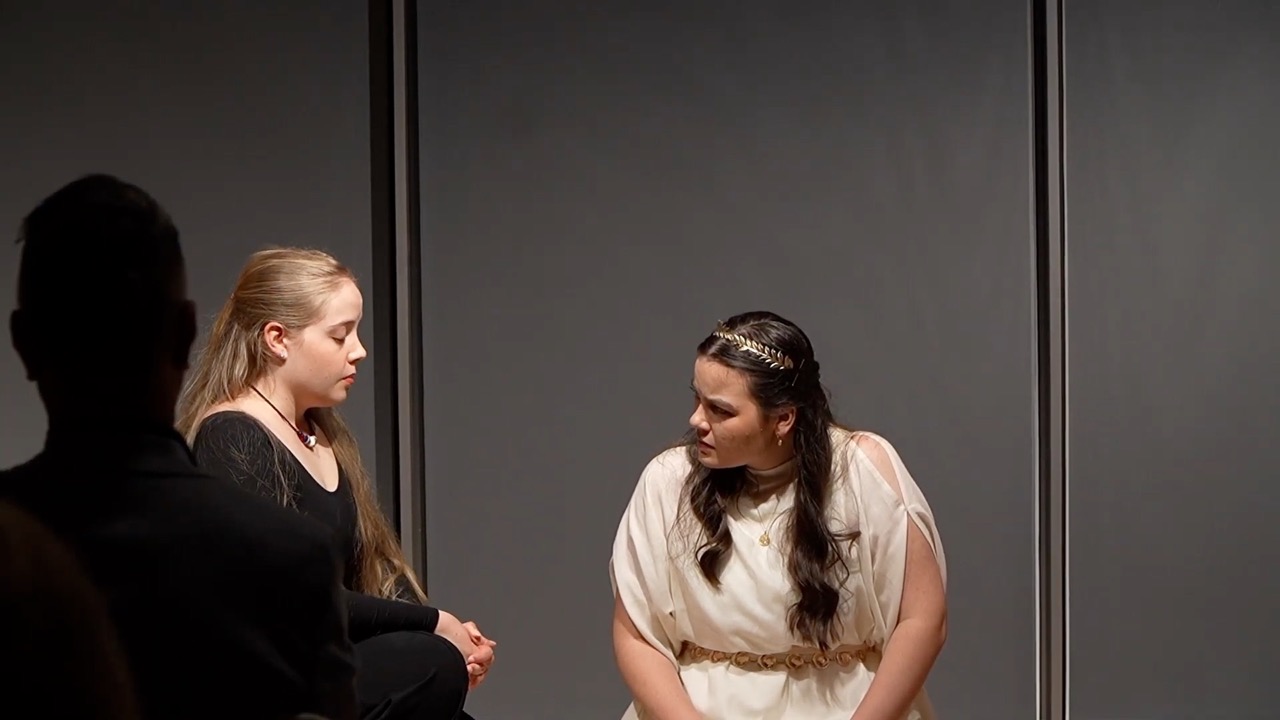
Frame capture from video by David Parada
The Gaius Gracchus Society, a society for University of Sydney students interested in ancient history and ancient languages, staged a production of Antigone at the Chau Chak Wing Museum in early May. The museum is full of ancient artifacts, and going into the production I assumed the show would be held downstairs, with the fragments of ancient buildings and the crystallised amphora that spent years in the sea before being displayed in its museum case. I envisioned a Shakespeare in the Park-esque production, perhaps even done in the round or at different locations across the Museum.
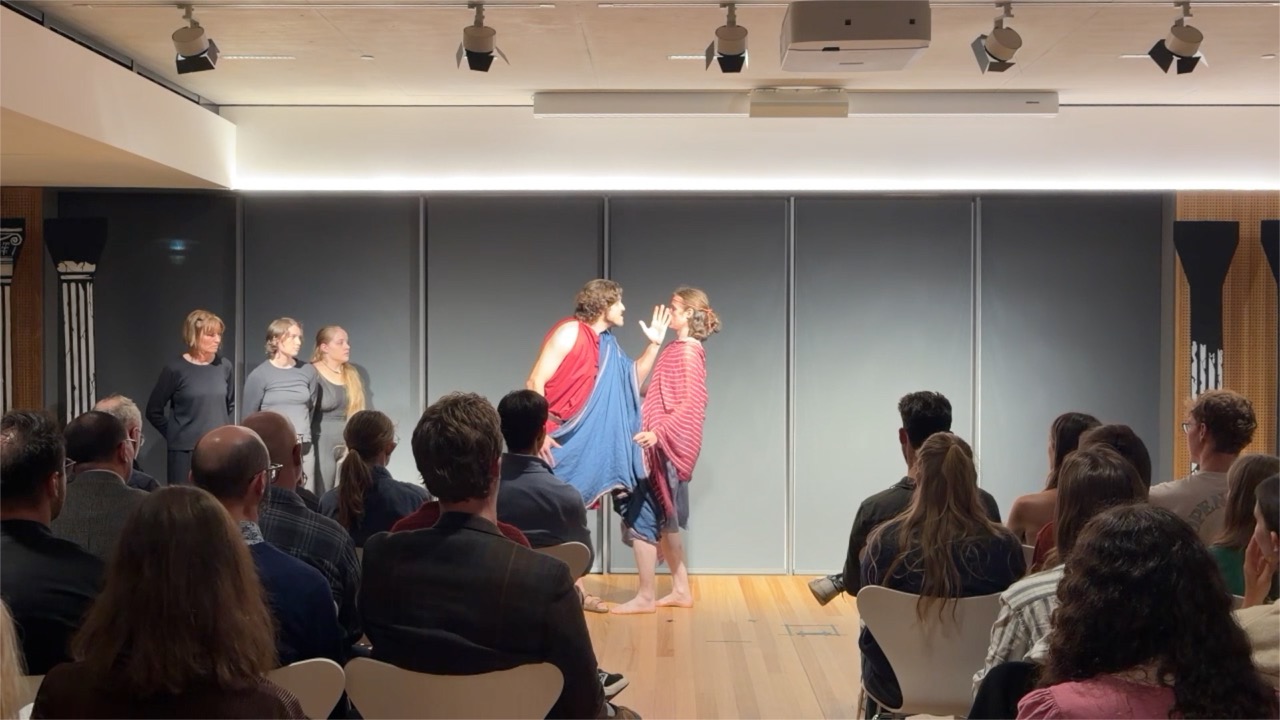
Instead the production was in a small conference room, with shades drawn and bright lights on the performers and audience. A haunting soundscape began, as we watched the shadows of the trees' leaves undulate through the blinds. A stage is not everything, and neither is staging. However, the production likely would have benefited from an elevated stage a little further from the audience, necessitating proper theatrical voice projection. An open-air production also tends to demand this from its performers. As it was, the characters spoke in their regular tone of voice, with unmetered Australian accents. It may have been better approached similarly to Shakespeare, with a considered meter, rhythm, and tone inherent in the delivery of each line.
Chorus and music
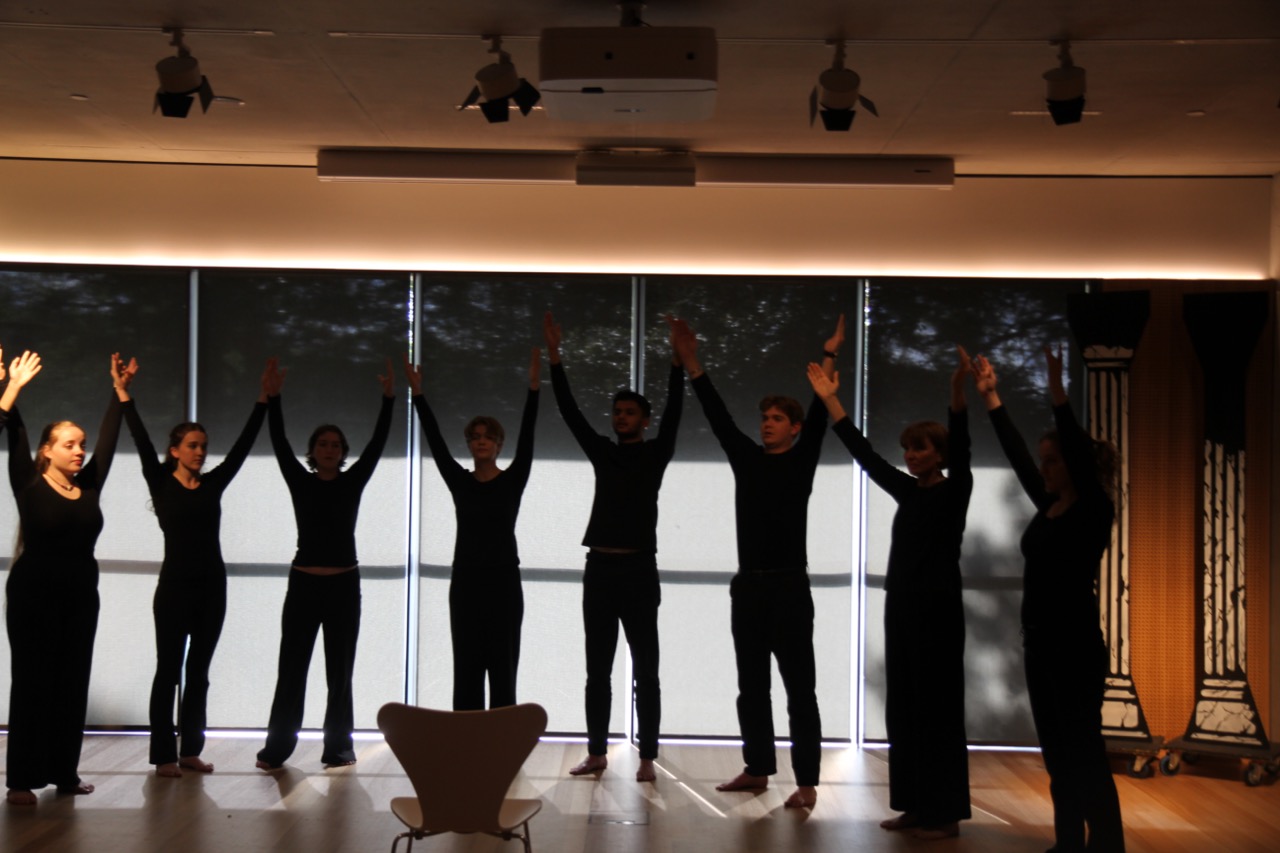
The chorus and the music was a highlight of Gaius Gracchus' Antigone, certainly making the production feel more connected to the classic tradition, in contrast with the more contemporary acting style taken up by the performers. At times the music evoked genuine emotion and a sense of connection to ancient history. The choreography and blocking of the chorus added a dynamic and unique element to the show. The moments of song were often strikingly beautiful, particularly 'Parados' which was performed in Greek.
Perhaps a slightly weak directorial decision was to have the chorus onstage silently reacting to some scenes and monologues. The actors' monologues would have been stronger if simply addressed to the audience rather than the in-story audience of the chorus.
Photo by Xavier Swann
The cast
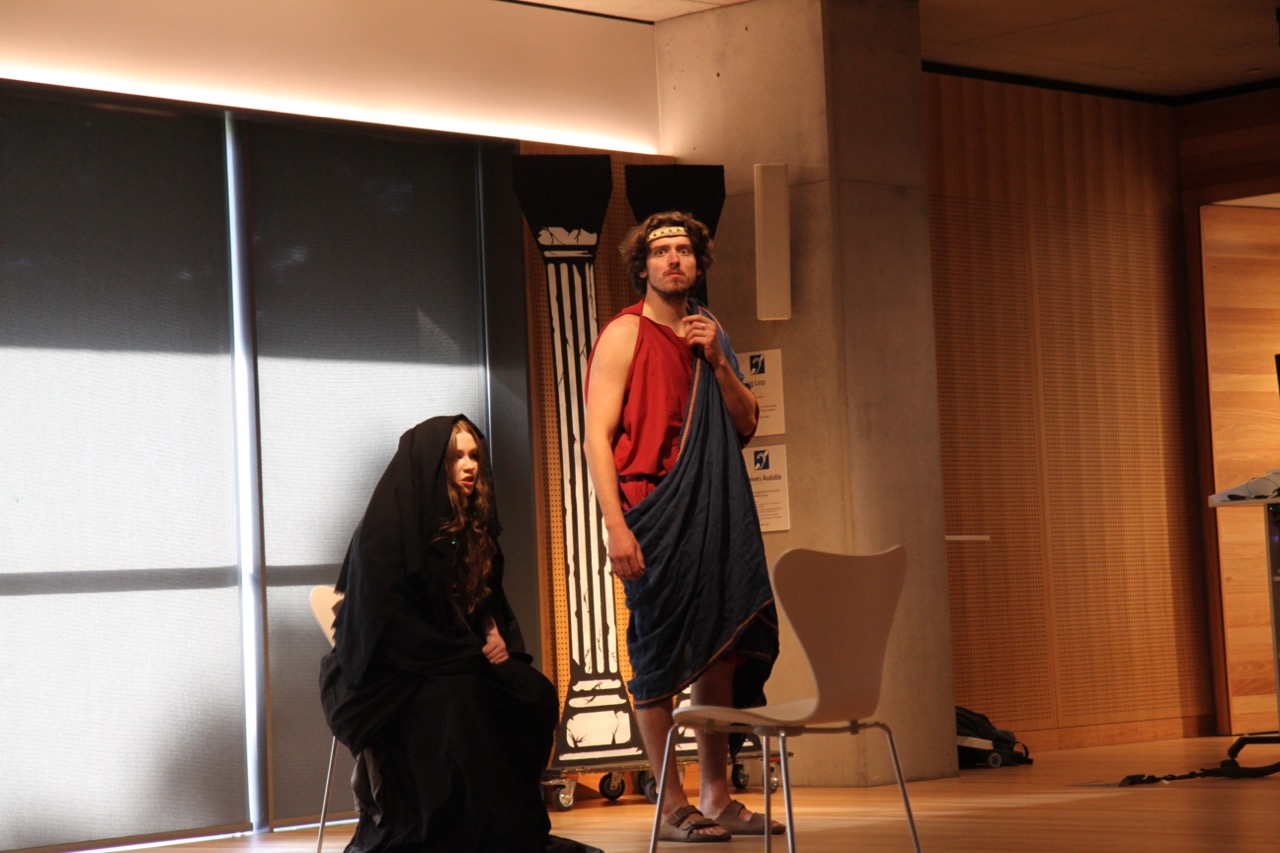
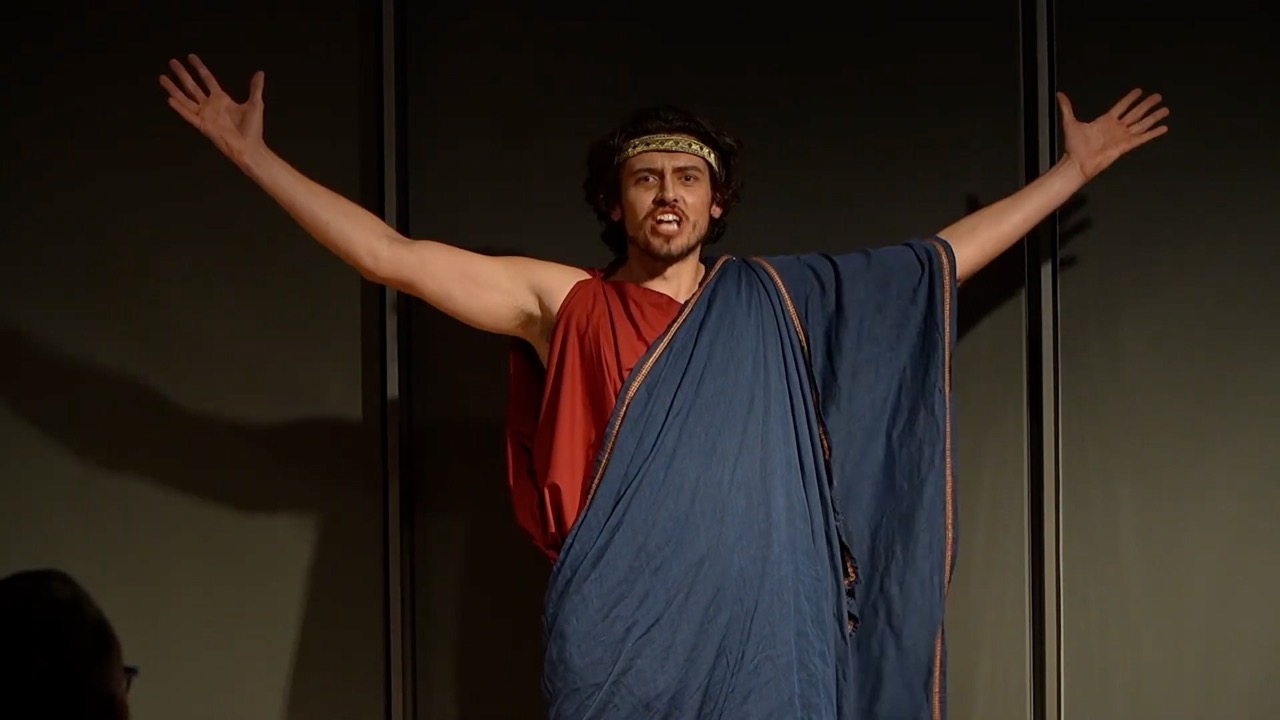
Duncan Eddy-Soros, playing Creon, was good in quieter moments, but the numerous moments of enraged shouting seemed slightly disconnected from any real emotions of anger or frustration. Eddy-Soros, rather, appeared to be responding to the knowledge that this was a line where the actor was to shout. Isabelle Le Map as Antigone provided a serviceable portrayal where high-strung emotions took precedence. Le Map's performance would likely have been much more impactful had the director reigned in the intensity.
Nicholas Disher, who played the Watchman, stood out with an explosive but measured performance. His scenes drew the first laughs of the show, and he displayed some of the best timing and restraint of the cast.
Photo by Xavier Swann
Finlay Mitchell's performance as Haemon was a strong point of the production, with the actor displaying a deep understanding of his lines and their literal, emotional, and broader meanings within the play. Mitchell appeared to feel all the complex emotions and nuanced motivations of his character, which is not always the case even in professional productions of classic works. Mitchell's acting suited the staging's complex mixture of modern and classic, with a contemporary acting style deployed sparingly when needed.
Photo by Xavier Swann
Tiresias
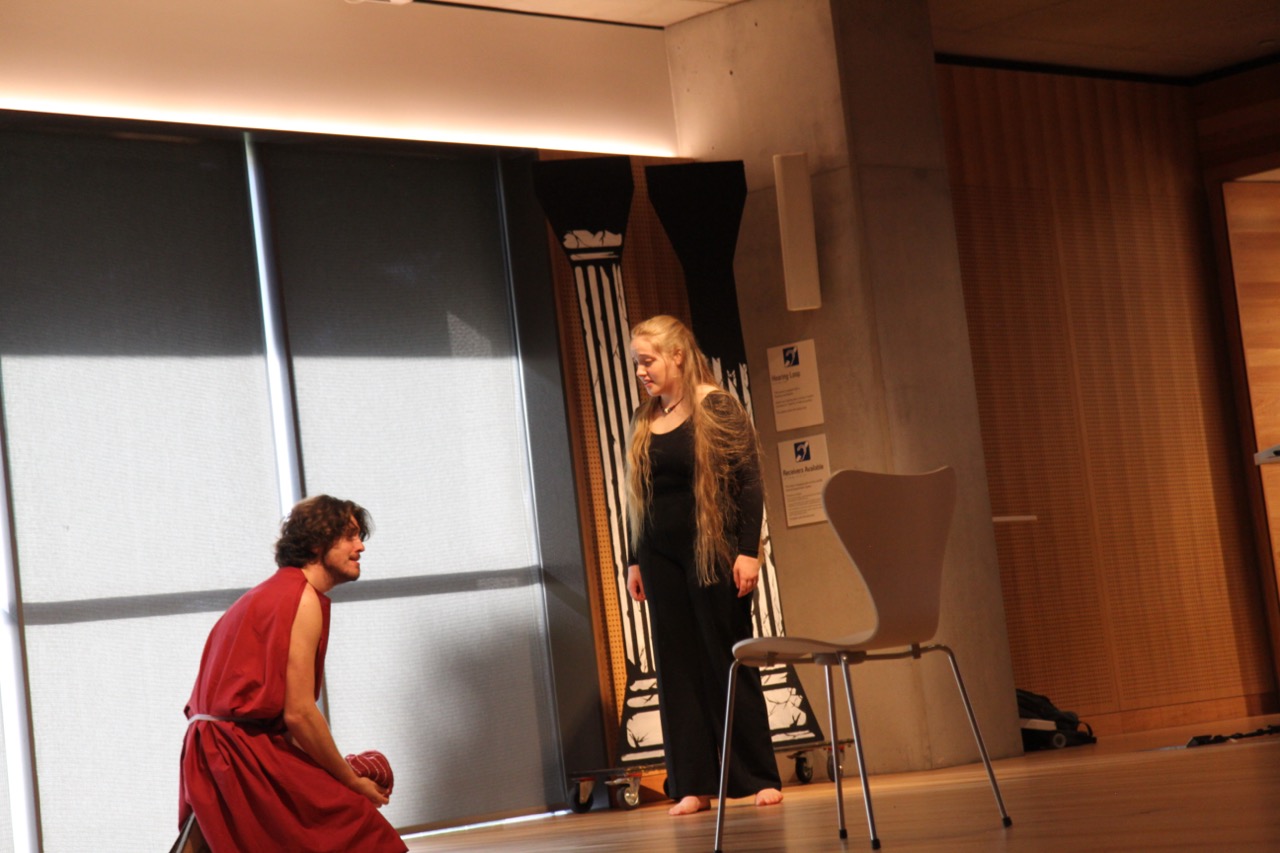
Madeleine Charters, who played Tiresias the soothsayer, had the audience spellbound with a beautifully ghostly and ethereal performance accompanied by Australian birdcalls echoing from the speakers in perfect time with her words. Charters' delivery was excellent, her pacing and enunciation allowing the audience to extract deep meaning and emotion from the words she spoke. One wishes much of the production was performed with this same dramaturgical ethos and practice.
"Tiresias' warnings had a profound sense of true foreboding that extended past the barriers of the stage, causing the whole audience to hold still and silent."
It was a powerful moment where the play slowed down and interrogated the beliefs and spiritual intensity of Ancient Greek theatre through experience of it, rather than philosophising or intellectualising. This achieved the aims of the play well, in bringing classic texts and ideas well-studied to a practical, experiential level.
Photo by Xavier Swann
Return to tradition?
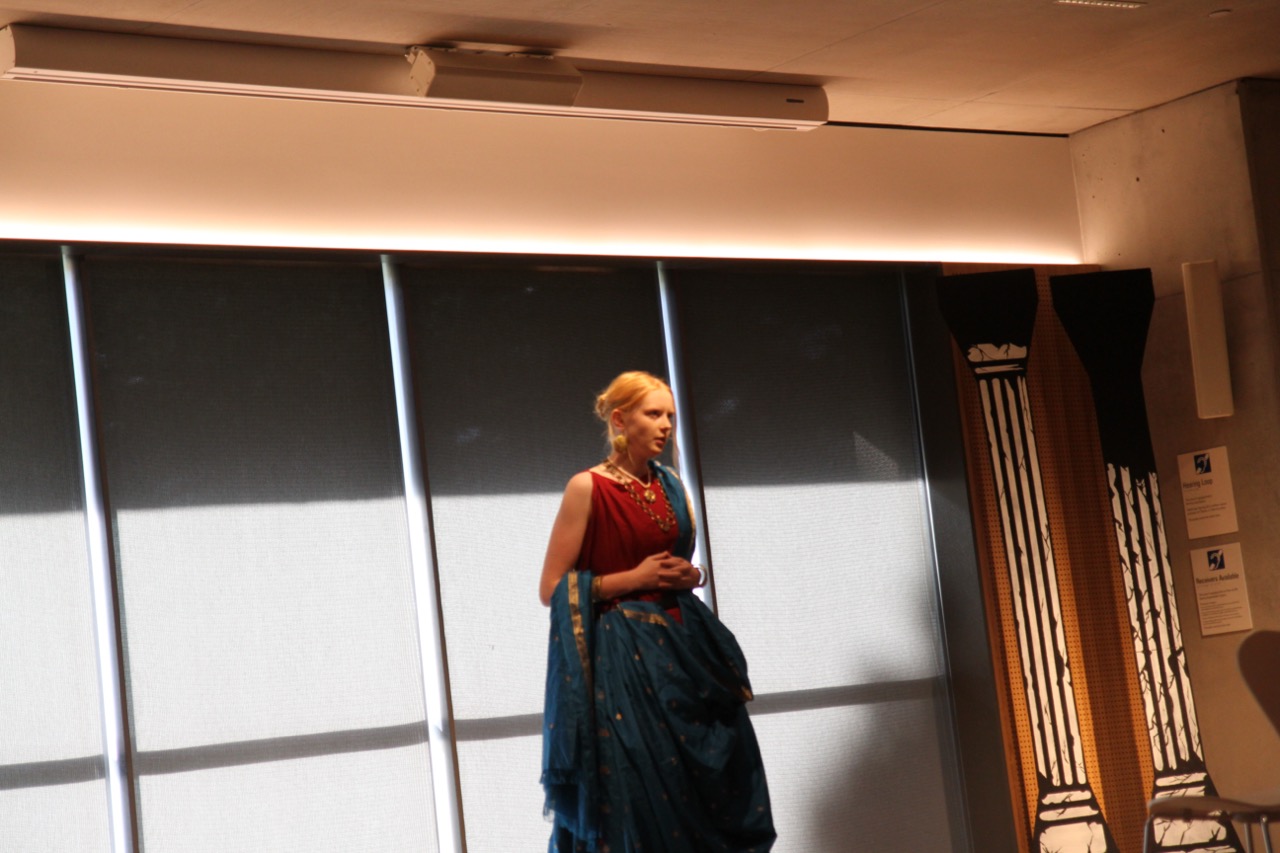
Gaius Gracchus' Antigone is stated as a "return to tradition" on the program, though it is more of a half-modernised adaptation, with lines reading somewhat like simplified Shakespeare, some wordy lines selectively preserving phrasing of the original, others with a wholly modern appearance both in delivery and substance. As such, the production combined lines such as "Happy are they that never tasted the crime" and "Doomed by foolish words and frenzied wits" with lines like "Shut up" and "He will kick my ass".
The combination worked in some senses, however it likely would have benefited from a more selective eye which uses modern phrasing only for comedic effect, and maintains a style of delivery with more gravitas for the majority of the production.
Frame capture from video by David Parada
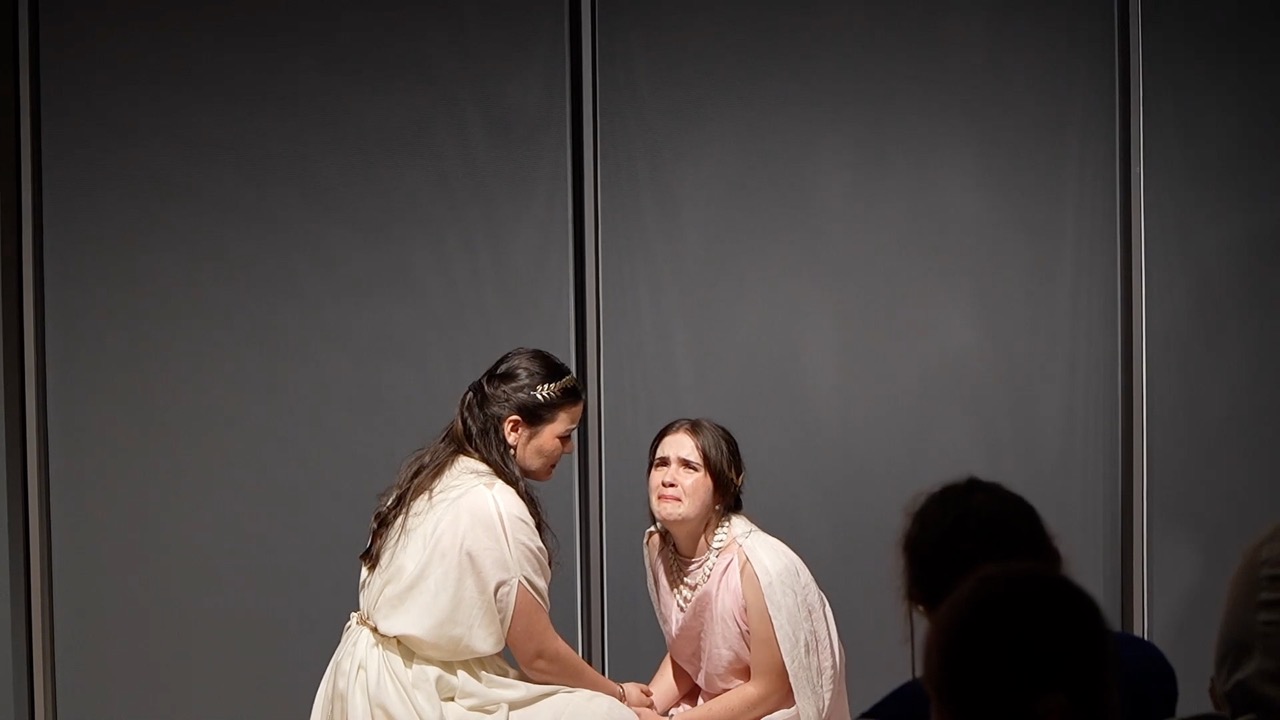
Frame capture from video by David Parada
Photo by Xavier Swann
Antigone — presented by the Gaius Gracchus Society (USYD Classics and Ancient History Society). Chau Chak Wing Museum, University of Sydney, 1–2 May 2026.
Writer: Sophocles Translation (spoken parts): Paul Woodruff Translation (choral odes): Thomas Henderson Eurydice's lines rewritten by: Imogen Evans Co-Directors: Daisy Levell, James Collins II Antigone: Isabelle Le Map Ismene: Zoe Gaynor Creon: Duncan Eddy-Soros Watchman: Nicholas Disher Haemon: Finlay Mitchell Tiresias: Madeleine Charters Messenger: Hannah Manhood Eurydice: Imogen Evans Chorus Leader: Lauren Cleary Chorus Master: James Collins II Chorus: Clare Ainsworth, Rebecca Barlow, Ivy Downes, Thomas Henderson, Adam Pearce, Jane Pedroza, Adeel Shams, Mulan Xu, Marcel Forrer Set Design: George Lyden Costuming: Della Gondwana Make-up: Xavier Radovilsky Lighting/LX: Angelina Young Sound: Byron Rowley Music: Thomas Henderson, Madeleine Charters Choreography: Marcel Forrer, Lauren Cleary Crew Manager: Xavier Swann Props/Set: Emma Rapeport, LLyr Bloom Lighting Support: Quinn Derlacki Graphics: Brendan Hurwood Photography: Xavier Swann Additional video: David Parada Visiting scholarly input: Dr Grace Gunning (Cambridge) Society President: Daisy Levell
Reviewed by Anastasia Dale.
Language: English and Ancient Greek Runtime: ~1 hour 40 minutes, no intermission Show times: Friday 1 May: 6:00–9:00 pm · Saturday 2 May: 1:00–3:00 pm · Saturday 2 May: 6:00–9:00 pm Ticket price: $10 (Gaius Gracchus members) / $15 (non-members) Venue: Chau Chak Wing Museum, University of Sydney
Socials: @ggracchus on Instagram
Production photography by Xavier Swann; video stills by David Parada.


%402x.svg)

.webp)


