Sitting Ganaay Review — Amelia Jean O'Leary at UNSW Creative Lab, Sydney Fringe 2026
Amelia Jean O'Leary's *Sitting Ganaay* at UNSW Creative Lab for Sydney Fringe 2026 is a quietly devastating solo dance work that holds space for intergenerational grief and the stories of First Nations women. From the front row, ctfg finds a performance where the ghosts in the room — and those ignored — live in every toe, every finger, every breath.
Sitting Ganaay Review — Amelia Jean O'Leary Dances the Ghosts Into the Room
A quietly devastating solo work where every toe, every finger, every breath carries intergenerational grief.
UNSW Creative Lab, Sydney Fringe 2026
Amelia Jean O'Leary's Sitting Ganaay at UNSW Creative Lab for Sydney Fringe 2026 is a quietly devastating solo dance work that holds space for intergenerational grief and the stories of First Nations women. From the front row, ctfg finds a performance where the ghosts in the room — and those ignored — live in every toe, every finger, every breath.
Reviewed by ctfg.
I have never witnessed a performance where you could feel the ghosts in the room and the presence of those ignored through just the body. Small movements in each toe and each finger that carry such weight in a barren stage in which, as an audience, is just within arm's reach. That was until I watched Sitting Ganaay.
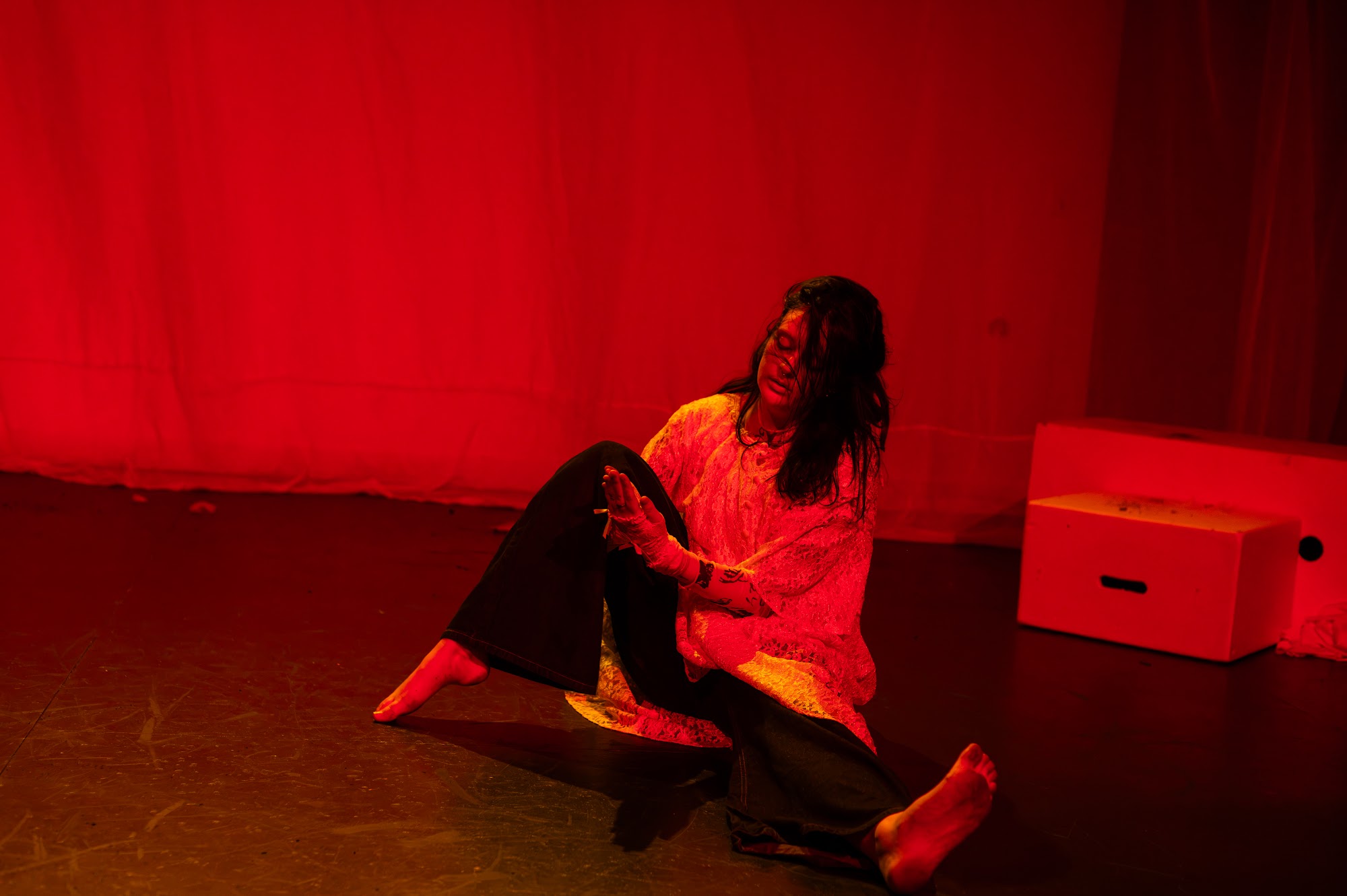
I was waiting on an orange couch after descending a set of stairs towards the back corner of the UNSW Creative Lab building. The area is open and quiet as people make their way across scattered arm chairs and seating. We were then let inside to be presented with two rows of chairs in a room, with your feet touching the same floor as the performers' stage. As I took my seat, I saw a white dress, a few white boxes covered in a white cloth, and a tray of water and flowers. But it's barren as the lights dim and Amelia Jean O'Leary enters.
The language carried in the body
I'm going to take a moment to highlight some of the important cultural language embedded in and a part of this piece. Ganaay means a digging stick, and the term Sitting Ganaay is for when a woman sits with her legs open, which usually is accompanied for a First Nations woman with a digging stick as she digs for yams. We watch O'Leary's transformation into a Yinarr. The term Yinarr means aboriginal woman, and O'Leary herself is a Gamilaroi and Wadawurrung woman. Her Aunt Shell and Uncle Ted are in the program as cultural advisors, and you can feel their stories and their yarns in how O'Leary carries herself.
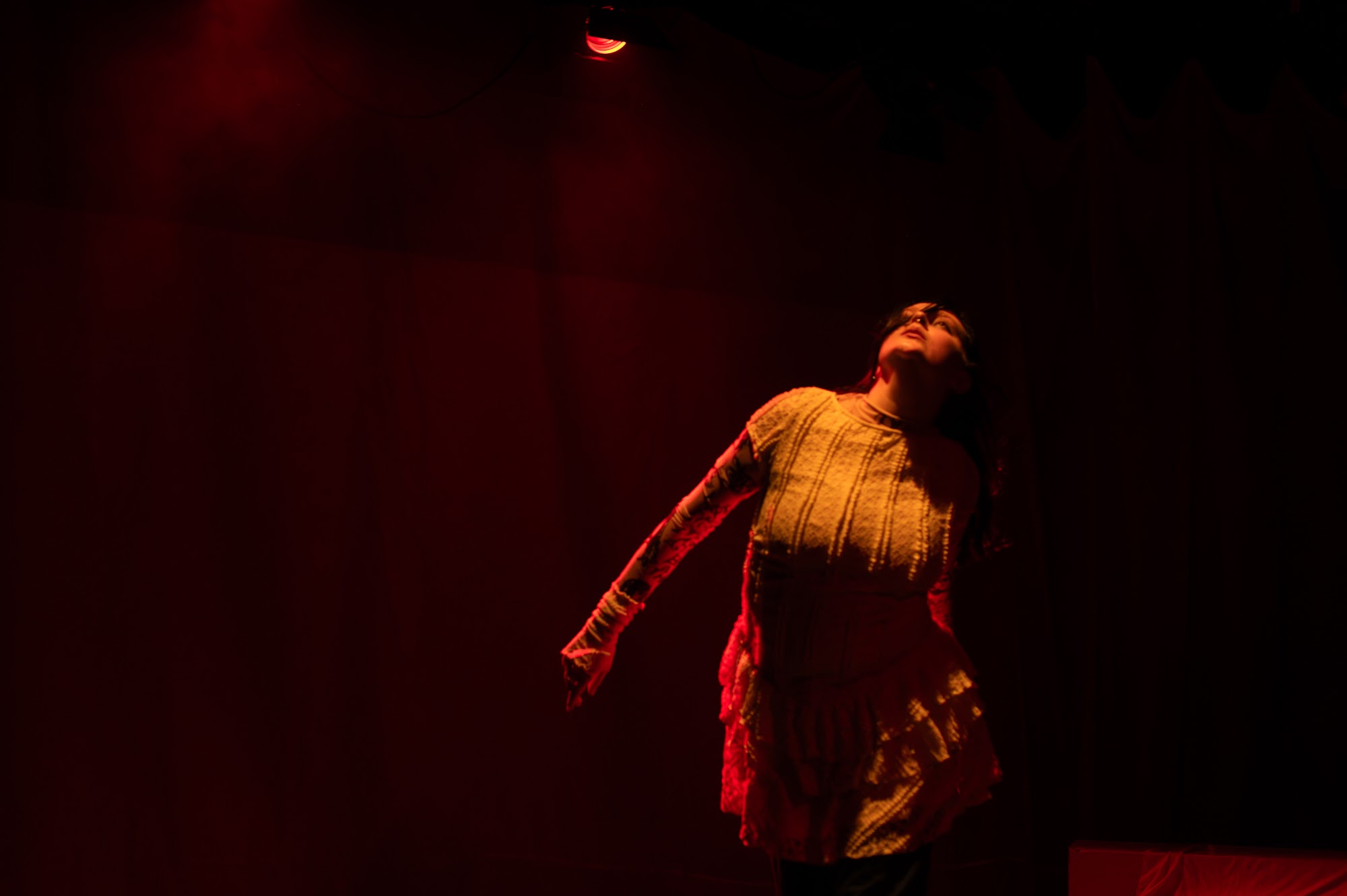
The wind, a whistle in the trees but not trees I could see, but that I could feel in the space. I felt a chill as I was swept into O'Leary's story that she begins with a walk. Trying to walk one corner to another, but is stopped and pushed back.
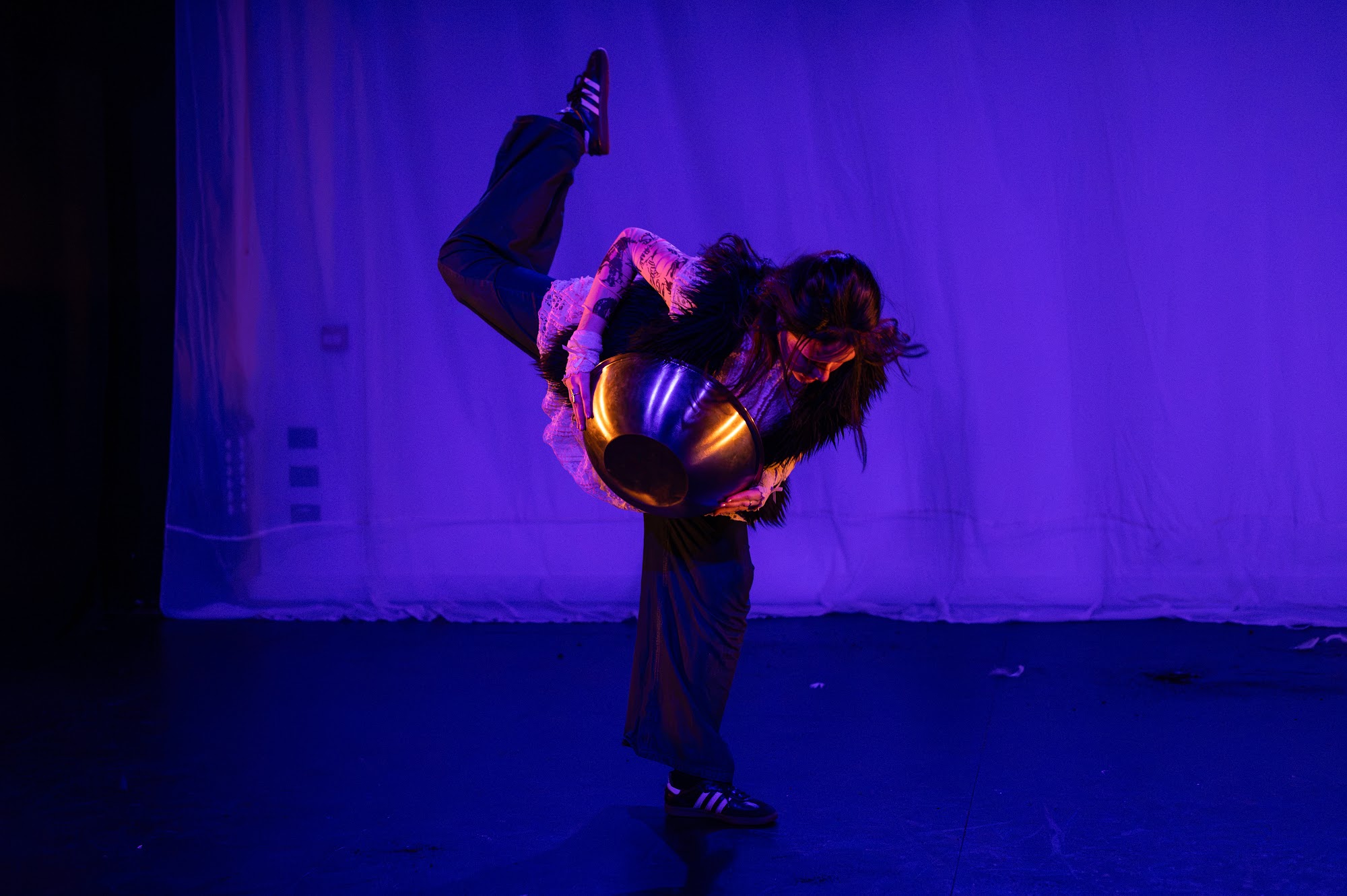
I could feel her struggling against a force that keeps pushing her back, as she removes a piece of clothing off her, one at a time in order to try and break out. She sheds her modern clothes and we are left with O'Leary, transformed, into her auntie, a Yinarr, walking with her children by her side. This isn't something that is seen but O'Leary's performance gives them space. The soundscape of the wind is reminiscent of ghosts and that, along with the slight movement of the white curtains behind her as she dances, I could feel she is dancing to make room for them on the stage.
Being so close to the stage itself and the dance, you can feel yourself with each breath O'Leary takes, wanting to reach out to try and pull her through. Reach out as her children cry as they are staring, as people keep walking away from her. As the cries of the children grow more painful until they stop.
But you must stay seated and watch. Watch and feel the story she is telling, watch as she is walking and is left behind. It's such a quiet and intimate space, even we as the audience cannot hide ourselves from the pain of her abandonment.
"My eyes were drawn to the level of control in each of her movements."
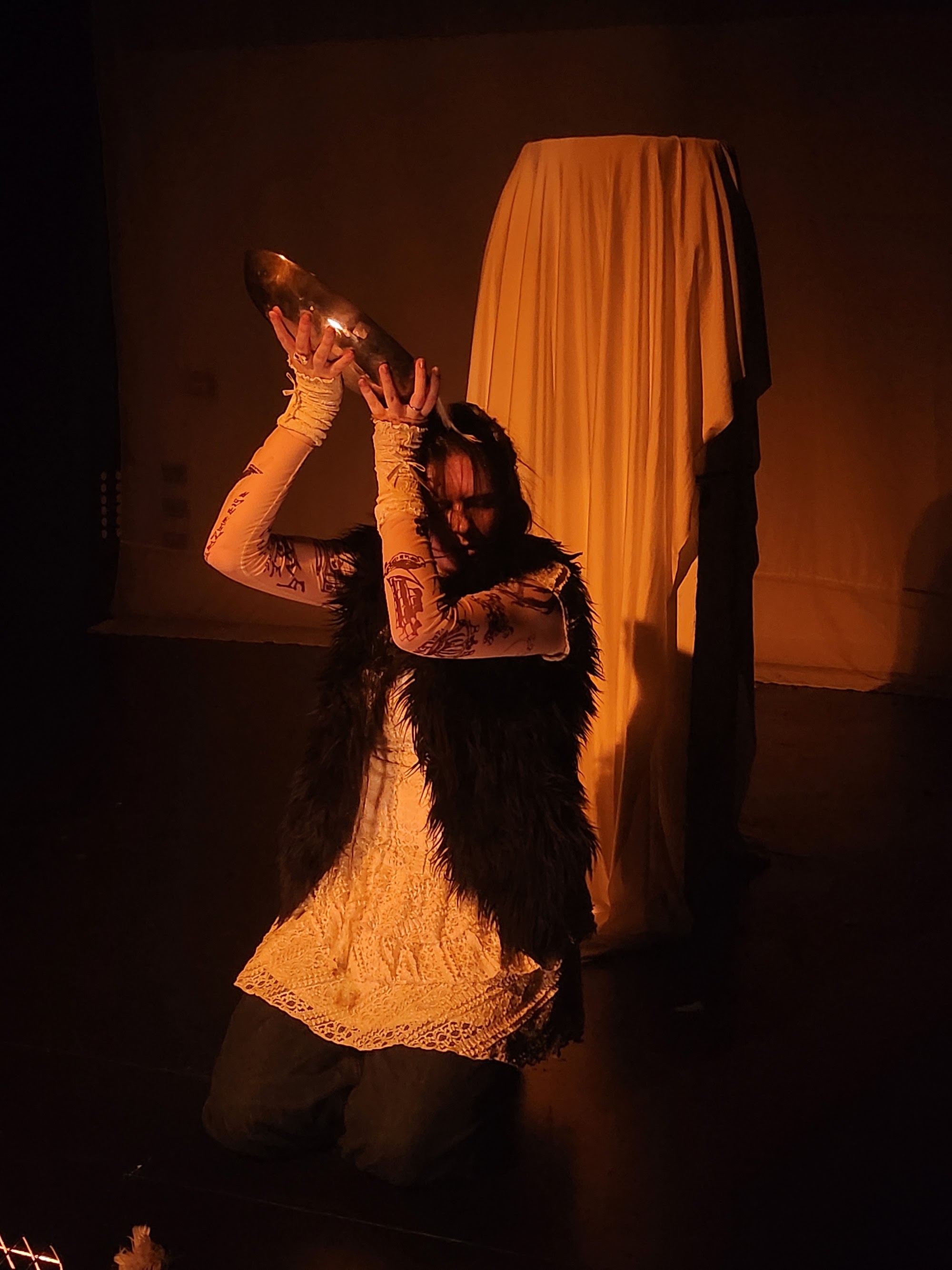
As a dancer myself, my eyes were drawn to the level of control in each of her movements. How each toe one by one as she moves holds the grief and loss she is feeling and how each finger stretches outwards in betrayal. When the Yinarr curses the people into frozen trees, building the trees out of blocks scattered across the stage, she holds this silhouette that I can't get out of my head, the curvature of her arms and the scrunching of her fingers of power and pain. O'Leary also plays with the use of white sheets, including the backdrop of the set, to highlight the intricacies of her dance as well as creating a ghostly like presence onstage, ending with her walking behind it and reaching outwards onto what was left behind.
As if we can look away, as if we are looking away. As if even her being alive, she is seen as a ghost and cast aside.
I think why this story is so important now is we ignore these cultural stories, this intergenerational grief and loss of First Nations women. But Sitting Ganaay gives it space to breathe, to be seen, to be told, to be heard. It makes you reflect on how First Nations women today are still ignored and their stories are generalised and cast aside. It is a story of First Nations women fighting to be seen, to be heard and teaching us as an audience that history repeats itself and warning us of what that world could look like. That we might be the frozen trees for not taking care of the community like we are supposed to do.
Sitting Ganaay — a solo dance work by Amelia Jean O'Leary. UNSW Creative Lab, Sydney Fringe 2026.
Performer & Creator: Amelia Jean O'Leary Cultural Advisors: Aunt Shell & Uncle Ted Photography: Lucy Parakhina & ctfg