Sext Me, I'm Bored Review — Stupid Theatre at QTopia, Sydney Fringe 2026
Eloise Wajon on Stupid Theatre's Sext Me, I'm Bored, written and directed by Tori-Lee Featon, co-written by Amy Crean, and performed by Sarah Ballantyne, at the Loading Dock, QTopia, for Sydney Fringe 2026. The marketing promises millennial empowerment; the show delivers Zoomer dread, and then isn't sure what to do with it.
Sext Me, I'm Bored Review
Millennial marketing, Zoomer dread, and a show that can't commit to either.
Eloise Wajon on Stupid Theatre's Sext Me, I'm Bored, written and directed by Tori-Lee Featon, co-written by Amy Crean, and performed by Sarah Ballantyne, at the Loading Dock, QTopia, for Sydney Fringe 2026. The marketing promises millennial empowerment; the show delivers Zoomer dread, and then isn't sure what to do with it.
Reviewed by Eloise Wajon.
Sext Me, I'm Bored is not quite what it claims to be on the Sydney Fringe website. The copy is littered with phrases like "reclaims power" and "sex-positive", remnants of what is starting to be called "millennial feminism" — a glass-half-full kind of movement, which has tapered off in popularity as everything in the world has gotten worse. The good news is that Sext Me, I'm Bored is neither put on by millennials nor particularly optimistic. The bad news is that it's not confident with the tone it takes instead.
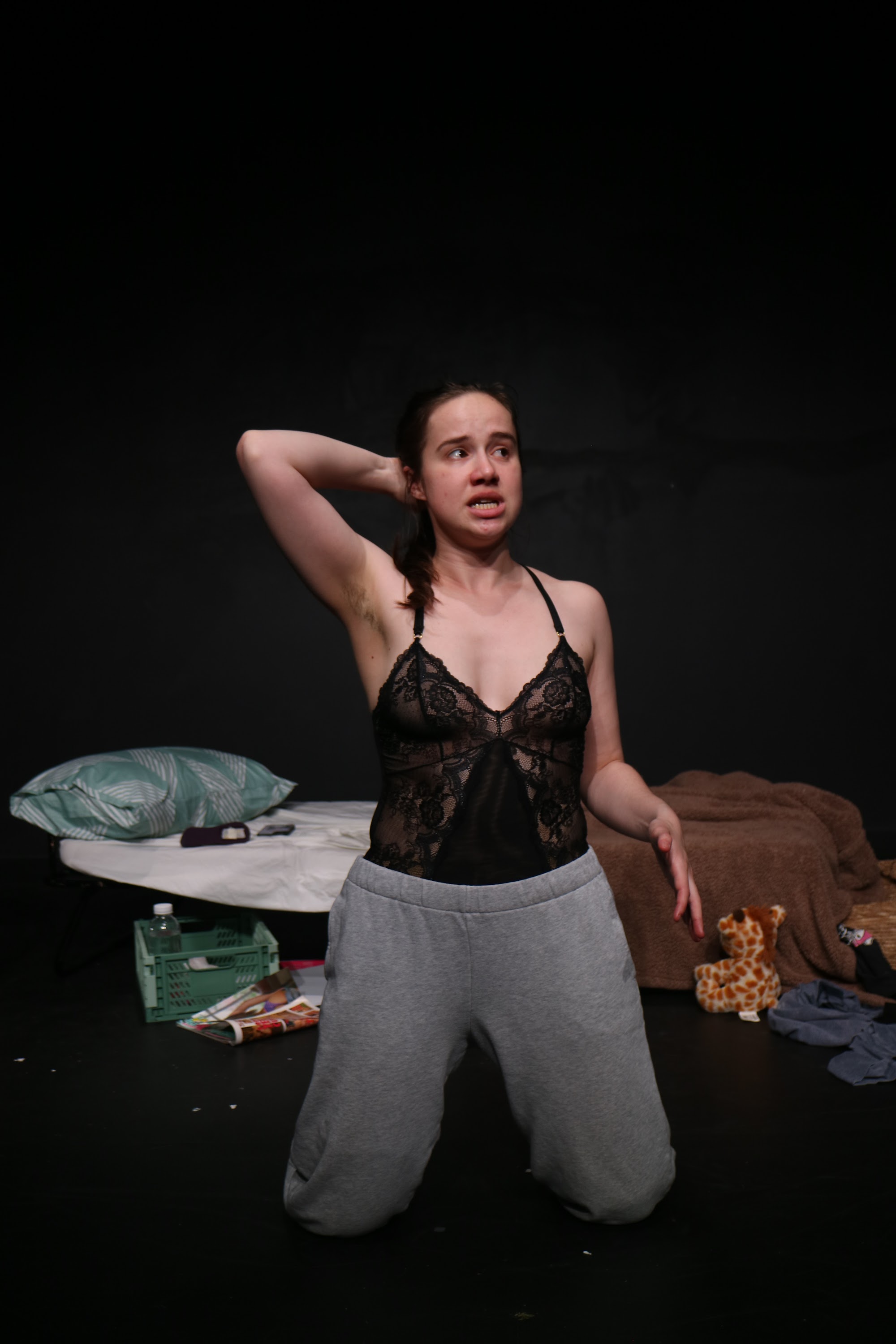
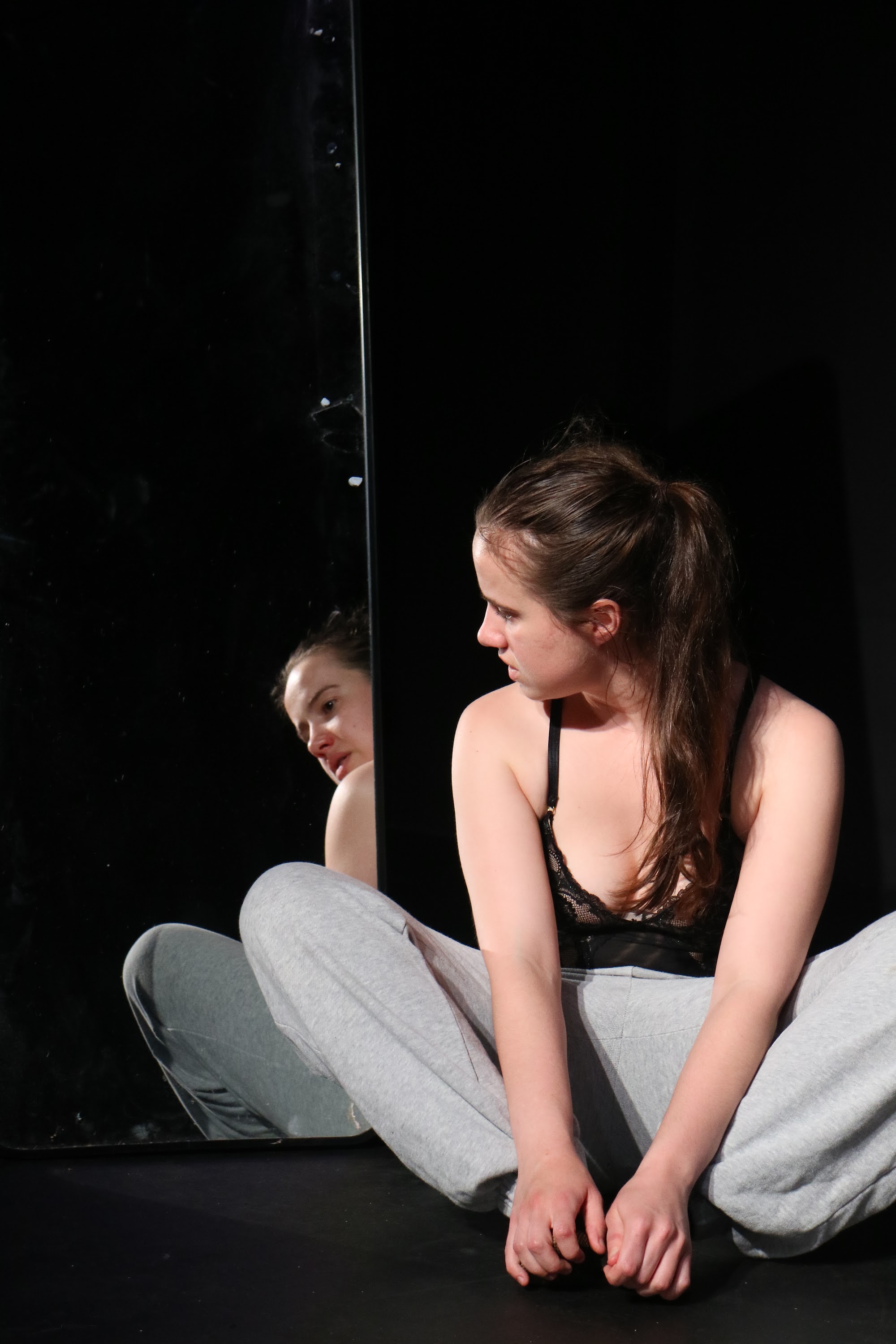
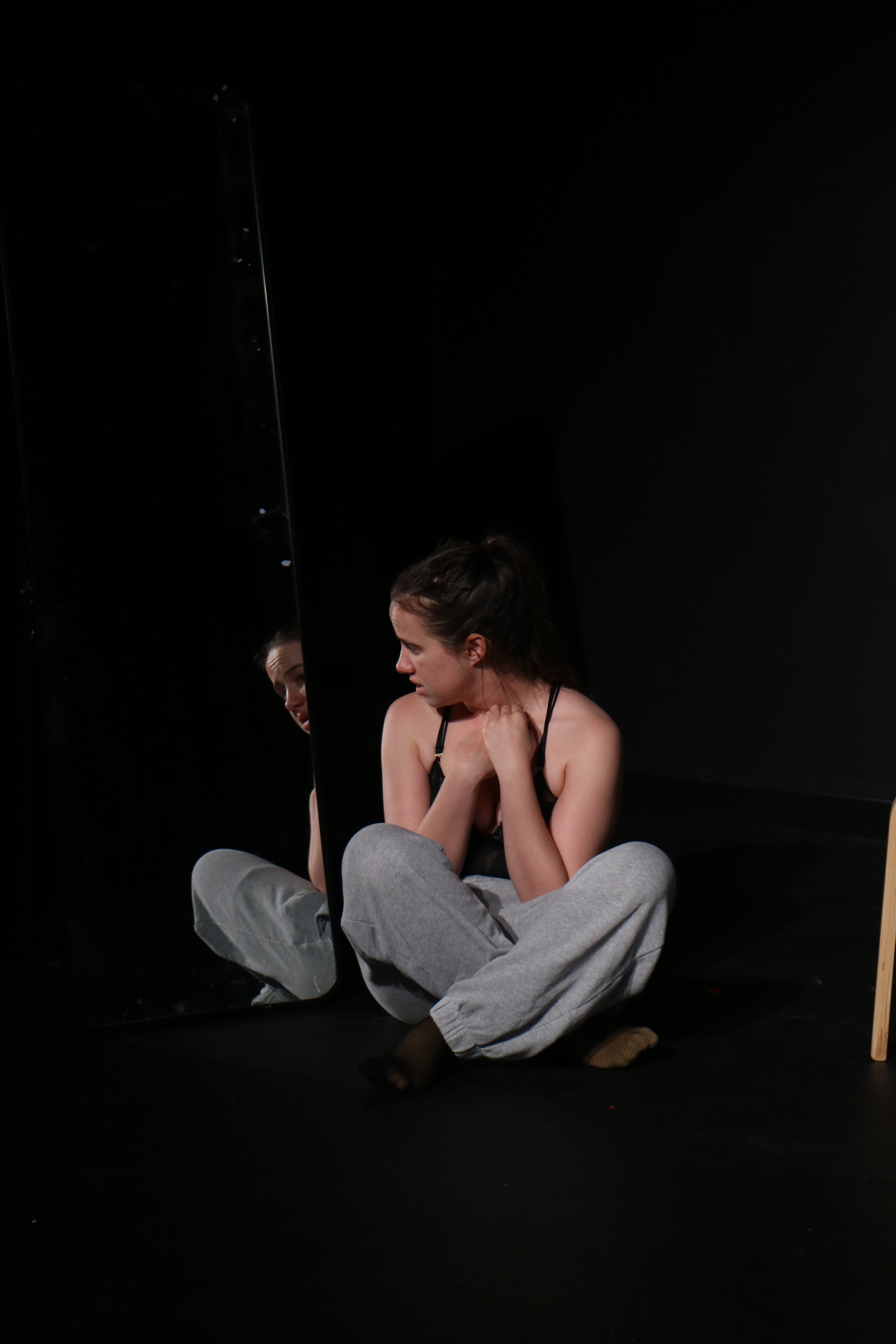
We walk into the Loading Dock, a black-box theatre in the back of QTopia, a queer arts and performance space in Taylor Square. The sole actress (Sarah Ballantyne) lies on a single bed, reading a pornographic magazine. The set strikes me as a sanitary version of Tracey Emin's My Bed, with only a heap of laundry in the right corner as a marker of relatability. On a bedside table, there is a Sonny Angel figurine — likely placing the main character in the Zoomer generation as well.
The lights dim, and we're played a recording, like the start of a Midwest emo song. A group of women are discussing sexuality and its relationship to "your power as a woman" — a phrase that strikes me as a bit woo, and not quite material.
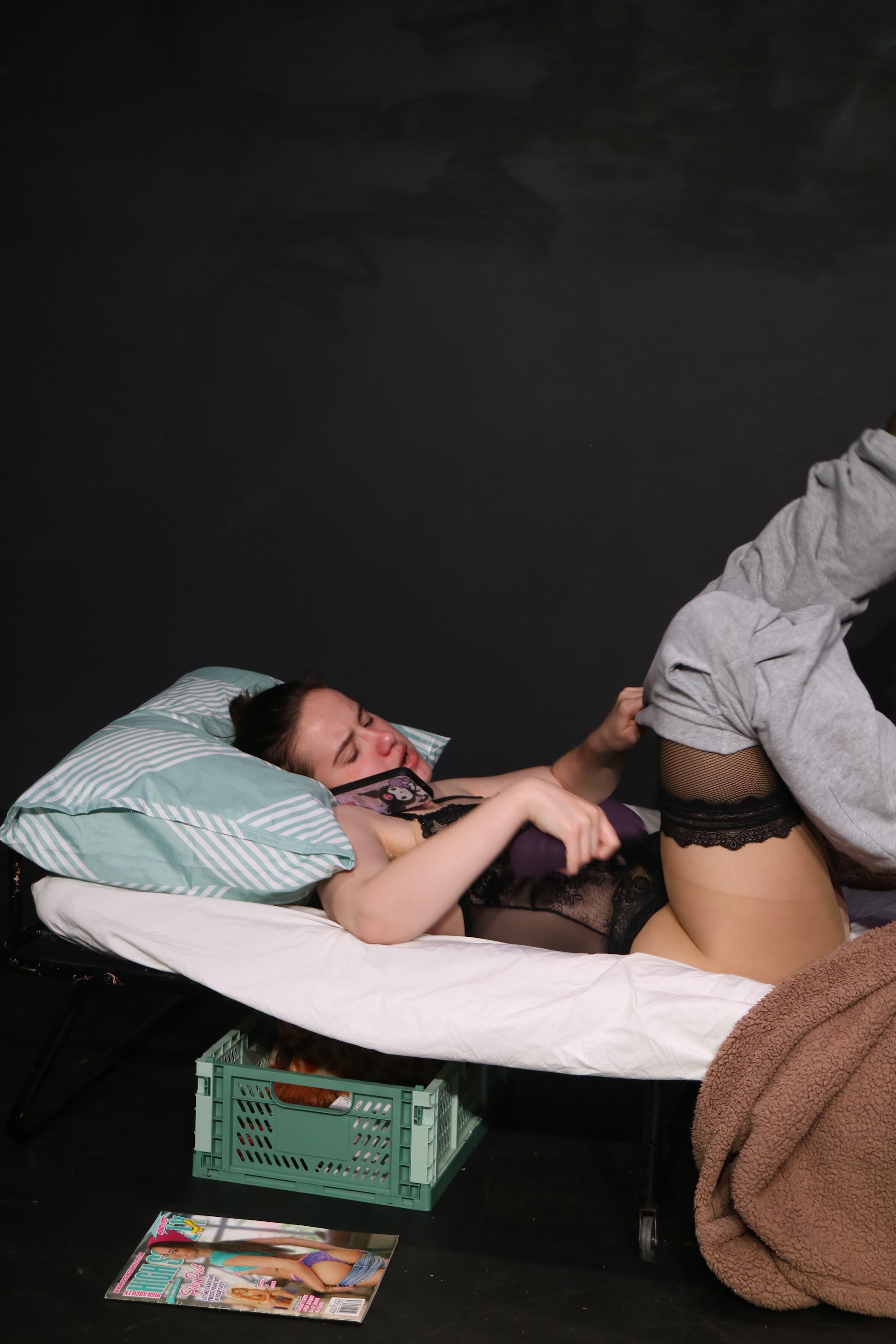
The lights switch on again, and soon the main character, wearing a black lingerie bodysuit and a pair of grey trackies, shuffles them off to reveal a pair of thigh-high black stockings. She raises her phone above her to take a photo, and without any commentary, sends it off. Given that this is what gets the ball rolling and gives the show its premise, it would be hard to tell, if you hadn't read up on the show, that she is sending a sext to a man.
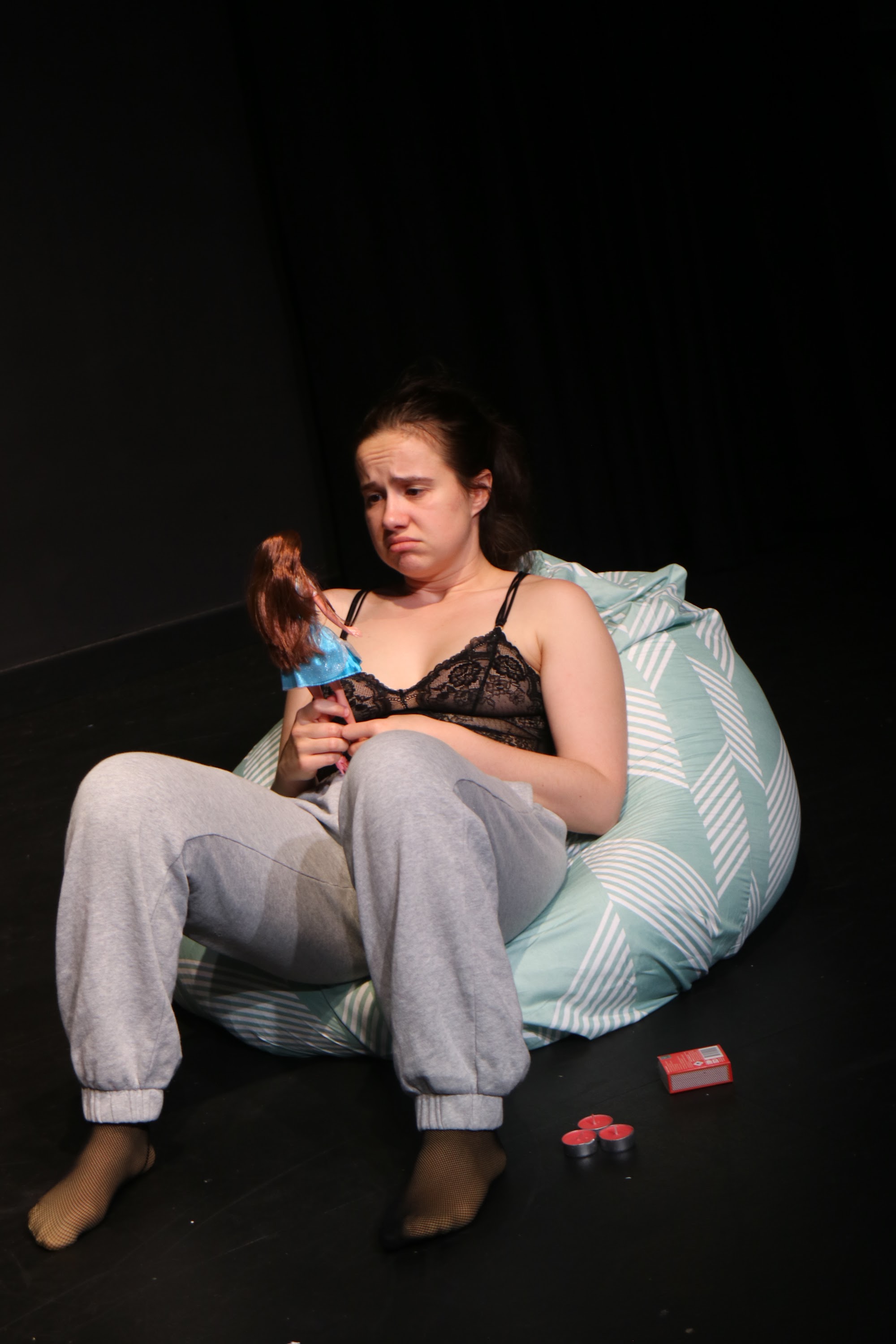
Nonetheless, the character accelerates into monologue, after bringing herself to climax with a vibrator and her phone in the other hand, reading Harry Potter smut. At first, she is playing a specific character. Her mother calls, and she has a reluctant conversation about inviting a date to her brother's wedding.
She tells an anecdote about her mother tirelessly searching an airport for a lost stuffed animal in her childhood, with a tone of relenting gratitude. The point is that your parents can love you more than anything, but not necessarily get you. For a moment the show lets a specific woman onto the stage — a daughter, a sister, someone whose mother would walk an airport for her — and it is the thing in the show that works.
Then the family isn't brought up again. Ballantyne can be a compelling actress, if in some moments she is unrehearsed. The pacing of the dialogue is fast, and so chock-full of lines intended to hit heavy that the impact is dulled.
"If you're dropping the mic every minute and a half, you might as well leave the mic on the floor."
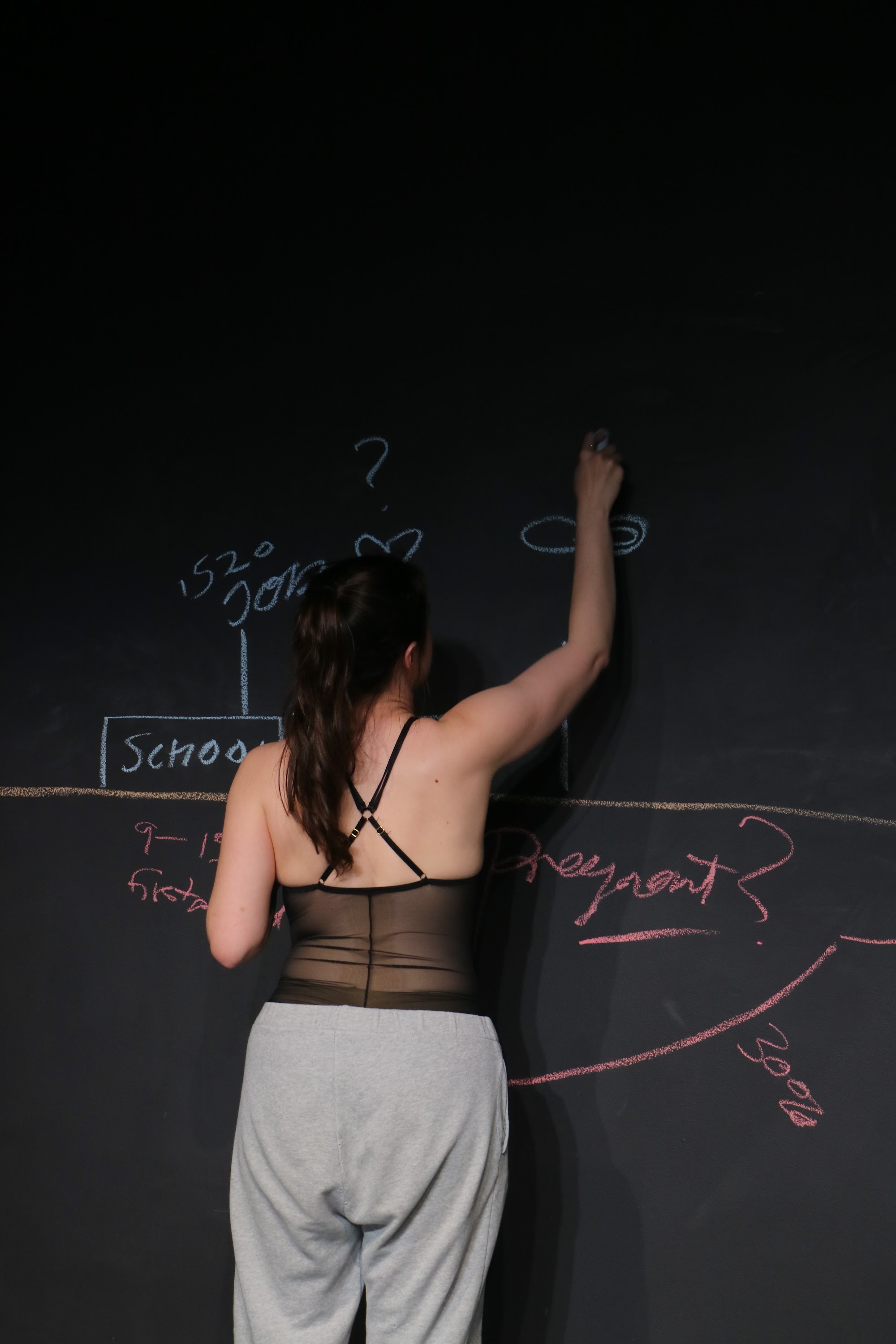
The show soon takes an unfortunate turn towards the generic. The main character pulls out a bucket of sidewalk chalk and draws a timeline of the average woman's life on the wall of the theatre. It's a good use of the space, but from the timeline — school, your first period, uni, a marriage, a divorce — the performance spins off into quips about the wage gap and biological clocks.
Instead of a show exploring a character, or even a close representation of a specific facet of feminism, we are getting a wide-angle lens with no particular focus, never going into enough detail to say something original. We brush upon several deeply familiar concepts about the male gaze and the sexual double standard — things that were touched on in the Barbie movie.
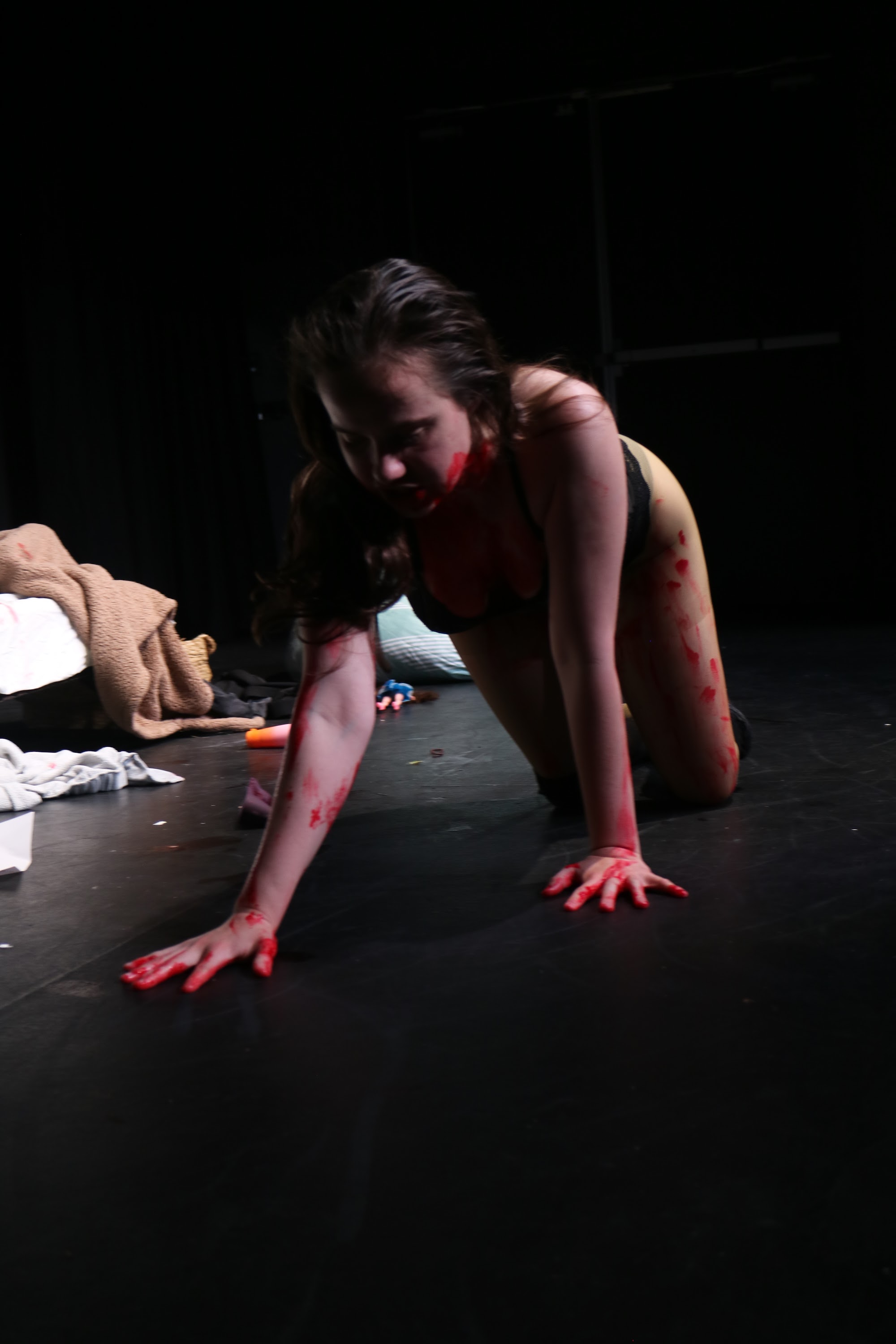
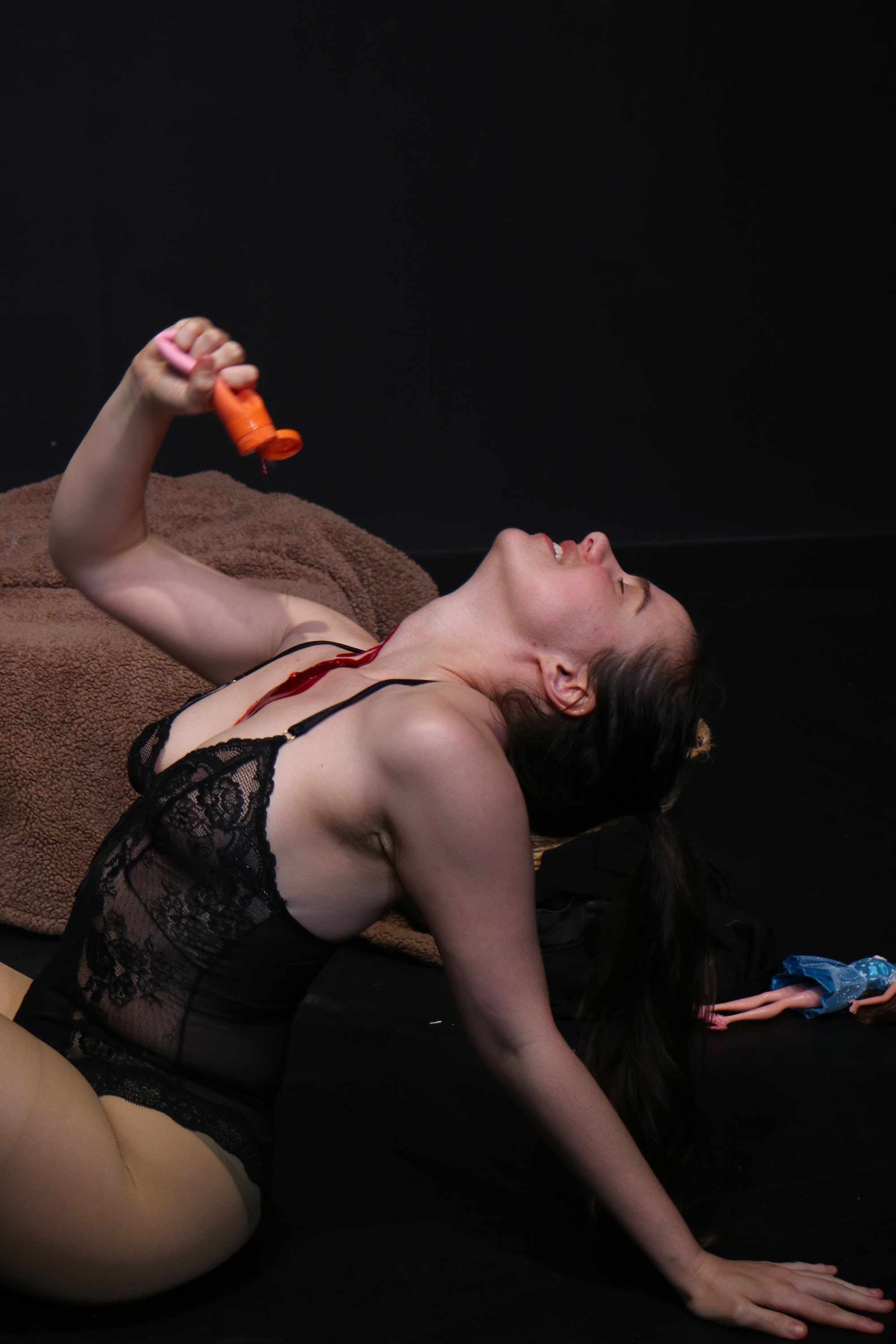
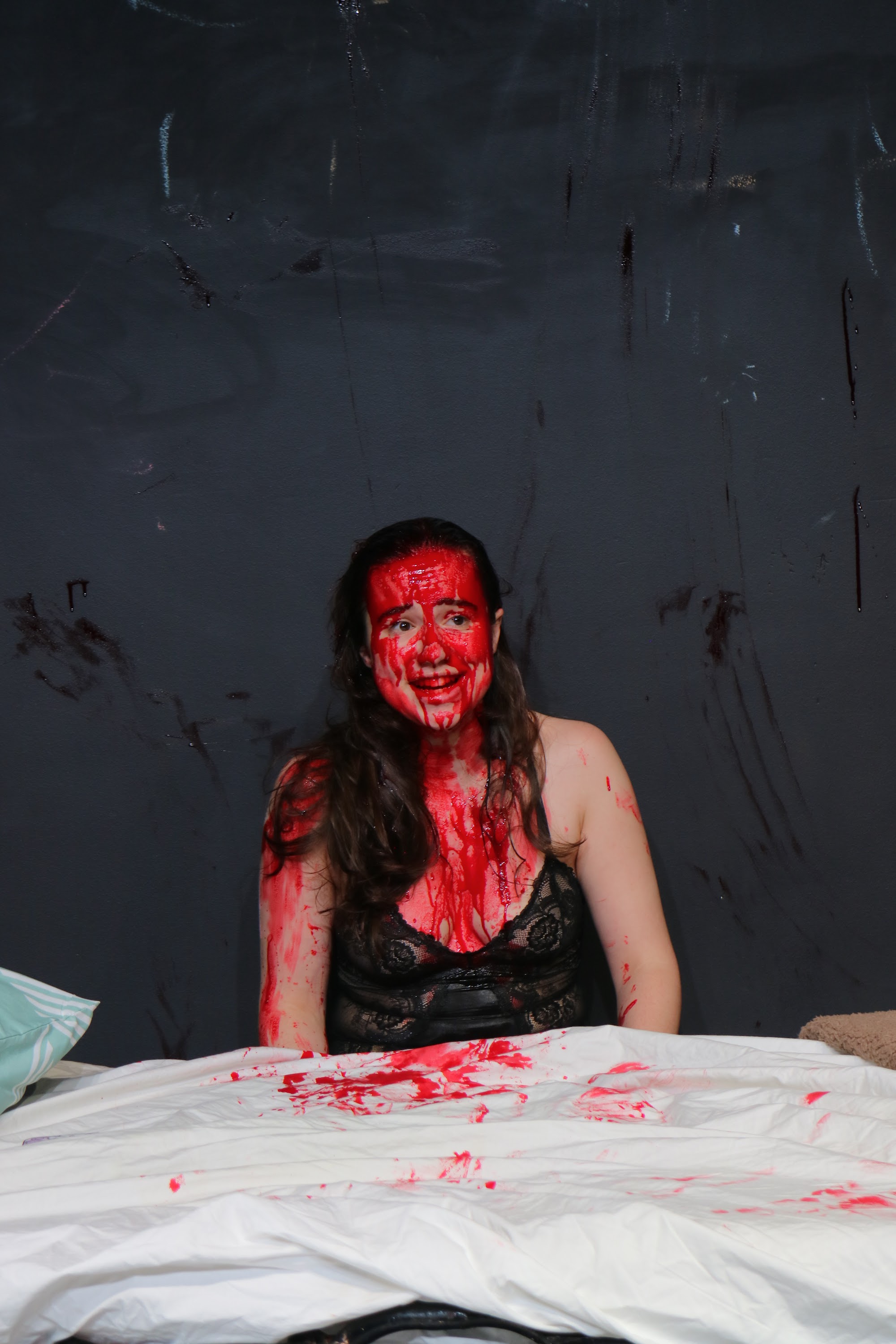
There's a twist towards the "weird girl" genre at the end where the stage lights turn red and the character pulls out a container of fake blood, smearing it on herself and across the chalk timeline on the wall. "Don't you get it?" she purrs. "I am you. I am woman."
I'm not sure I do get it. The blood smearing reads as a symbolic motion, but it is unclear what it is meant to be symbolising. It's viscerality for the sake of being visceral, needlessly edgy. The brief moments of character building at the beginning — the mother at the airport, the brother's wedding — are all for naught if she is supposed to be "woman", every single one of us.
The show ends by cutting the character off mid-sentence, with the ding of an SMS notification. Evidently, she has received a response to her sext. As with the sending of the sext at the beginning, it isn't clear without prior reading what's occurred here, which is a particularly weak feature for a finale.
Especially for women, there's not much to look forward to on the news.
In-between Australia's femicide epidemic and AI image-based abuse of schoolgirls and public figures, it no longer feels like power is available for us to reclaim, or that sex is a source of positivity. Millennial optimism is long dead. It's the right time, given the news cycle, for feminist art that doesn't try to be light and digestible.
There was potential for this show to be quite relevant. Despite the marketing, the main character does not "reclaim power" or "find agency". The tone is firmly situated in the cynicism and sheer feeling of dread that differentiates Zoomer attitudes towards feminism from millennials.
The show at times is aware of the abject fear that permeates "Gen Z feminism", which is deeply connected with sex and sexuality. It isn't sure how, or if it really wants to, address the full ugliness of that fear. Instead, it combines a number of crowd-pleasing, well-worn feminist platitudes with a gloomy expression, and as a result, struggles to make an impact.
Sext Me, I'm Bored — written and directed by Tori-Lee Featon, co-written by Amy Crean, performed by Sarah Ballantyne, presented by Stupid Theatre. The Loading Dock, QTopia, Taylor Square. Sydney Fringe 2026; the run closed 12 September.
Writer and Director: Tori-Lee Featon Co-Writer: Amy Crean Performer: Sarah Ballantyne Presented by: Stupid Theatre