Interview · There's Nothing Funny About Social Work — Ian "Esky" Escandor
In There's Nothing Funny About Social Work, Western Sydney youth worker and stand-up comedian Ian "Esky" Escandor takes a title that sounds like a dare and interrogates it: an hour of comedy about the ethics of visibility and helping people, and if stand-up can provide the support that a support person needs. Directed by Suren Jaemann with dramaturgy by Bina Bhattacharya, at PYT Fairfield, 10–12 September, as part of Sydney Fringe 2026.
There's Nothing Funny About Social Work...Or Is There?
Ian "Esky" Escandor on ego, ethics, and finding the joke in a decade of youth work.
In There's Nothing Funny About Social Work, Western Sydney youth worker and stand-up comedian Ian "Esky" Escandor takes a title that sounds like a dare and interrogates it: an hour of comedy about the ethics of visibility and helping people, and if stand-up can provide the support that a support person needs. Directed by Suren Jayemann with dramaturgy by Bina Bhattacharya, the show runs at PYT Fairfield from 10–12 September as part of Sydney Fringe 2026.
Ian "Esky" Escandor has spent over a decade doing community youth work in Western Sydney, and roughly half that time doing stand-up on the side. The two lives have run in parallel until now. There's Nothing Funny About Social Work, his debut solo hour, is where they finally cross. The premise is deceptively simple: what happens to a youth worker when the work goes viral? In Esky's real life, that meant a Netflix documentary (OneFour: Against All Odds). On stage, it becomes a way in to a bigger question — what does "successful" social work actually look like, and does it line up with the values of the job?
The show is built with dramaturg Bina Bhattacharya and Melbourne stand-up Suren Jayemamn in the director's chair, with writing support from Marcel Blanche de Wilt and Johnson Mulia opening across the run. Across the conversation, Esky is candid about the fear of writing it, the ethics of talking about the people he works with, and the unglamorous truth of a "solo" show — that no one makes one alone. We spoke ahead of his three-night run at PYT Fairfield.
This conversation has been edited for length and clarity.
Is it a dare, or is it a trap?
The title sounds like a dare — can you make social work funny? Is it a promise, a trap, or both?
"It's more of a dare. I'm not trying to trap anyone. I find a lot of humour in the work I do...but when I tell those stories to someone else, they can sound a bit too real. That's what the show is about."
"Bina was the dramaturg. Suren Jaemann directed. He's a Melbourne stand-up, an overall funny guy. Bina works in theatre and screenplay and has a really good sense of story. I wanted to tell social work from my point of view but still make a palatable stand-up show, because that's my love."
"Stand-up is my form of self-care outside of social work. I wanted to use it to share the experience."
You end up on a Netflix documentary in real life. Your show asks what that visibility does to a social worker. Where did that thread start?
"I wanted to talk about how it got to my head — what it means to be successful as a social worker, and whether that runs parallel or congruent to the values of what social work actually is."
Hannah Gadsby is the obvious touchstone for a stand-up who wants to sit inside something difficult. Where do you place yourself in relation to her?
"Hannah Gadsby's special influenced me into writing a solo show. She was able to turn something not funny into something funny, and that definitely inspired the show I'm trying to make. She really flips it on its head — what is comedy? I'm not asking that question. I'm asking the step after: is there anything funny about social work?"
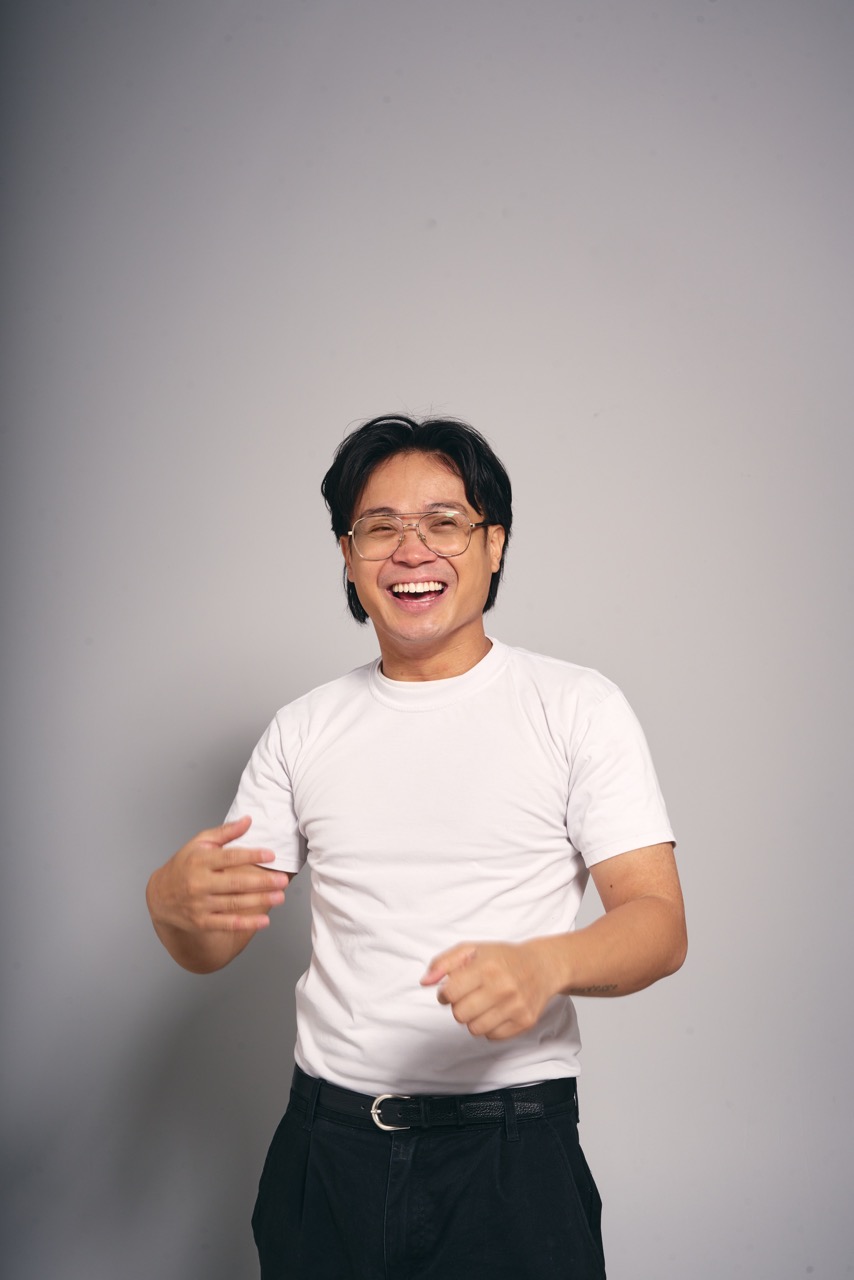
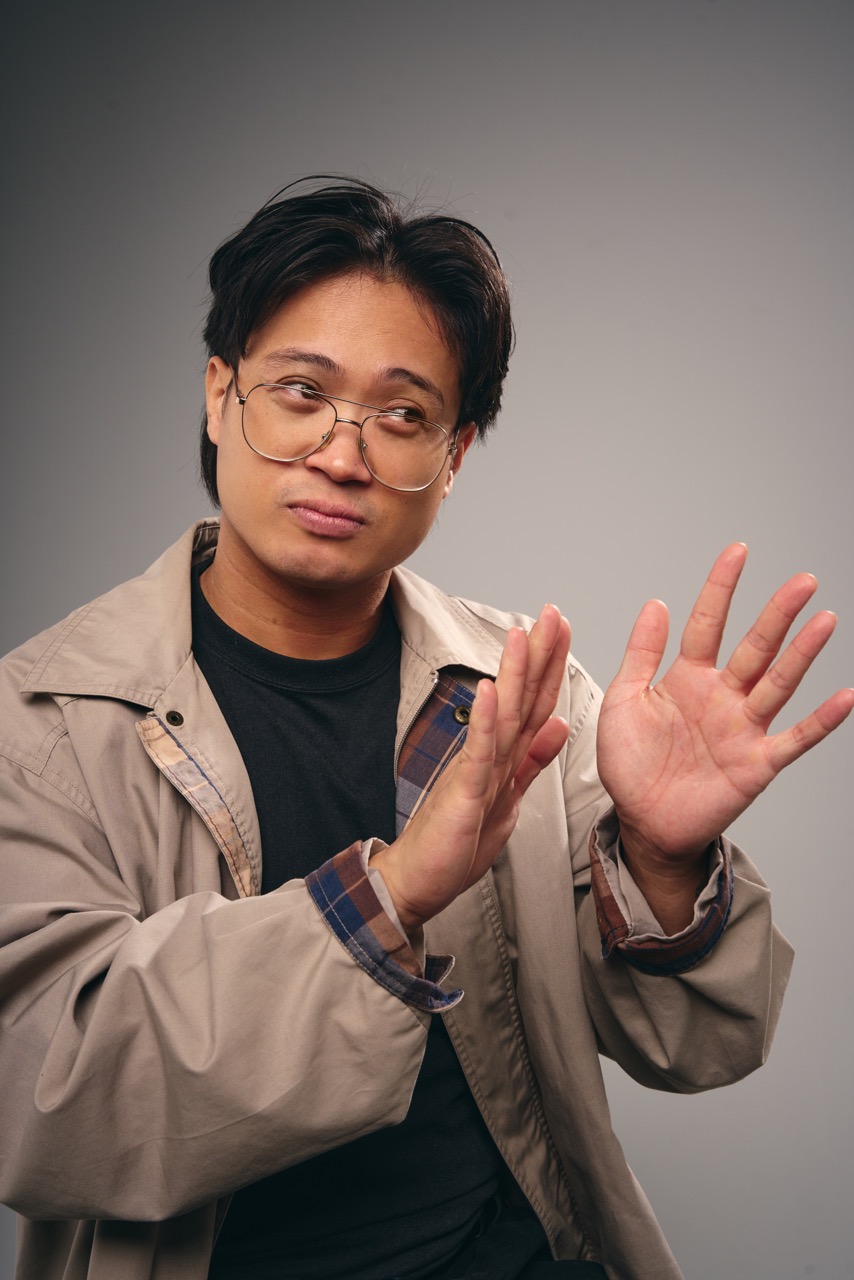
Photo credit: Justin Cueno
Sitting in the silence
Social work stories don't come with punchlines. They're the "open case", in the parlance — they don't resolve. Where did you feel that friction against the form?
"Bina, Suren, and Marcel Blanche de Wilt helped me write the show. These are very funny people. Writing a stand-up hour, I wanted it to be funny the whole way through. I didn't realise how much it was okay to let things just sit (in the story, in the theme, in what does it mean to help someone) and not resolve it with a joke. I struggled a lot with that."
"Part of it is I'm always thinking about the other comedians watching. They're probably going, okay, where's the joke? In five, six years of stand-up, I've been told: get to the joke quicker, get to the joke quicker. That's fair for a five or ten-minute club set. I thought I could just take my ten minutes and multiply by six. It isn't that at all."
"I had to be okay with sitting in the awkwardness, building a story and not ending it with a laugh. I did a trial show for six friends and I felt it. I was like: oh crap, there's no laughter, I need to fix this. My director said, no, that's okay. If they're not laughing, they're listening. They're feeling something. That's what I want in the show."
You've been programmed alongside Sheng Wang at the Enmore, and played Sydney Comedy Festival and Adelaide Comedy. Is this solo hour arguing with the form of stand-up?
"This is my first solo show. For the last five years I was obsessed with the structure of a joke. Only writing the solo hour did I have to go back to what I envisioned for myself five years ago — a solo show, obviously inspired by Hannah Gadsby. I didn't have to unlearn anything, really. I've got the tools of comedy. I just had to put some of them down, because they weren't serving a full solo show."
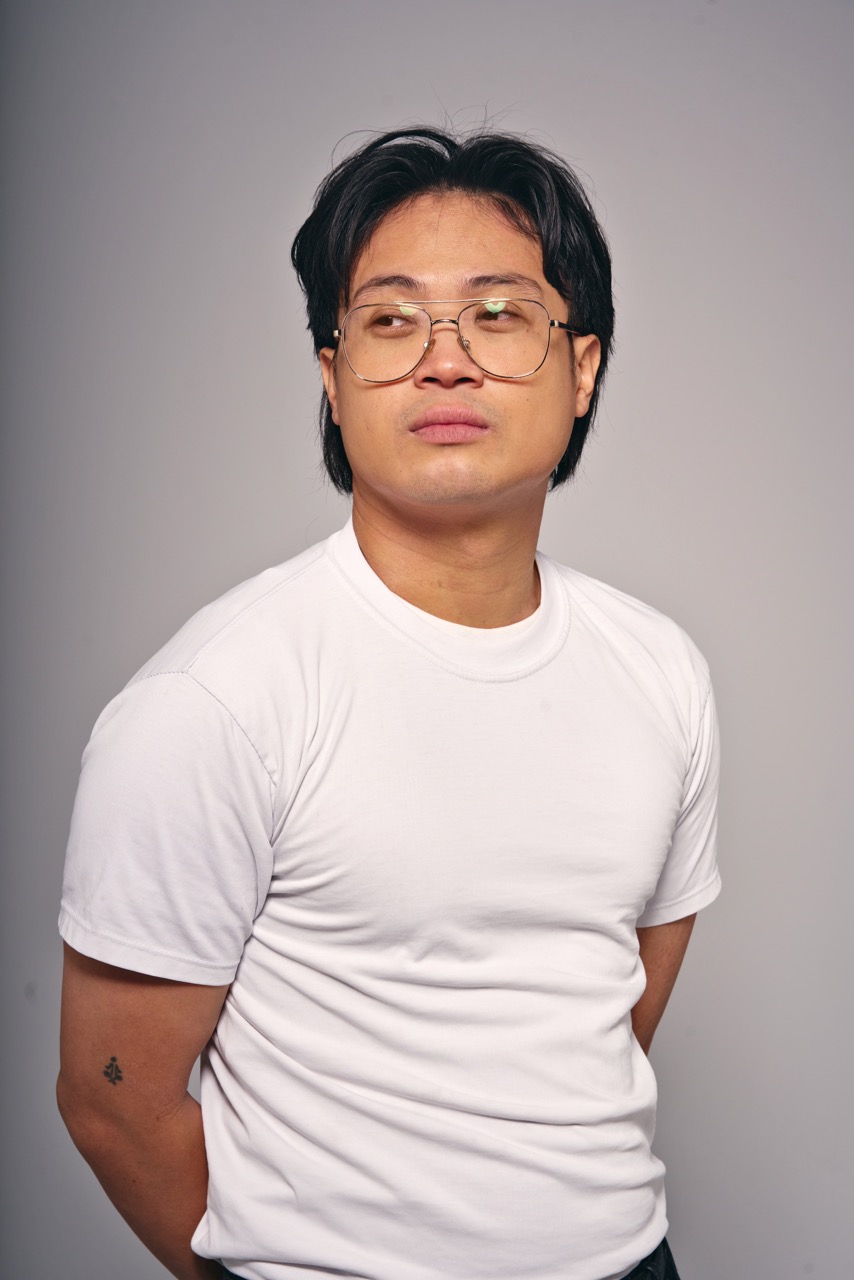
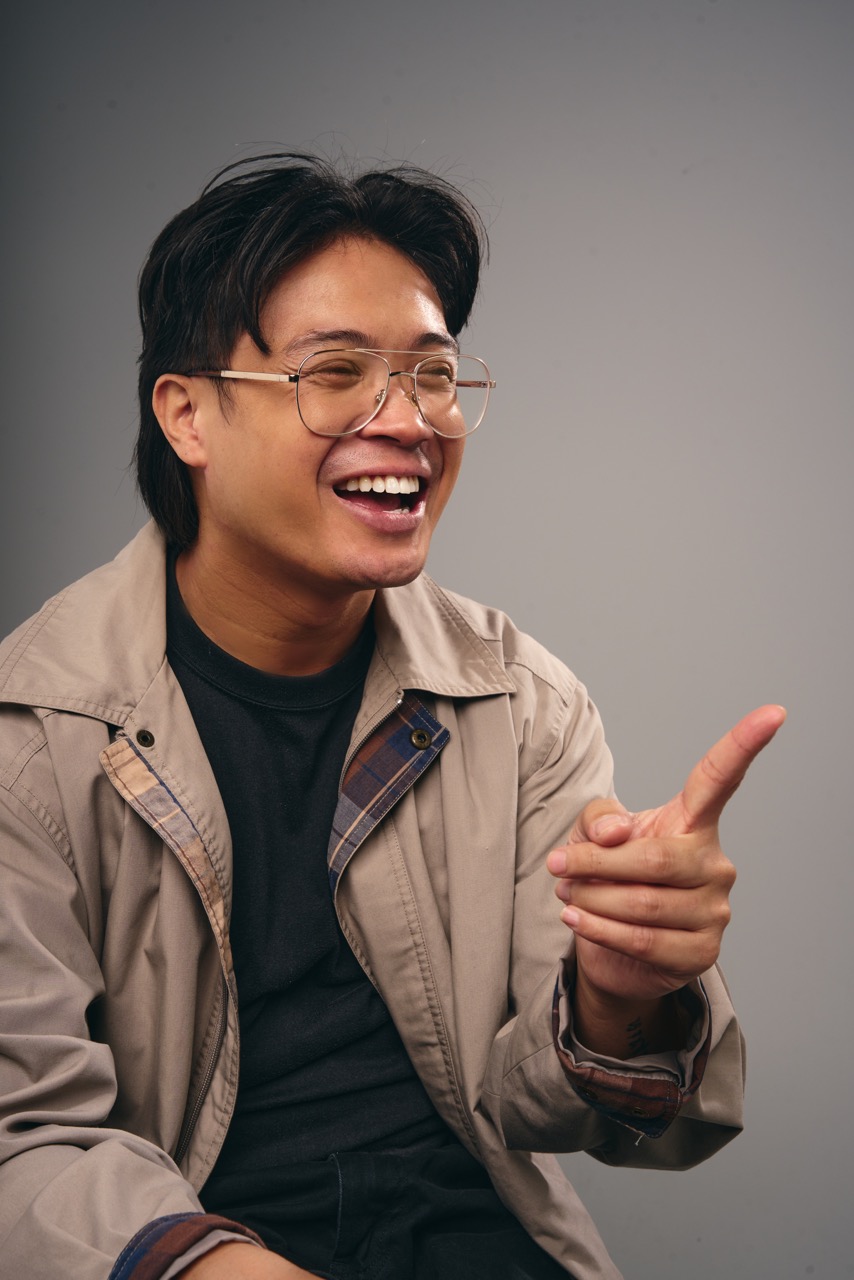
Photo credit: Justin Cueno
No one person is a superhero
You've come up through community arts (Curious Works, PYT Fairfield, OPNSRC) and co-directed When Worlds Collide. What does a solo stand-up hour do that those collaborative projects didn't?
"Throughout my career as a community art worker, you have to be collaborative. You can't build something and hope it changes the people it's for; you have to build it with them. That's a big value in community work. OPNSRC, Curious Works, Street University, that's all reflected in the collaborative approach."
"No one person is a superhero. That's one of the main themes of my show...which is interesting, because a solo show is perceived as one lone wolf taking on the task alone. Building it, I realised it isn't a solo effort. I couldn't even make my own solo show a solo effort. Bina, Suren, Marcel, all the comedians at open mics — hey, do you think this joke works? The credits list would be endless."
"Johnson Mulia, who's opening across the shows, really sat down and interrogated not just the jokes but my point of view of the jokes, my persona. The difference is: I'm the face of this one. I'm the point of marketing. Which is funny, because I talk about being the face of social work in the show. That's not how it ends."
The audience in the room
Who are you writing for? A Thursday-night room of your Mount Druitt colleagues vs. a room of comedy regulars — is it the same hour?
"I want my colleagues to come, and they tell me they are. They bought tickets. I want social workers to come. I want allied health workers to come. There's a lot to be said in the space of social work that isn't being said."
"Social workers do really well in separating themselves from the work, to avoid burnout, to avoid being too involved with clients. Sometimes that means they feel they don't have a space to talk out what they're going through. This show is my testimonial on my work in this space, but hopefully it sparks other social workers into that conversation."
"If any social workers want to hit me up for a discount code, please do. I'm more than happy to send one through."
"For everyone else...Enmore Theatre patrons, Factory Theatre patrons...I think they'll find something they love too. It's a very funny show. Bina works as a screenwriter and on stage as a writer, so I really tried to make it palatable to a theatre person who's come for a story structure."
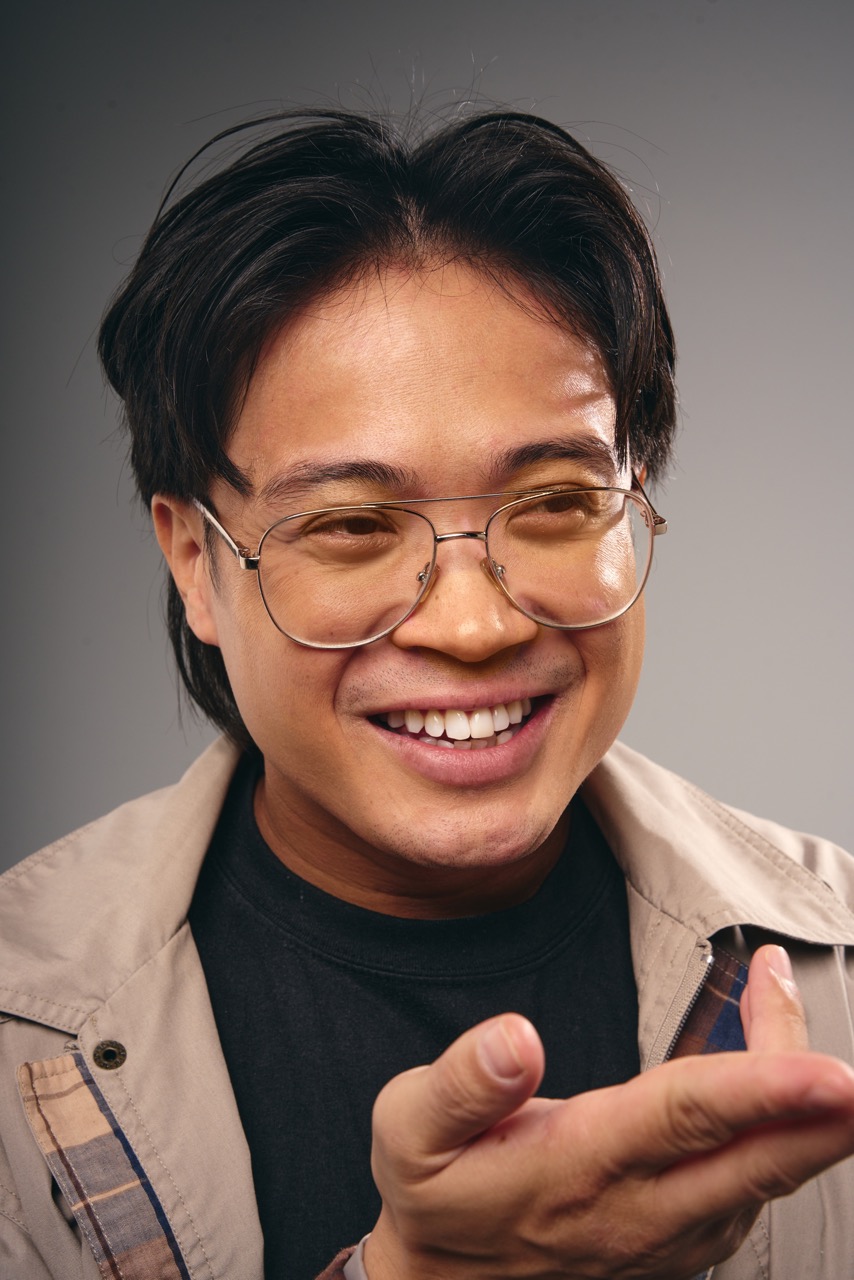
Photo credit: Justin Cueno
The ethics of the joke
Comedy opens up a wider conversation, but the work has real people and real cases in it. How did you hold the ethical line — breaking down what you're not supposed to say, while keeping it safe and respectful?
"I was afraid of writing the show. Sure, you can work around the confidentiality. You can change names, or creative edits. But what worried me more was whether the act of telling these stories could do justice the people I work with. My colleagues, some of the clients, the community."
"Stand-up is about finding the funny in things. If I'm not careful, I'll make a joke about something I find funny that actually isn't funny for the other person. I was afraid of being perceived as inconsiderate for even doing the show, let alone the jokes."
"Bina works in community arts, so she was very encouraging about how important a story like this is to tell. That kept me going. Suren was also helpful in making sure some of what I was saying didn't come across as inconsiderate or disrespectful. At the end of the day, let's see what people say after they watch. I've been careful not to rub people the wrong way — but art is going to do that, and it should."
The show sounds like it will keep growing.
"I hope so. Hopefully I can perform it at another festival and take on the feedback of the social workers who will be watching."
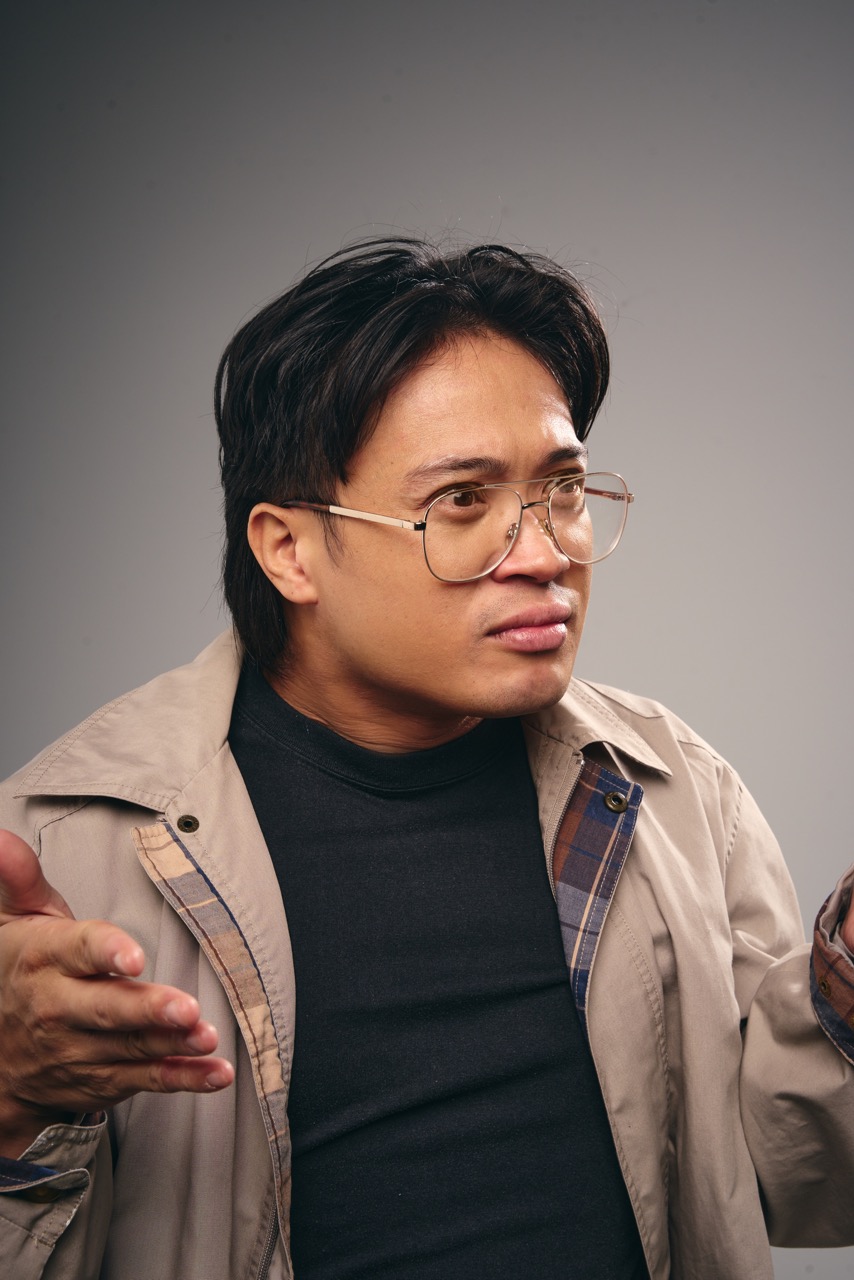
Photo credit: Justin Cueno
Everyone has a story
What do you hope to highlight that isn't highlighted often enough in Australian art?
"Writing and performance art can be perceived as exclusive. Like, if you haven't been of that world, don't even try. That's why I love the community arts sector: it encourages people to dip their toes in."
"If you're a social worker, if you're in fast food, if you work an office job — there's a story to be told anywhere. It deserves to be told. If you feel compelled, go for gold. Aim for the sky. Art is such an important way to live on this earth. It's a form of expression. There's no A-to-B set path in living this life. Art is a way of taking a step back and reflecting on what we've experienced. Everyone has a story, and it deserves to be told."
We need more workplace comedies.
"For sure. Some of the funniest people I've met were in the warehouse. People say, oh man, that was such a funny thing that happened — it'd be so funny if there was, like, The Office with Steve Carell, but the warehouse. And I'm like, yeah man, make it. Do it. It won't be a sitcom on HBO, but write something. Perform a joke on stage at an open mic. Art is so important in letting us live. And I mean, live."
Photo credit: Justin Cueno
There's Nothing Funny About Social Work — a debut solo stand-up hour from Western Sydney youth worker and comedian Ian "Esky" Escandor, on ego, ethics, and what it means to be successful at helping people. PYT Fairfield, 10–12 September 2026.
Writer & Performer: Ian "Esky" Escandor Director: Suren Jayemann Dramaturg: Bina Bhattacharya Additional Writing: Marcel Blanche de Wilt Opener: Johnson Mulia
Interviewed by Sydney Dramaturgical.
PYT Fairfield, Fairfield School of Arts, 19 Harris Street, Fairfield 2165 (Cabrogal Country). Part of Sydney Fringe 2026. Tickets via sydneyfringe.com.


%402x.svg)

.webp)


