Andrea James Lui on creating a Fringe show around a lesson plan, clown as an accident, and the small tight-knit village keeping The Pole Shebang upright. Lui brings The Pole Shebang, a coming-of-middle-age story about a nerdy pole teacher late to the biggest, glitziest stage in the land, to Erskineville Town Hall — Emerging Artist Share House for Sydney Fringe, 22–26 September.
Procrastinating Your Way to Success
Andrea James Lui on creating a Fringe show around a lesson plan, clown as an accident, and the small tight-knit village keeping The Pole Shebang upright.
Andrea James Lui brings The Pole Shebang, a coming-of-middle-age story about a nerdy pole teacher late to the biggest, glitziest stage in the land, to Erskineville Town Hall — Emerging Artist Share House for Sydney Fringe, 22–26 September.
Interviewed by Aubrey Naur.
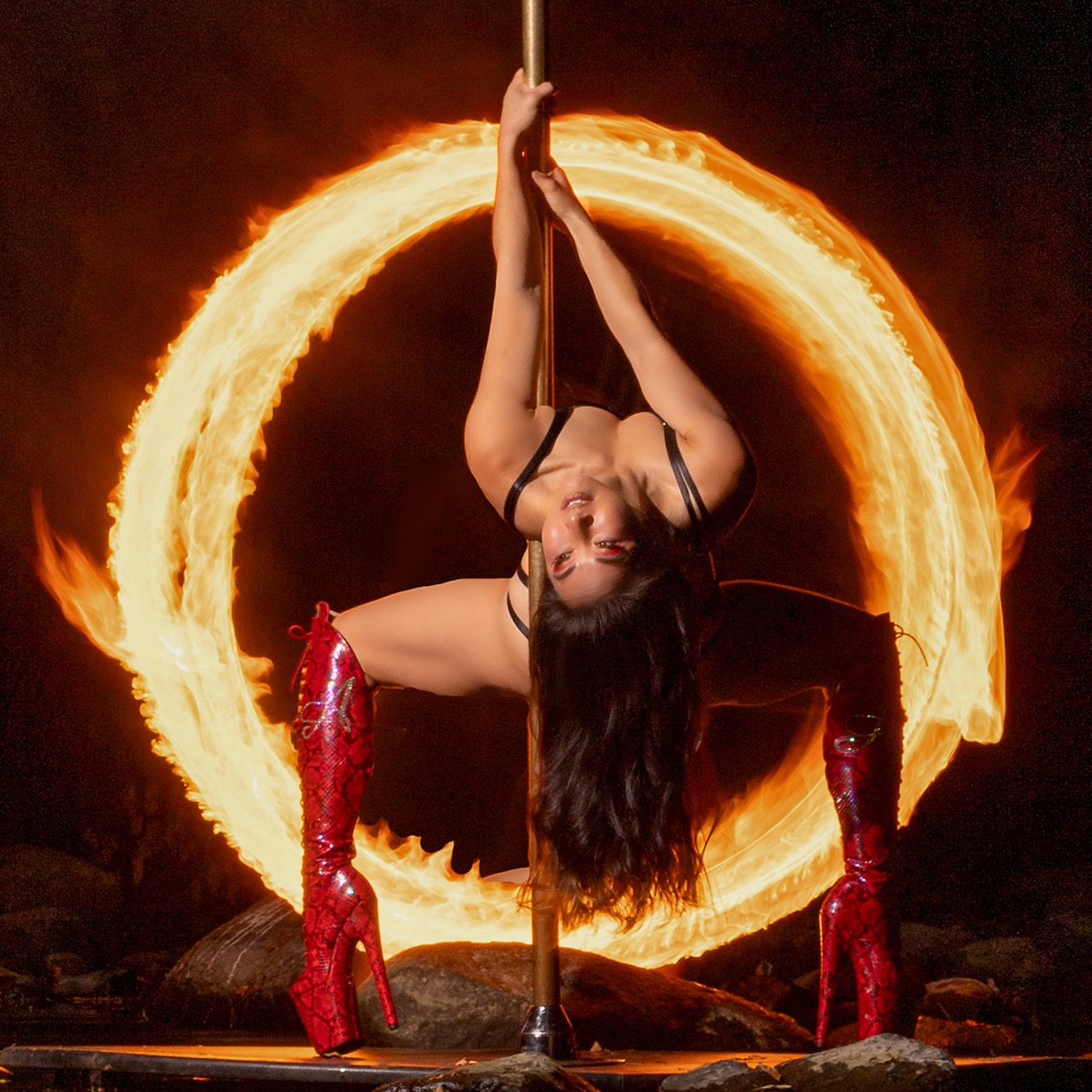
ANDREA JAMES LUI, PHOTO CREDIT: JEALOUS BY NATURE
Andrea James Lui is originally from Toronto, trained at York University in Creative Ensemble and at Randolph Academy in acting, singing and dancing, and moved to Australia where (on her partner's suggestion to 'find a hobby') she fell into pole dancing. After a decade of competing and teaching across Canada & Australia, including multiple Melbourne studios through lockdown, she has ended up with The Pole Shebang: a solo hour with audience interaction, that's picked up quite a few tricks from keeping a pandemic audience engaged.
The show has already toured six festivals — London (Ontario), Hamilton, Vancouver, Midsumma, Fringe World, Adelaide — and comes to Sydney as one of two back-to-back Australian stops before Melbourne Fringe. It's picked up a stack of stars along the way (★★★★½ at On The House and Clara Reviews) and a very local anxiety: turns out Sydney is one of the biggest cities in the world for pole, so there's pressure on the choreography to pack a punch.
We spoke about the training that kicks in when the brain goes blank, the difference between a comedian and a clown, and what an outside eye can do for storytelling..
This conversation has been edited for length and clarity.
Sydney to Melbourne, back to back
You've scheduled Sydney late in its festival, then straight into the middle of Melbourne's. Was that the plan?
"When it came time to scheduling this next round, I wanted to go from Sydney directly to Melbourne. So I'll be late in Sydney's festival and then sort of middle of Melbourne's. I didn't want to be at the start of either festival like I was in both Midsumma & Adelaide earlier this year. It was a bummer not being able to flyer other shows and do the networking stuff before opening because it was my first time, so I didn't know anybody."
But you've performed here before?
"I've done several pole competitions & showcases in Sydney, where I'd typically fly in for a weekend to do the show and then fly out again. Aside from pole shows, I worked on a big circus show at Sydney Opera House, but it was just post-COVID, so we were not allowed to do anything but sleep, do the show, go back to sleep. You couldn't contract anything, socialise, or engage. So I'm really excited to get a more accurate view of what the Sydney art scene is actually like."
Does bringing the show to Sydney change the choreography?
"Because it was my first solo show — alone on stage for an hour — I created quite simple, manageable pole dance acts for myself. But Sydney and Melbourne are arguably two of the biggest cities in the world for pole dancing, so you better believe I've been tweaking the choreography!"
Andrea James Lui, Video by Saturated Images
The lesson plan as a show
When did teaching become the framework you devised this show around?
"I've been placed in teacher roles since high school. You know like when you're a kid and you criticise a teacher and they say 'do you want to get up here and teach the class?' — I would be like, well, yes. I do. I'm going to teach you about indirect and direct objects, because I don't think you're doing a good job explaining grammar."
"So when it came to creating the show, I was like, I don't know how to make a show. So I made the whole premise that I'm a teacher teaching the audience a pole class, and the action of the story springboards from that."
"I don't know how to write a show, but I do know how to write a lesson plan."
The recursive form is doing something cool here.
"There are a couple of sayings that have haunted me. 'Those who can, do; those who can't, teach.' And 'jack of all trades, master of none.' I've always known that if I fall into teaching and stay there, I'll never get to do the things I actually want to do. Teaching will never satisfy the part of me that wants to get on stage and be super camp."
"But because I'm good at teaching, it's a security blanket. So when it comes to doing something scary — like writing a show — I can write a lesson plan, and then introduce obstacles that take the teacher out of her classroom and force her to go do the other thing that I, in real life, also want to do. It's an alignment between me and the character version of me."
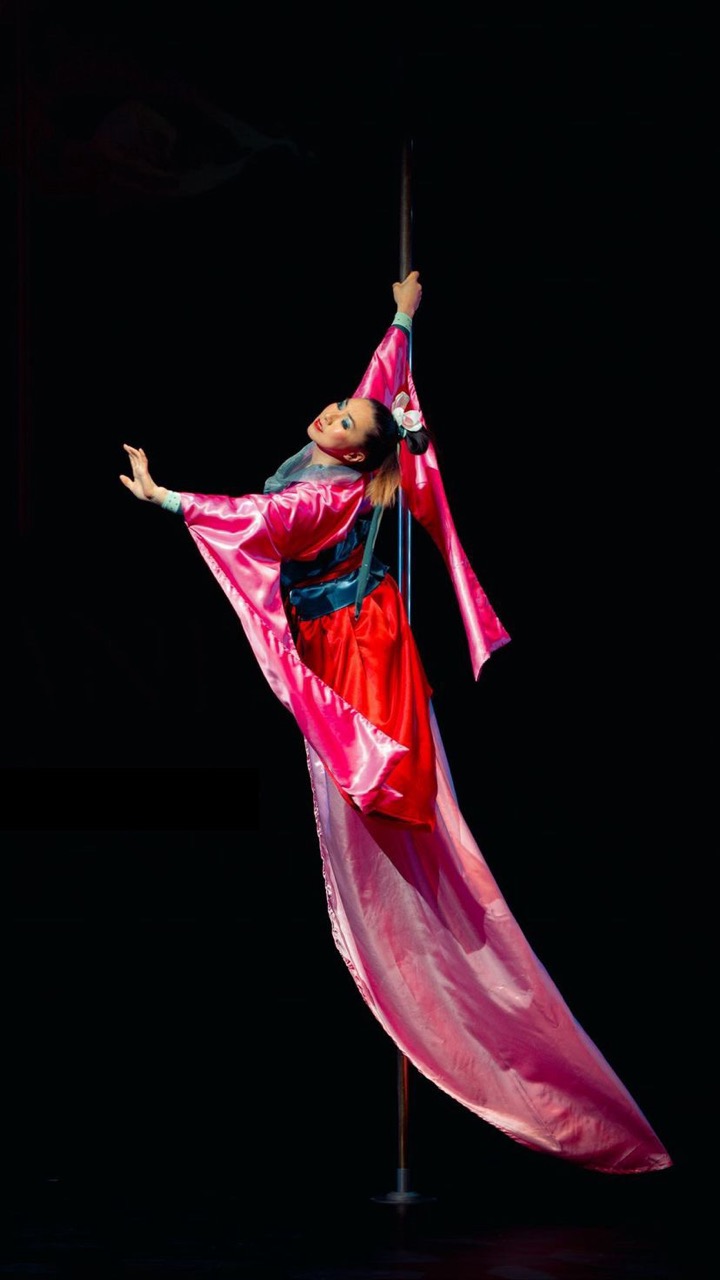
ANDREA JAMES LUI, PHOTO CREDIT: JARROD HELLMUTH
Charlie, Clara, and the dramaturgy of a burlesque performer with a notepad
You've credited Charlie Love and Clara Cupcakes as early collaborators. Why go to a burlesque performer rather than a director?
"My background is very ensemble oriented. Even at theatre school I majored in Creative Ensemble, where we learned to collaborate to create, write, direct, perform and produce. Then I worked with a sketch comedy troupe doing fringe shows the same way. So I'm accustomed to having a team."
"When I decided to write a show in Australia, I didn't know how to do it, and I didn't know anyone who could help — I'd spent ten years just pole dancing, so everyone I knew in Australia was a pole dancer. Charlie Love had been my duo pole partner in Melbourne pre-COVID. He was someone I could ask to look at what I had. And Clara Cupcakes was hosting pole competitions and doing burlesque cabarets — her comedy, her ability to emcee and train an audience, get them laughing, cheering — I was like, I'm going to need that."
What did Clara actually do in the room?
"I was doing awkwardly uncomfortable stumble-throughs — script in hand, 'somebody's knocking at my door, I'm just going to grab that real quick' — really painful, close friends only. Clara came into one of those and was there with her notepad and pen the whole time, just taking notes. By the end she was like: here are the main themes of your show. This is the trajectory. This is who you are as a person and what I think you should highlight. Here are some jokes you may want to consider adding."
"One rehearsal. She gave me the belief that I had a show. I thought I had nothing. She said, no — your bones are very clear. The skeleton of your show is very clear. It was like a therapy session. That's dramaturgy, isn't it? That's exactly what she did."
And Charlie followed you to Canada.
"Charlie flew all the way to Canada for my first festival and helped me carry a stage pole around, hit play on the music, run bigger rehearsal sessions with sketch comedy people, stage combat people, theatre enthusiasts. Practical support. Then the day before my show opened, he had to fly back to Australia, like 'I have to go do a contract now, byeeeee.'"
Insurance, kilos of pole, and the village
There's a heavy metal rod that you've got to lug around everywhere. How does producing a pole show actually work?
"Travelling with a stage pole is expensive: it packs down into four bags, each around twenty or thirty kilos, though one is just the pole so it's lighter, but four giant heavy bags would be crazy expensive."
"So everywhere I've travelled, I've known somebody or contacted pole studios asking would you be interested in a sponsorship or partnership? They'd lend me a stage pole, host workshops, their students and teachers volunteer at the show. Sydney and Melbourne are the seventh and eighth festivals of this show, and if it weren't for pole studios, the small business owners in the community, and X-POLE themselves sending equipment and helping with cross-promotion, none of it would happen."
Folks love helping out. But that doesn't make asking for help any easier.
"I still have this knee-jerk reaction of, oh god, what am I doing, how can I ask strangers or loose acquaintances for help this frequently? But people have invited me into their homes, lent me their cars, helped in huge significant ways. The rest is coming from my partner, who's really championing what I'm doing. It's a combination of sources all contributing."
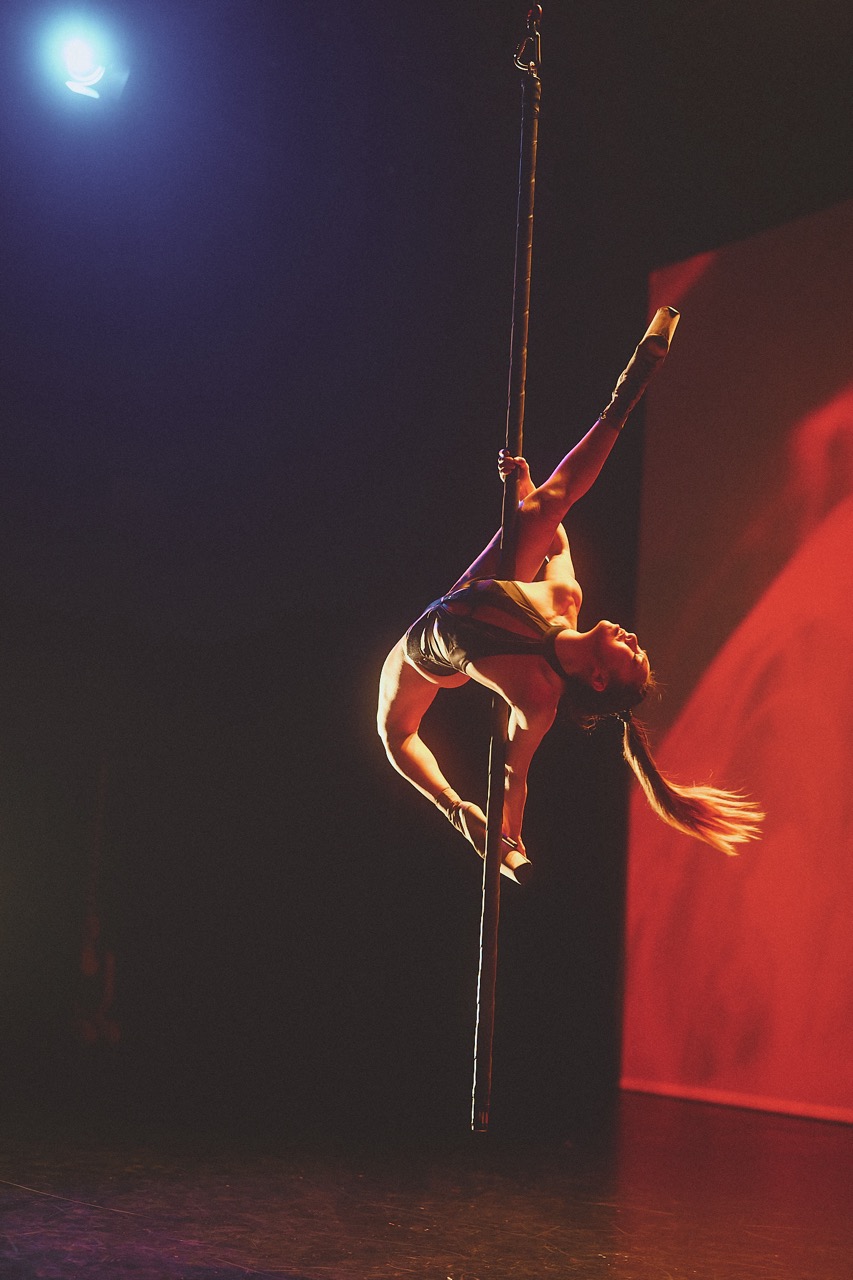
ANDREA JAMES LUI, PHOTO CREDIT: BRYAN LLANEZA
Breaking even, and the scab question
You broke even on a three-city tour earlier this year. Breaking even is huge in Fringe.
"I did Midsumma, Fringe World and Adelaide Fringe. Over all three cities, I broke even. I came home with my hat in my hand telling my partner, well, I've been gone for two months and I didn't make any money. He was like, but you broke even, and everyone says that's success. My parents have really ingrained in the back of my mind, 'Andrea, what are you even doing, you're not contributing anything.' My partner is the one who defends me to them. 'She works really hard, she's doing really well, she doesn't make money, but we don't care.' And I'm always like — are you sure you don't care?"
Fringes right now come with an ethical question about affordability.
"Another performer I respect devastatingly much was giving me tips about Melbourne Fringe. There'd been controversy about the increase in fees, and I asked her, am I a scab if I go ahead and do this festival? She said: no. You have to take the opportunities you can afford to do, and just be thankful you can. Whenever someone tells me they're on their eighth Edinburgh Fringe, I'm like, okay — you're somebody who can afford it. There are people who did Edinburgh once like eight years ago and are still in debt from it."
You've invested more in marketing this round. How does that feel?
"Like playing slot machines. It's only worth it if it yields more ticket sales than you would have otherwise. I'm comparing what I spent earlier this year to what came in, versus what I'm spending now and what I think it'll bring. It's basically gambling. It's a real learning process.
Training that kicks in
You've said the show 'just started coming out of you.' What was actually happening?
"I had this knee-jerk self-deprecating self-doubt — I don't know what I'm doing, I can't be alone on stage for an hour. Then I realised, wait: I have an entire university degree on how to create a show. I have a decade of solo competition pieces that have won awards. I know how to choreograph pole dances."
"It's like first aid. I used to be a lifeguard, and a lot of lifeguard training is scenario reenactment. Classmates pretend to be drowning, bleeding, have broken bones, and you reenact exactly what you'd say — check for environmental danger, check consciousness, check pulse, check airway. Over and over. Karate is the same, someone tries to grab your throat, you drill the response until it's conditioned. When you're in a moment of panic and your brain goes 'I don't know what to do,' the autopilot kicks in. That's basically what my show is. It just started coming out of me. We could put it in order, put it on stage, and figure out what it means later."
Evolving inside the show
How has the show changed across six festivals?
"My first festival was London, Ontario — only 18 shows altogether in the whole festival, 2024, still feeling the effects of COVID. I braced for a worst case scenario. I expected older, white, conservative couples in a tiny town. What surprised me is that older people were really excited. They didn't get all my pop culture references, but they got the heart of it and the jokes."
"The initial evolution wasn't that the show was evolving. It was that I was evolving within the show — more confident playing with an audience, asking actual questions, hearing actual answers I could reference later. By Vancouver my final show had about a hundred and seventy people."
And then Australia.
"Australia walloped me in the face. The festivals here are not dozens of shows, they're hundreds. I'm no longer the only pole dancer — I'm in a sea of aerialists, circus, cabaret, drag, pole. You pole? Who cares? So does everybody else here. The tour earlier this year was a hundred percent an evolution in production and marketing. Now, with Sydney coming up, I finally have time for creative growth — rewrites, more intricate choreography."
Having done Fringe myself — if there's one thing that I can say about the Australian arts ecosystem, it's that it's organised. Probably because of all the bureaucracy and all of the forms they make you fill out.
But I've found the festival bureaucracy helpful — it's forced me to put a structure around my otherwise messy and ineffable artistic practice. Have you had this experience with the application process?
"Yes! It's probably the autistic part of me that's like: yes, let me fill out questionnaires! They force me to think about what my goals actually are, what my challenges actually are, and then reverse-engineer. I do like the structure."
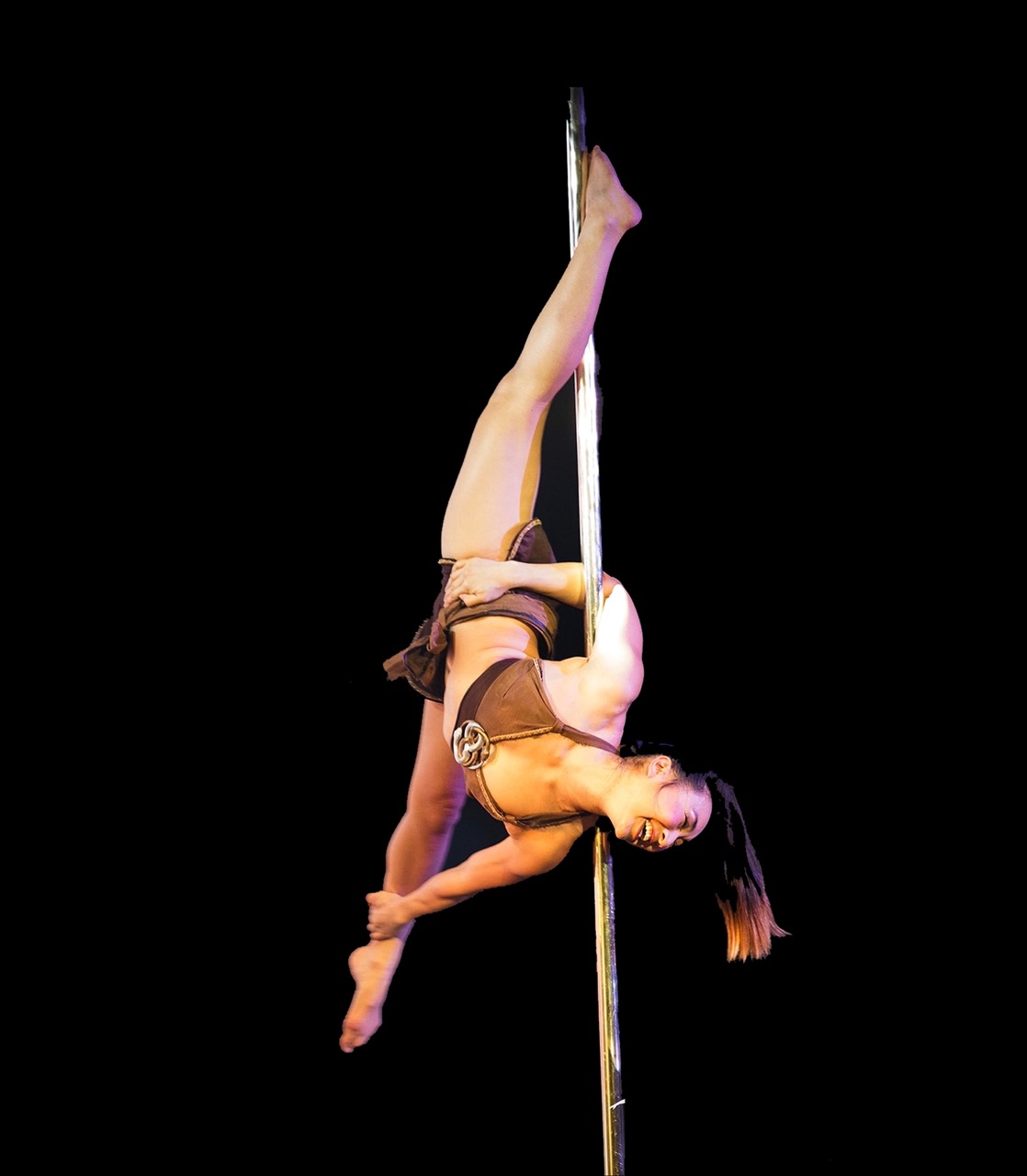
ANDREA JAMES LUI PHOTO CREDIT: LIONESS PHOTOGRAPHY
Accidentally funny
There's an attitude of clowning in your vibes. Any clown background?
"So Melbourne Fringe has a program called Outside Eye that pairs artists up. I met mine this week and her first impression, after hearing me speak, was 'oh, we've got a clown on our hands.' I took it as a deep compliment. When I started creating this show I was in a period of I don't know what I'm doing, I need more skills — completely forgetting I have a college degree and a decade in this. I was doing a circus show in Adelaide Fringe and everybody was buzzing about Gary Starr's Greece Lightning. I saw it and thought it was the most brilliant thing I'd seen in years. He's obviously the ultimate clown king of Australia now — is it safe to say that? So I did a couple of his clown workshops and realised almost instantly that I suck at it."
"Everyone else's instincts were so much better than mine. Everything I was doing was wrong and stupid. I have a background in sketch comedy and improv, and even in improv I felt like I had the worst instincts. In my sketch troupe I felt like the least useful person in the writing room — what I brought was physical skills. I choreographed things, wrote spoof song lyrics. Always in the framework of something existing, replacing things."
So you called it a storytelling show.
"Garry Starr said the only difference between storytelling and comedy is whether or not people laugh. I didn't want to put that pressure on myself, so I called it storytelling. Then performance after performance, people were consistently laughing, talking about how hilarious the show was."
"What made my Outside Eye say 'we've got a clown here' was: clowns are accidentally funny, comedians are intentionally funny. So maybe I shouldn't try to be funny. Maybe I should just put myself in these circumstances, and if funny things happen, they happen. If I were a clown, my clown would be a robot. An android of some kind."
Producer versus creative
In fringe the producer, marketer and performer are the same person. Do those parts conflict?
"There's a conflict between me as a producer and me as a creative because me as a human being procrastinates. When I have a looming deadline, I'm so productive with everything except that deadline. My house is immaculate, chores done, computer files organised — everything but the thing. Sometimes the producer tasks make me procrastinate on physical rehearsal. But because it's pole, I need a certain strength and stamina to safely execute the show, so safety always trumps procrastination. But sometimes I'm doing rehab exercises specifically so I can't send the marketing emails. They end up battling each other."
Procrastinating your way to success.
"Procrastinating your way to success — that's a good talk title. I'm writing that down."
Hyperfixation as a superpower
You once gave a seminar called Hyperfixation as a Superpower.
"A lot of pole dancers are neurodivergent — the pain tolerance is different, the hyperfixation is different, the creativity and thought processes are different. Pole attracts neurodivergent people. I'm a hyperfixator, and I know a lot of pole dancers are. The talk was a five-point plan for safely using your hyperfixation to become a better pole dancer. Instead of feeling like your neurodivergence, autism or ADHD is a deficit, how do we reframe it as a superpower? A weapon you know how to wield."
Speaking of labels — you've moved from marketing yourself as 'Asian-Canadian-Australian pole dancer' to naming neurodivergence and gender diversity upfront. What shifted?
"After every show I set up a camera where the audience can leave reactions. People kept saying things like 'that section on procrastination really spoke to me,' or 'thank you for the nonbinary shout-out.' I realised I'd never had to label myself because people of a certain demographic see me and automatically relate. There was a time I wouldn't have referred to myself as neurodivergent, autistic, gender diverse — I market it now as gender rebellious. But after people kept labelling me, I was like: I can get behind that. It feels accurate."
"So it's useful for me to say clearly in the show that I'm neurodivergent and gender diverse, because the show is about a neurodivergent person trying to make something on an urgent, high-pressure deadline, and a gender diverse person trying to enter a gender-segregated competition. In pole there's men's competitions and women's competitions. Where do you go if you don't feel comfortable in one or welcome in the other? What if you're somewhere in the middle? It means something to people to see not just an Asian on stage, but a gender rebellious person put on a pair of high heels and lipstick."
The audience seeing themselves in the show has helped you see yourself.
"That's a good way to describe it. My first ever bio wasn't written by me, because I didn't know how to write about myself. It goes back to that thing — it's easier to do something for someone else than for yourself. So The Pole Shebang is not for me, it's for everyone else."
THE POLE SHEBANG — created and performed by Andrea James Lui. Erskineville Town Hall — Emerging Artist Share House — The Living Room, Sydney Fringe Festival, 22–26 September 2026, 9pm.
Created and performed by: Andrea James Lui Early dramaturgical support: Clara Cupcakes Rehearsal and tour support: Charlie Love


%402x.svg)

.webp)


