Sofia El Iraki brings Influence to the Montréal Fringe — a 45-minute contemporary dance work, made in a week of intensive rehearsal with co-creators Sacha Ashwini and Noha Abdelmoaty, that weaves movement vocabularies from Morocco, Egypt and India into a meditation on identity, connection and the influences we carry. The piece runs June 17–20, 2026 at La Chapelle.
Influence: A Conversation with Sofia El Iraki
Sofia El Iraki brings Influence to the Montréal Fringe — a 45-minute contemporary dance work, made in a week of intensive rehearsal with co-creators Sacha Ashwini and Noha Abdelmoaty, that weaves movement vocabularies from Morocco, Egypt and India into a meditation on identity, connection and the influences we carry. The piece runs June 17–20, 2026 at La Chapelle.
Interviewed by noor.
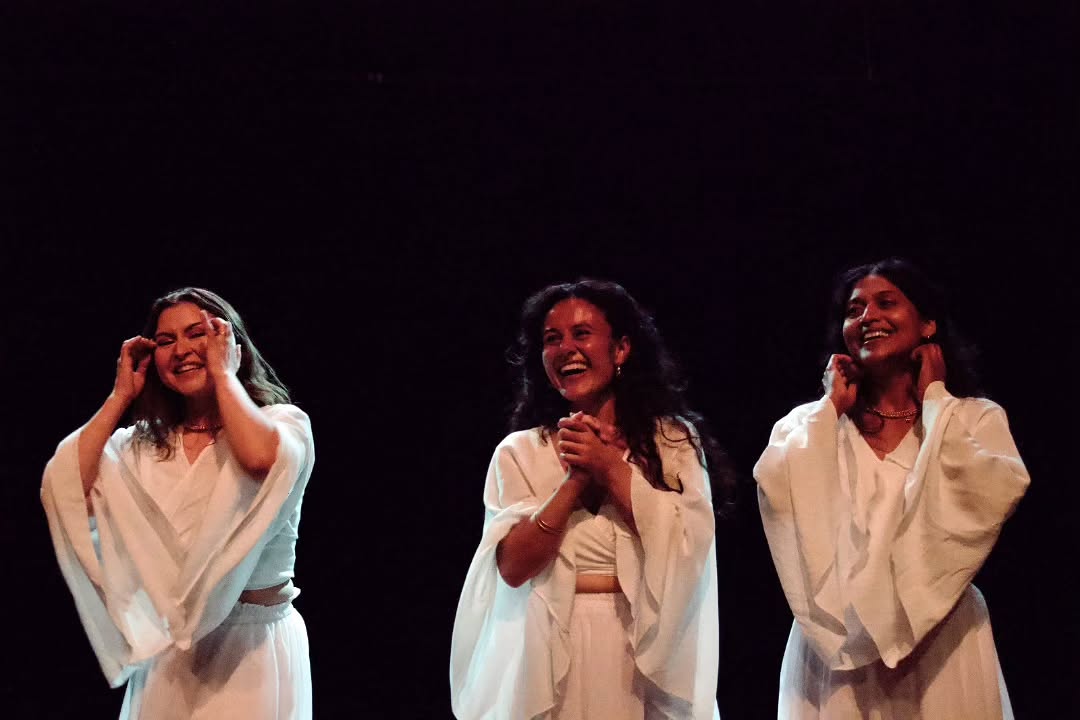
L to R: Sofia El Iraki, Noha Abdelmoaty, Sacha Ashwini. Photo: Vievida.
Thank you so much, Sofia, for agreeing to do this conversation. I've known you for a while now, and you, as a dance teacher, but also watching you move through different kinds of performances, different styles, different spaces. But this was your first time bringing something to Fringe, right? So, what made Influence the piece that got made specifically for this context of Fringe, and how did doing here feel different from everything else you've done before?
“So, first, this process and this creation was something new. As a creator, I created a few pieces, but never in this setting with these people also. And I think in everything that you create is always a co-creation with the people you are with, so it's always a new experience, and so this was the first time creating with Sasha and Noha also. I had many options since I also have a dance school, so I was like, should it be an opportunity to present something with the student, or should I do something more in the Indian dance, Bollywood, or the different styles that I was doing and teaching at that moment? But I think the piece Influence is more in a contemporary approach, fusion in many styles. I wanted to go into a process of creation that was different from the way that I was doing choreography when I'm teaching, for example, or yeah, really like creating movement on a specific song. I wanted to have an approach where we meet in the studio and we see what happens and we connect. The connection will make something emerge instead of having a plan before and coming, okay, let's do that. Sasha and Noha were actually two people I connected before with. Noha, we've never danced together, but I feel like I've known her for forever. That's the really specific connection that I had with her, and also I knew her because she was working for a theater group. She was the coordinator of the group, and she contacted me because they needed a choreographer for a specific moment in the piece, and they presented their piece last year at the Fringe Festival. So that's funny because we met through Fringe. And Sasha, she was also teaching at my school.”
L to R: Sofia El Iraki, Noha Abdelmoaty, Sacha Ashwini. Photo: Vievida.
But about the idea, did you have the idea from before, or did it come suddenly because you were selected?
“The themes that we talked about are themes that from the beginning are part of my creative process, my démarche artistique, because we are talking about identity, culture, in movement, connection with the other, this idea of being all connected on this earth, and that we are the same, even though we have different backgrounds, we have different cultures, we are from different places on the globe. These themes and this idea were there before. Now it was how to transcribe this idea into this setting. 45 minute piece with three people, with one week of intensive rehearsal. This was the magic of the creation. What happened happened. The idea was there before, but it was just how to adapt it to this context.”
Different languages, artistic languages
As you were saying about coming from different contexts, so you come from Morocco and Noha from Egypt and Sasha from India. Dance became the medium for bringing these contexts in the room together, as you were saying. Could you tell me more about that?
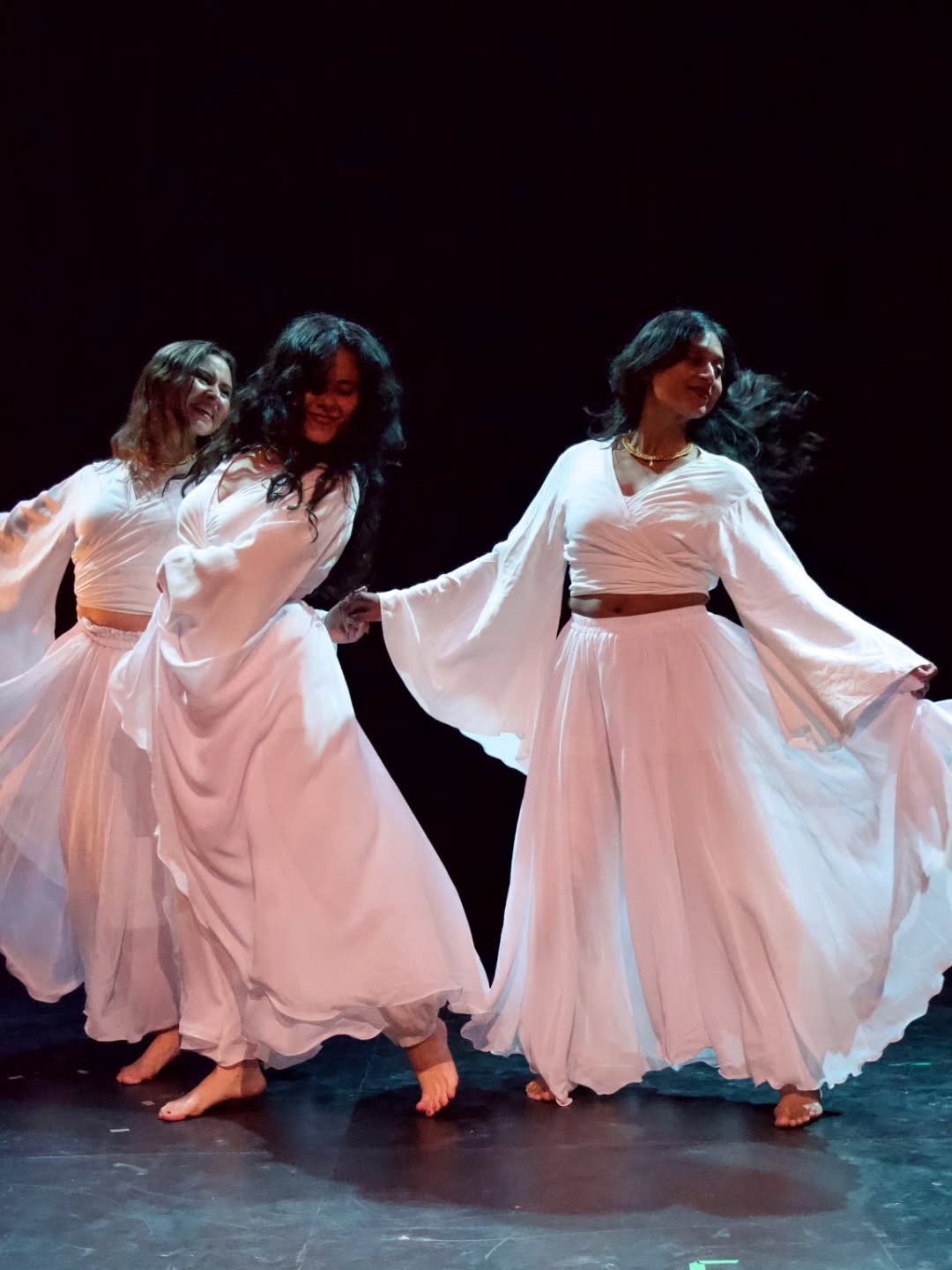
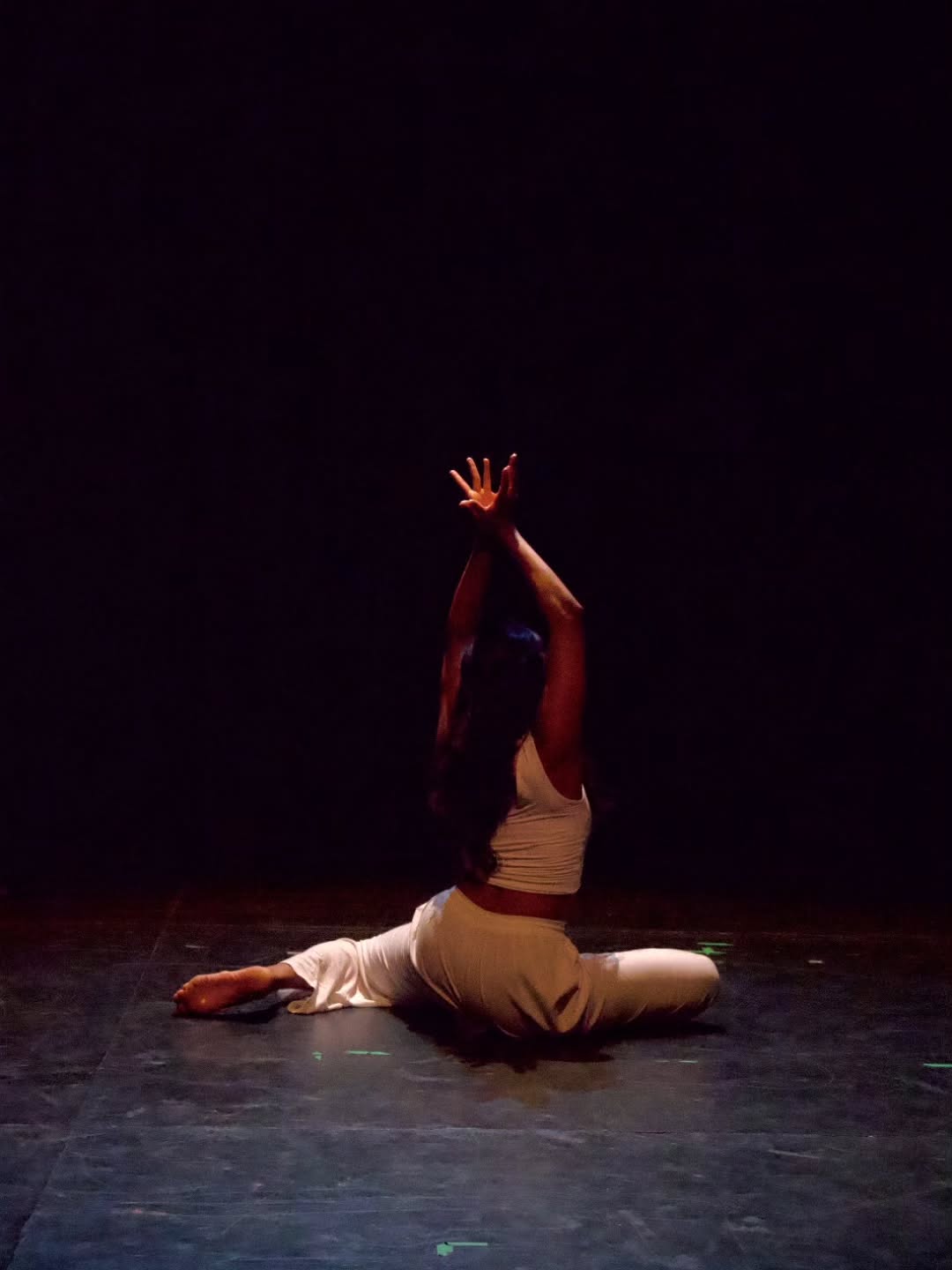
“We played with that, and this was I think what was most important for us than the final result, that is to explore these communication between different languages, artistic languages. It was important for us that we each have a solo moment in the piece to express ourselves freely in our form, without even saying, that this is this art form, this is this dance form, etc., because we are whole and everything is cohabitating in our movement, in ourselves. That's why we have this space to actually express ourselves separately, and then come together. We had some moments where, for example, we kind of touched the baladi dance form, not everyone was familiar with the style, so I know that we had some moments where we were showing each other a few movements, not specifically identifying the styles, but just movement that we connect with. This is the movement that I like and that is natural in my body. So I will show them to you. We kind of exchange like that to then create something combining all these movements.”
A solo moment within Influence. Photo: Vievida.
So how did the music and the collaboration also come together, like the choice of this music, for example, and how much of the sound existed before the movement did, and how much got built around what you were already doing?
“Originally we wanted to have an original composition and work in collaboration with the composer, but because of time, we were not able to do that. So he helped with putting the music together, but all the music was already existing. Nothing was composed specifically, but this is our goal for the future. That's why sometimes we only use a drone or silence even, and do our own rhythm, our own music, which is also a challenge because the notion of time is different when you have no track, or even when you are with live musicians. It's a different way of composing, which is a nice feeling because each presentation will be different, different timing, different feeling. The way you feel will affect the way you feel in your perceived time. Sometimes you feel like, oh, it's this time, this moment is too long. Maybe we should accelerate. And sometimes it's the opposite. You take too much time, and then the music comes and. Already! So it was alive, you know. So it was really fun to actually have this time, and we had like a garage band session on the laptop. This is what I gave to the tech person, and the track was not the same for every presentation. So sometimes we felt that tonight this moment is a bit too long, so maybe let's cut it and let's see how we feel. And then we ask the audience at the end, and we also adapt the track based on what the audience sometimes said about this moment or that moment. Oh, this was too short. We wanted to have more of this, so we tried and added some music just to have more time to explore. Most of the choreography and some parts were explorations, so we kind of tried different things also every night, which was fun to do.”
Making their own stories
What made you want that kind of exposure? And has anything from those conversations already started to change how the piece looks in the future?
“I think the connection with the audience is key because it's really precious to have this feedback. Yes, you can have feedback on social media if you're posting something, but even posting something related to arts vivants, it becomes non vivants when it's online, it's a video, you don't have the same experience as a live performance. To have the live feedback from the live performance, and also fresh right after the performance. Then we ask also, what did you feel and what did you understand from this piece? What are we talking about? Instead of us being okay, we wanted to say this and this and this. No, what did you perceive? Because okay, there's one story, but we keep it pretty much abstract, so that everyone can also make their own stories with what they see and make their own experience. It was interesting to have these kinds of exchanges at the end.”
So, is that openness, that ambiguity, and that abstraction, as you said, intentional? Or is there a version of Influence where you'd frame that more explicitly for someone coming in without that background?
“Yeah, that's a good question. And that's also something that we always think about. Doing specific forms, we feel also that sometimes you have this responsibility of also like educating or like explain or show that to an audience that might not know, and this, without being a theoretical class, you know, like it's not like it is still a piece that has its own character, its own vibe, its own purpose, its own thing, and it is composed by different stuff. So, how to explain without being too evident, but keeping this abstraction or the themes or the stories, the main thing. But without erasing, of course, the thing that we are using to express these stories. So to find the balance is not easy, and it's something that we think about. But also, the beauty of these arts and these cultures is that sometimes even few we notice by our connections and even with other art forms and other people that sometimes the boundaries, the frontier, the borders are not defined in cultures.”
So there's a lot in the room when you watch the performance. I was there — women on stage together, a real sense of joy that you witnessed of the connection between the three of you. So if you had to say in your own words what Influence is actually about for you right now, what would you say?
“If I just speak about influence, the theme ‘influence' — it's about how we are always a combination of many different influences, each one of us, and we keep evolving as an individual with different and new influences every time. So with this piece we played with the influence that we have over each other, but the influences that we have from our past, from our cultures, from our parents, from our backgrounds, the influence that being influenced by the audience that is present right now while we are performing, the influence that we may have on the others. For me, influence — it's that goal.”
A continuum
So, where do you want to take it next? Is there a version of Influence beyond the Fringe run, and what would need to happen to get it there?
“Yes, it was a work in progress. The next step will be to think — we didn't plan the dates yet, but we'll be in a residency here at Mayuraa Studio. We'll have like a week of residency in 2026 hopefully, and we will be able to also apply to many different festivals or anywhere we can perform and produce the piece. But I think it will always be a work in progress. Nothing is never finished, so that's why you can't say okay, this piece is finished. It can always evolve because we are influenced by everything, and we are changing also. So it is a continuum. This piece will continue evolving. We'll see until when. And we were also talking about the creation process and we wanted to maybe bring other people in the room to continue exploring like more and more these influences, to have live musicians also, to have many more people and do some explorations, do some exploring, exchanging, to see like what can emerge from these connections to nourish the process and to nourish the piece. Will the piece stay a trio? I don't know. Will the piece stay a 45-minute onstage performance? No idea. Everything is possible. I think I know some creators — they have a specific plan, they have something already that they want to create and they go towards this. But I'm really into loving the magic of the creation and being impressioné, like being impressed by things that are emerging that you didn't plan. Just for this, I think this is also why I'm doing this, and I think we are doing this. That's why also the process is way more important than the results, because you see that creation is divine. It's coming from somewhere else. It is an experience of life.”
Influence — a contemporary dance trio choreographed and performed by Sofia El Iraki, Sacha Ashwini and Noha Abdelmoaty. La Chapelle, June 17–20, 2026.
Chorégraphes / interprètes | Choreographers / performers: Sofia El Iraki, Sacha Ashwini, Noha Abdelmoaty Compositeur | Composer: Ahmed Soroko Conseillère artistique | Artistic advisor: Chanel Cheiban Photos: Vievida


%402x.svg)

.webp)


