Daumas: Devil's Advocate Review — MBC Productions at Mission Santa Cruz, Montréal Fringe 2026
MBC Productions' Daumas: Devil's Advocate, an interactive courtroom drama written by Fred Azeredo and co-directed by Azeredo and Krystie Nguyen, puts its title character on trial for treason and hands the verdict to the audience. At Mission Santa Cruz for Montréal Fringe 2026, noor finds the show's real texture in the unscripted room it produces — and wonders what a version willing to wander further from its own script might look like.
Summoned!
MBC Productions' Daumas: Devil's Advocate, an interactive courtroom drama written by Fred Azeredo and co-directed by Azeredo and Krystie Nguyen, puts its title character on trial for treason and hands the verdict to the audience. At Mission Santa Cruz for Montréal Fringe 2026, noor finds the show's real texture in the unscripted room it produces — and wonders what a version willing to wander further from its own script might look like.
Reviewed by noor.
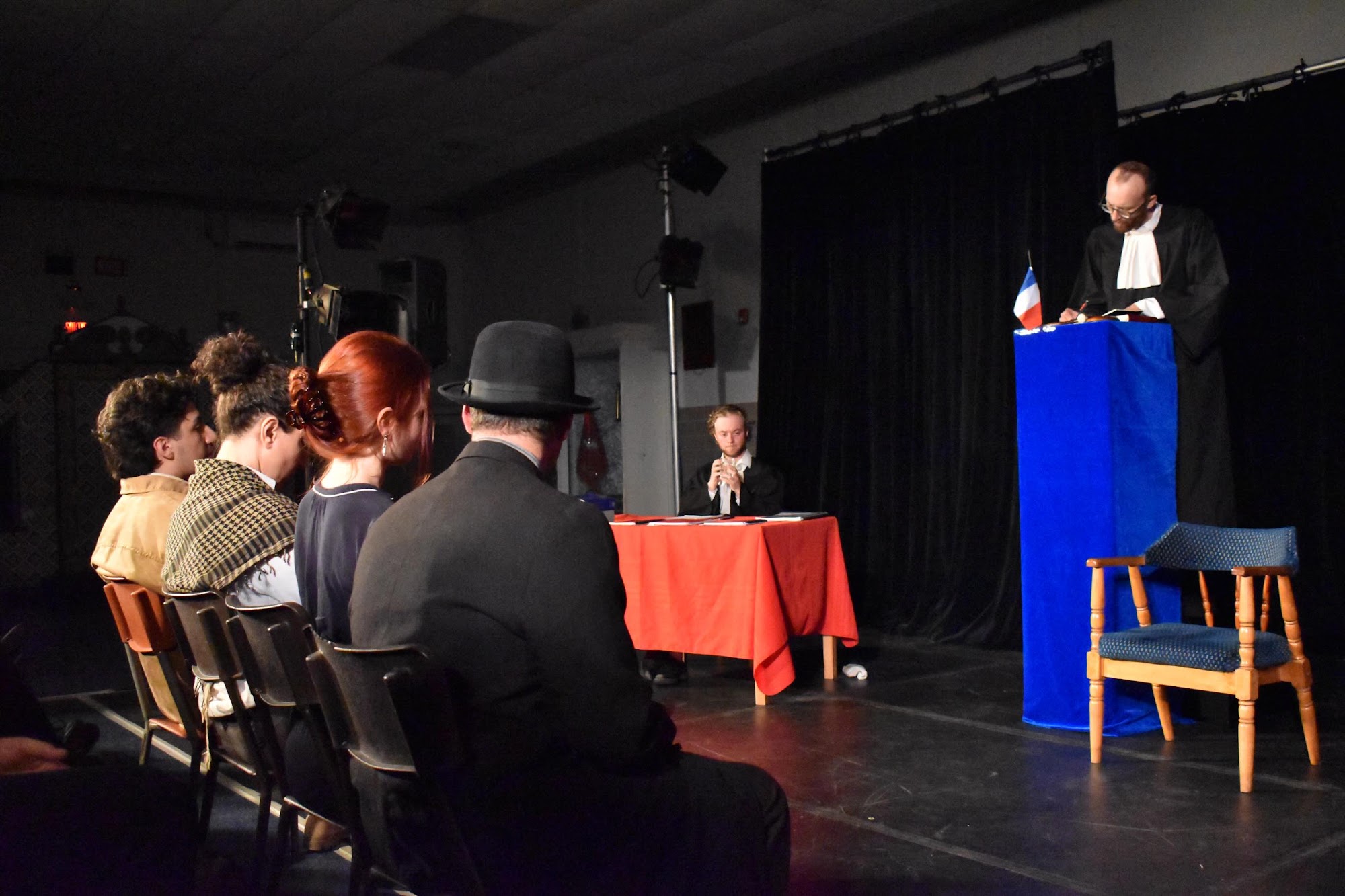
The witnesses face the bench as Daumas' trial unfolds. Photo: Hwaan Han / MBC Productions
Justice was served, we were told, or so the play insisted. Fifty minutes or so of Daumas: Devil's Advocate end with the audience holding up their hands to decide whether the man on trial is guilty. What does it actually mean for a play to ask this of the people watching it? Is the verdict being placed, briefly and sincerely, in the audience's hands? Or are we only working through a script that has already decided which way the vote should fall, using our hands as the mechanism through which its own ending arrives?
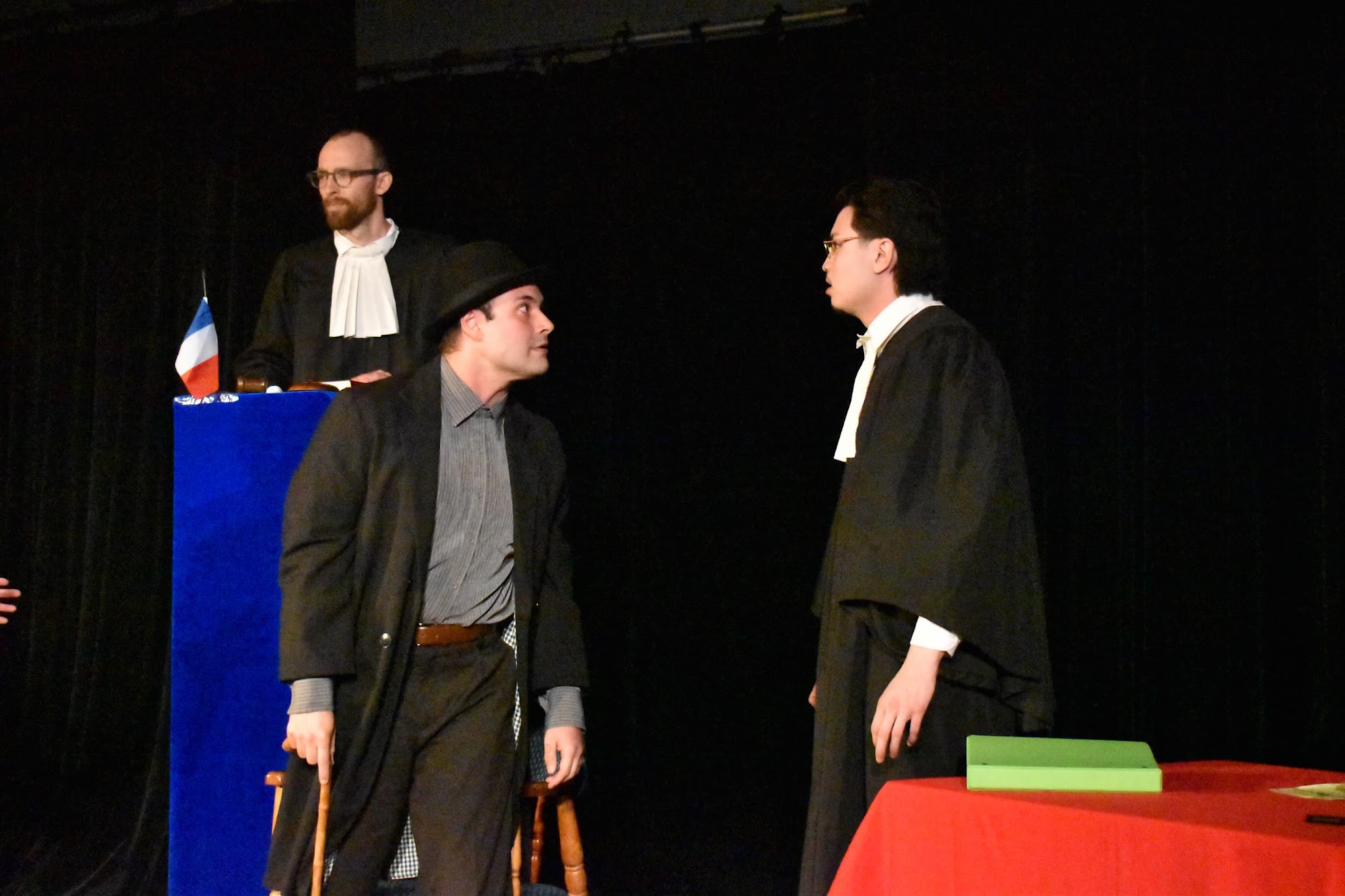
Confrontation in the courtroom. Photo: Hwaan Han / MBC Productions
MBC Productions' courtroom drama, written by Fred Azeredo and co-directed by Azeredo and Krystie Nguyen, borrows its premise from the real life of Jacques Vergès, the French-Algerian lawyer of Vietnamese descent known, not always kindly, for defending clients most lawyers would refuse. Here he becomes Georges Daumas, on trial for treason, summoning witnesses from his own past to defend himself: an ex-wife who was a militant, a revolutionary tried for terror, a Nazi officer among them. Each witness drags a fragment of Daumas's history back into the courtroom, and the audience is left to assemble those fragments into a single judgment. Guilty, or not.
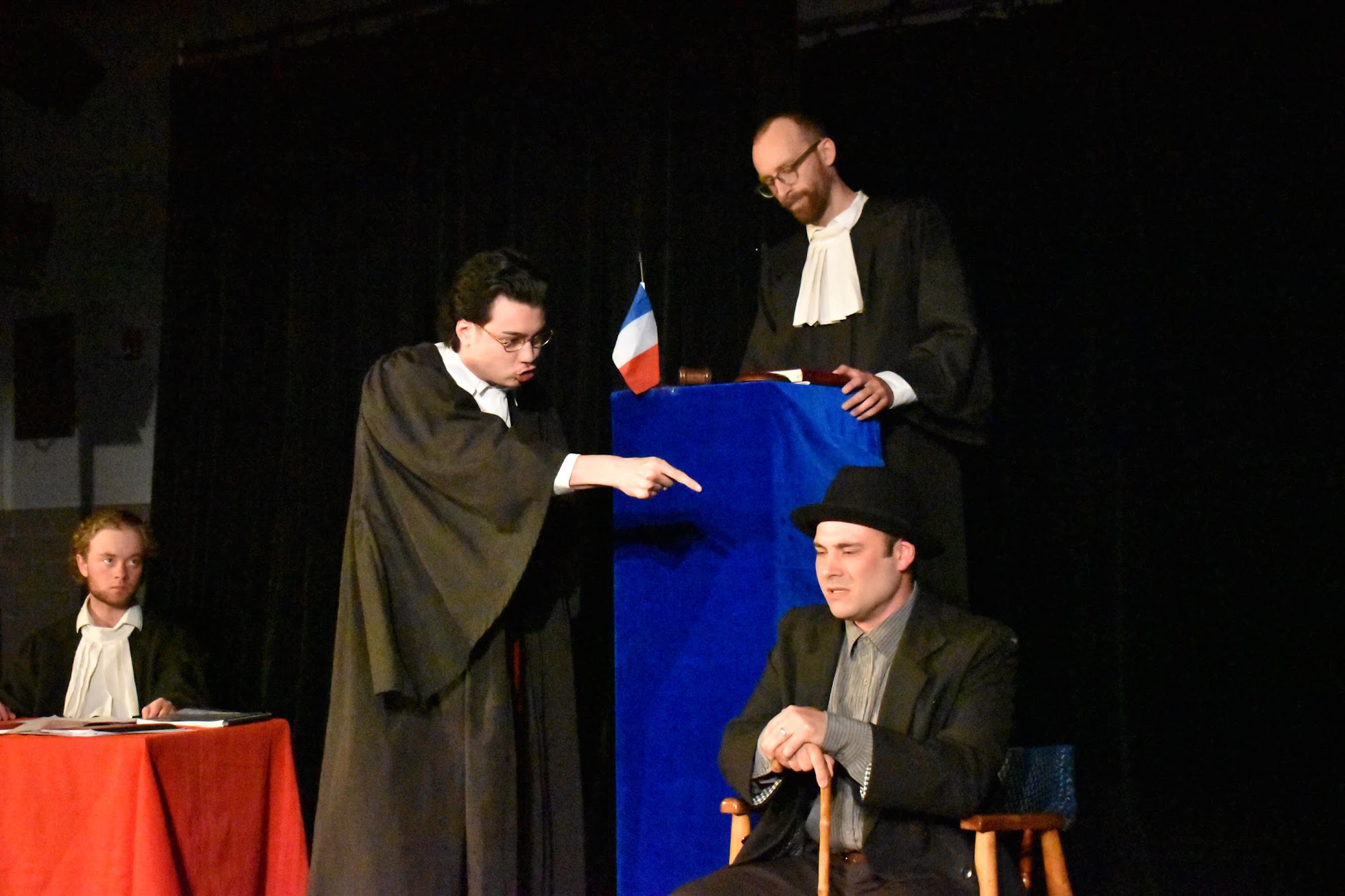
Daumas' defense is put to the test before the court. Photo: Hwaan Han / MBC Productions
That assembly is where the play's real question lives, and it is more than just about Daumas. It's about what happens when a room of strangers is asked to reach consensus in the space of a few minutes. The interactive stretch that follows the vote, though, is where the evening's real texture shows itself. Sitting through fifty minutes of the same unfolding story with a room of strangers turns out to be a strange kind of shared ground, not quite intimacy, but something adjacent to it. I watched people break the ice with whoever happened to be next to them. Some sat through that discussion time with visible awkwardness, unsure what to do with a stranger's opinion on a fictional man's guilt. Others, especially those who had come with someone they already knew, leaned into the debate, arguing in real time over what the “right” call could be. It's a rare thing for a Fringe show to produce that kind of unscripted in-between conversation, whatever shape it takes.
And yet the choice the play actually offers, guilty or not guilty, keeps the audience wandering inside a script that was written before we arrived. Most of the real thinking seems to happen in that wandering, in the gap between the binary we're handed and what we might actually want to say if given more room. I kept returning, after the show, to a version of this play that never happened: what if an audience member had been invited up not to vote, but to become Daumas's accomplice, implicated directly rather than asked to judge from a seat. Would that change what justice, or the performance of it, felt like in that room? I don't know, but I want to.
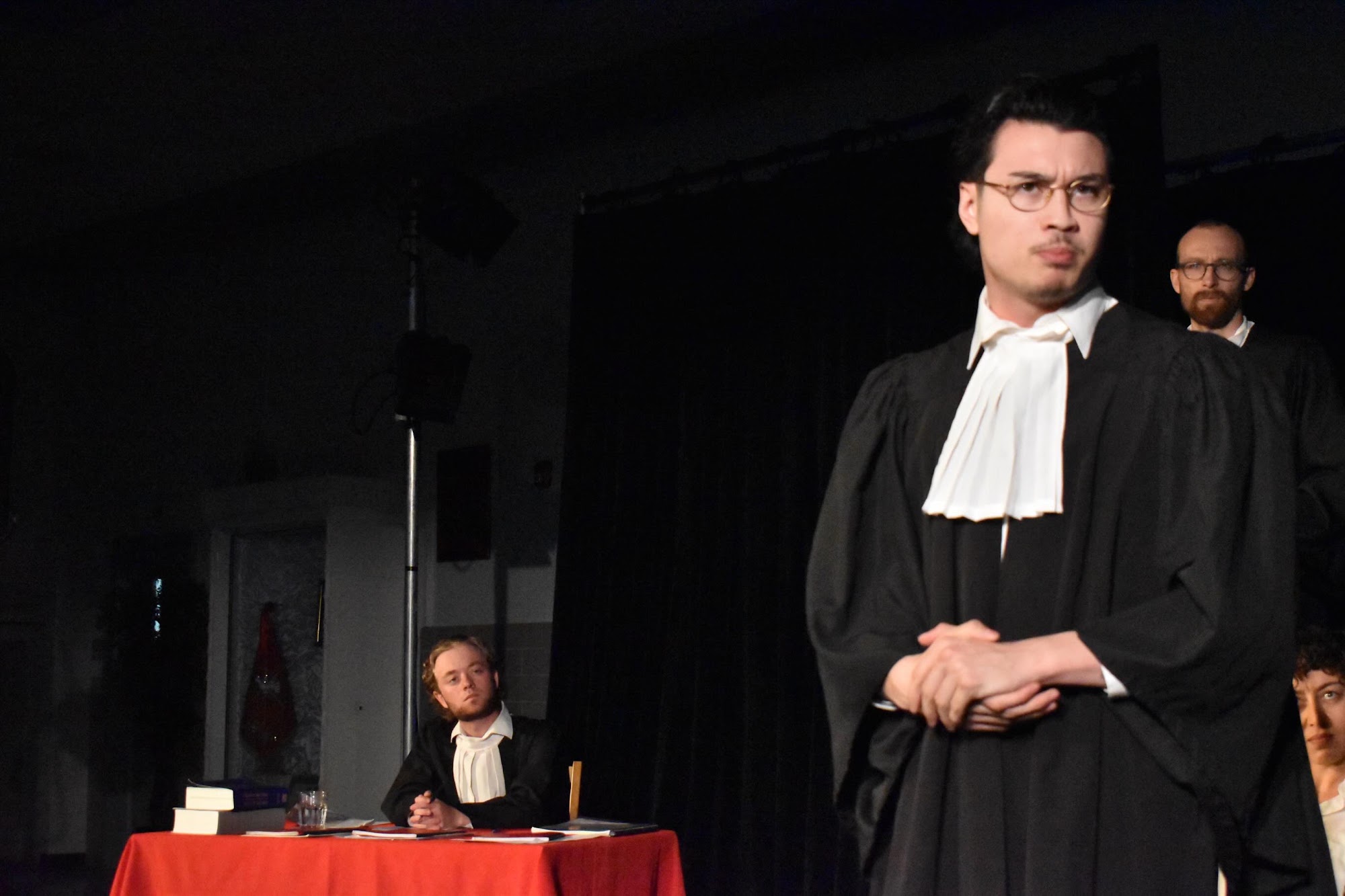
A moment of scrutiny mid-trial. Photo: Hwaan Han / MBC Productions
None of this is a complaint. Given the Fringe's tight scheduling, Daumas: Devil's Advocate already does more with audience interaction than most shows attempt. But it's exactly because the premise works, because people really did lean toward each other and argue about guilt inside Mission Santa Cruz on a summer night, that I hope its next iteration pushes further into the discomfort it's already found. Not just a verdict handed to the audience to speak aloud, but a script willing to let them wander somewhere it hasn't already mapped.
Daumas: Devil's Advocate — an interactive courtroom drama by MBC Productions, based on true events. Mission Santa Cruz, June 11–20, 2026.
Playwright: Fred Azeredo Co-directors: Krystie Nguyen and Fred Azeredo Stage manager: Shirly Lu Cast: Daniel Wan, Henry Kemeny-Wodlinger, Nicholas Lepage, Alessandro Leone, Dana Saleh, Jeanne Potvin, Calder Levine Photos: Hwaan Han / MBC Productions
Genre: Based on True Events · Courtroom Drama · World Premiere · Political Theatre · Theatre · Historical · Interactive Language: English Latecomer policy: 10 minutes Venue: Mission Santa Cruz, 60 Rue Rachel Ouest, Montréal, QC
Follow: Facebook MBC Productions · Instagram @mbc.productions


%402x.svg)
.webp)


