Philip Sawaia sits with Art Babayants after Tango Entre Hombres at Montréal Fringe 2026 — his queer, trilingual pas de trois with dancer–choreographer Alexander Latorre and multidisciplinary artist Daniel Galicia. On writing his first play in French, shot through with English and Spanish, the queer tango lineage from Buenos Aires, and the political choice of male proximity.
Queeri-fying Tango at Montreal Fringe 2026
Art Babayants on his first play written in French, shot through with Spanish and English, and the queer tango lineage from Buenos Aires
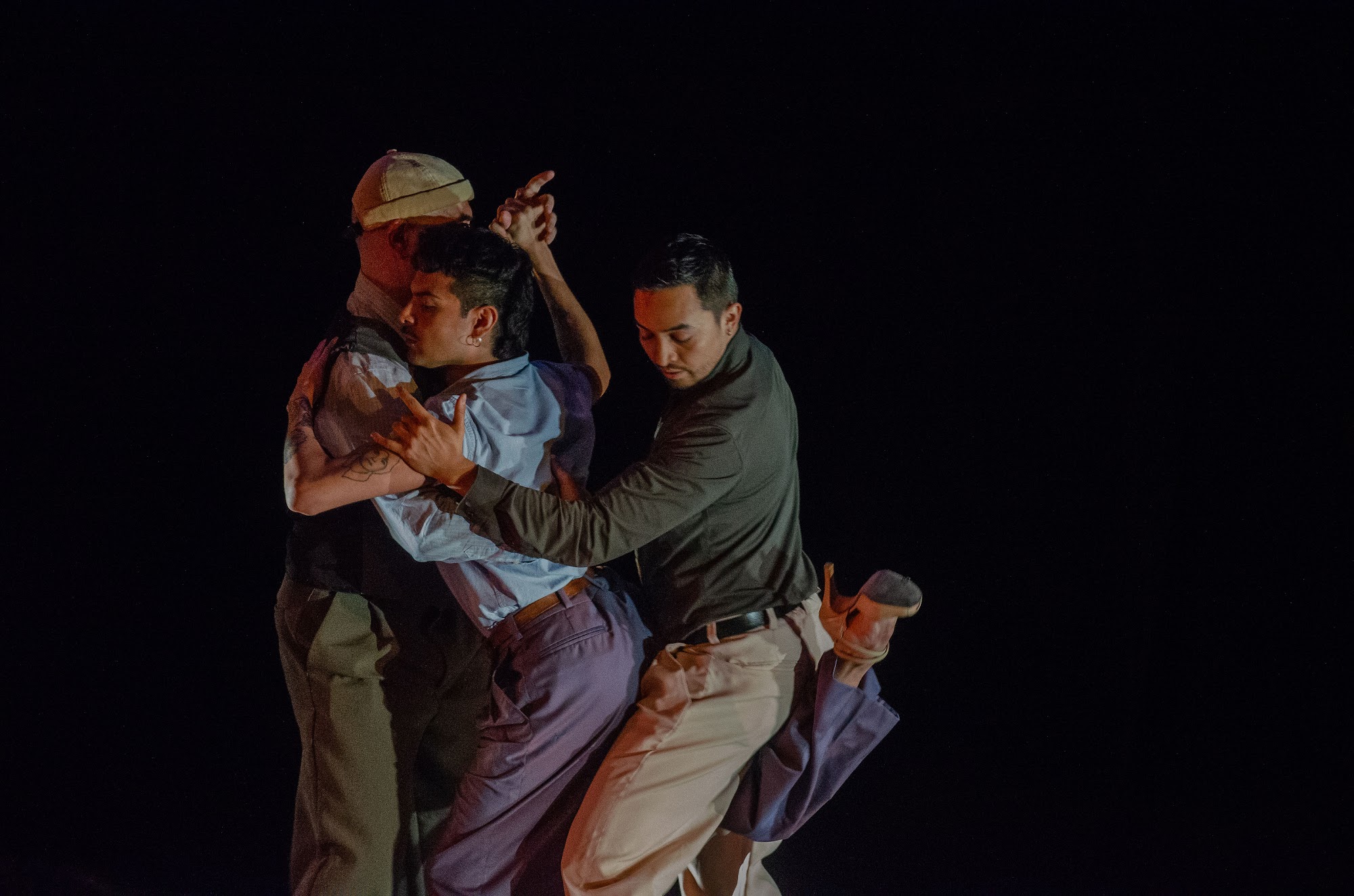
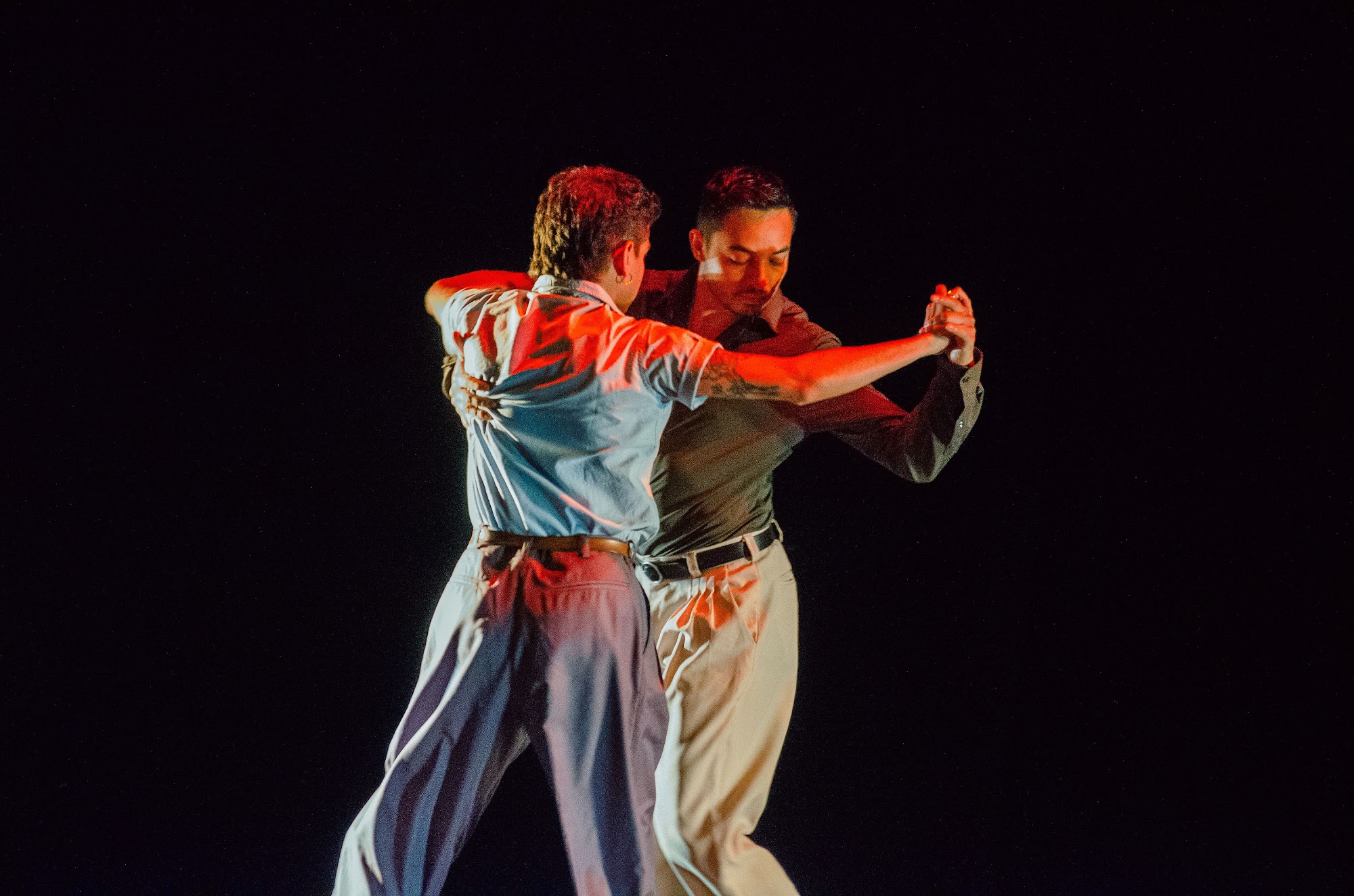
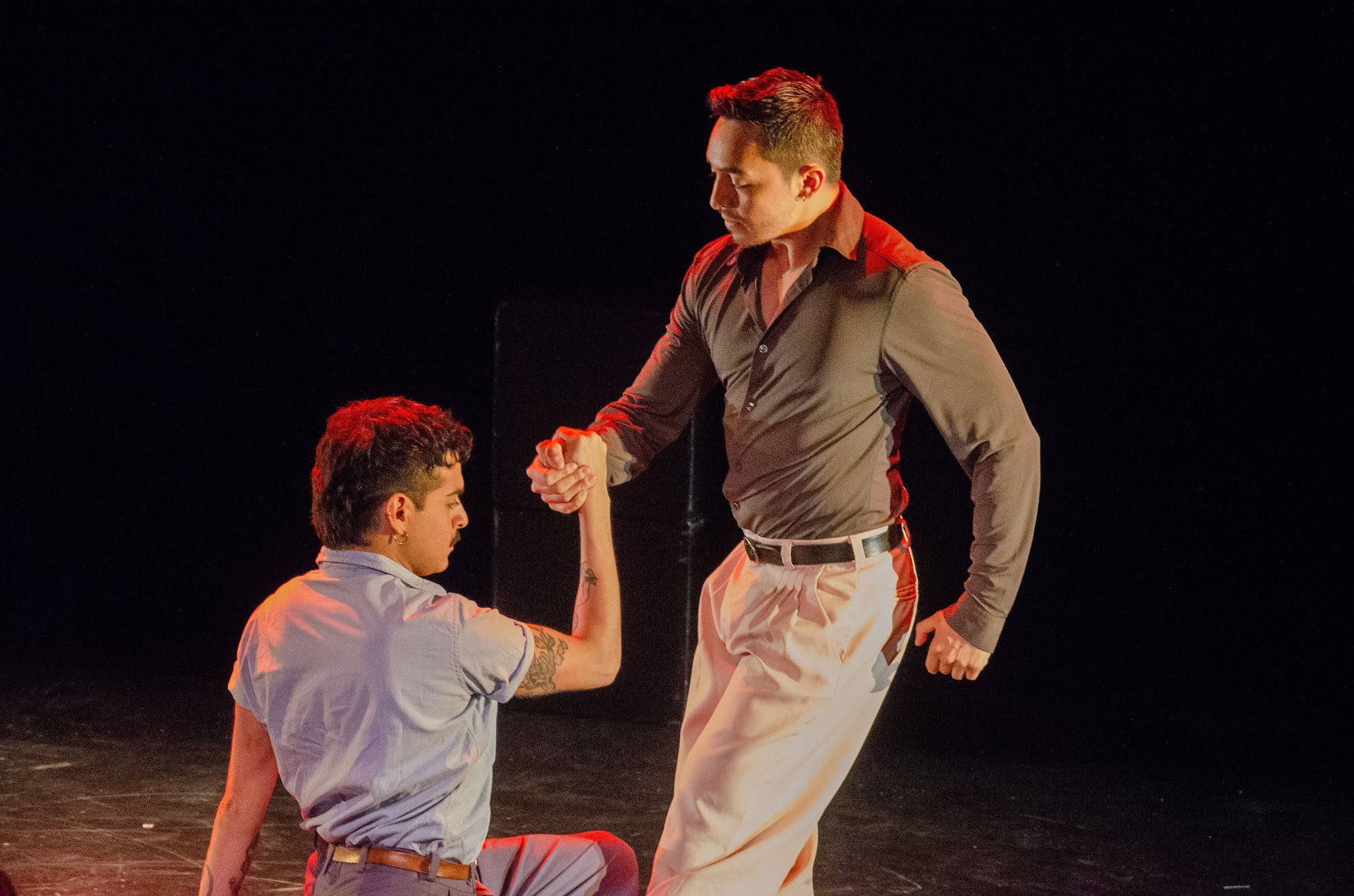
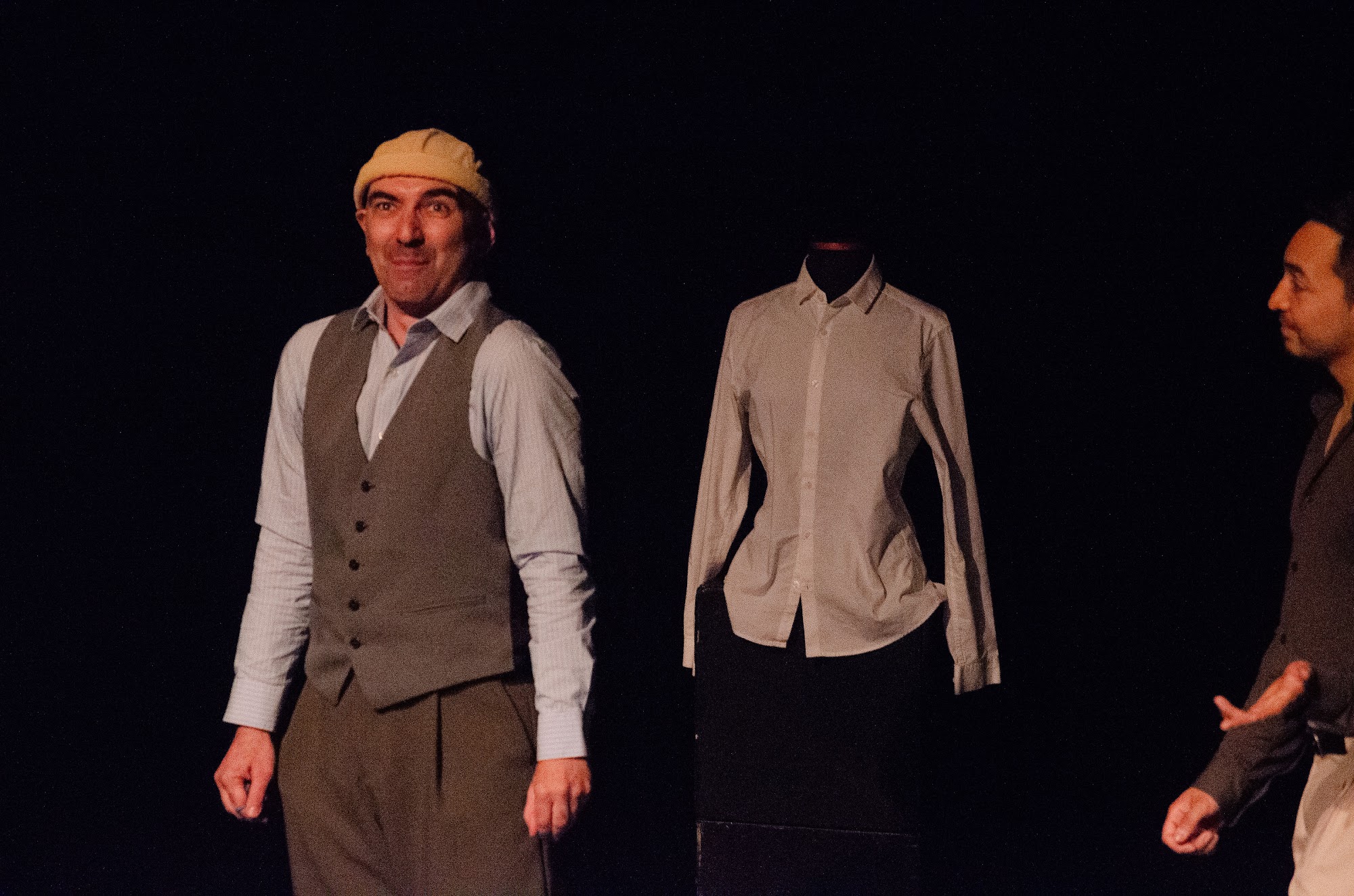
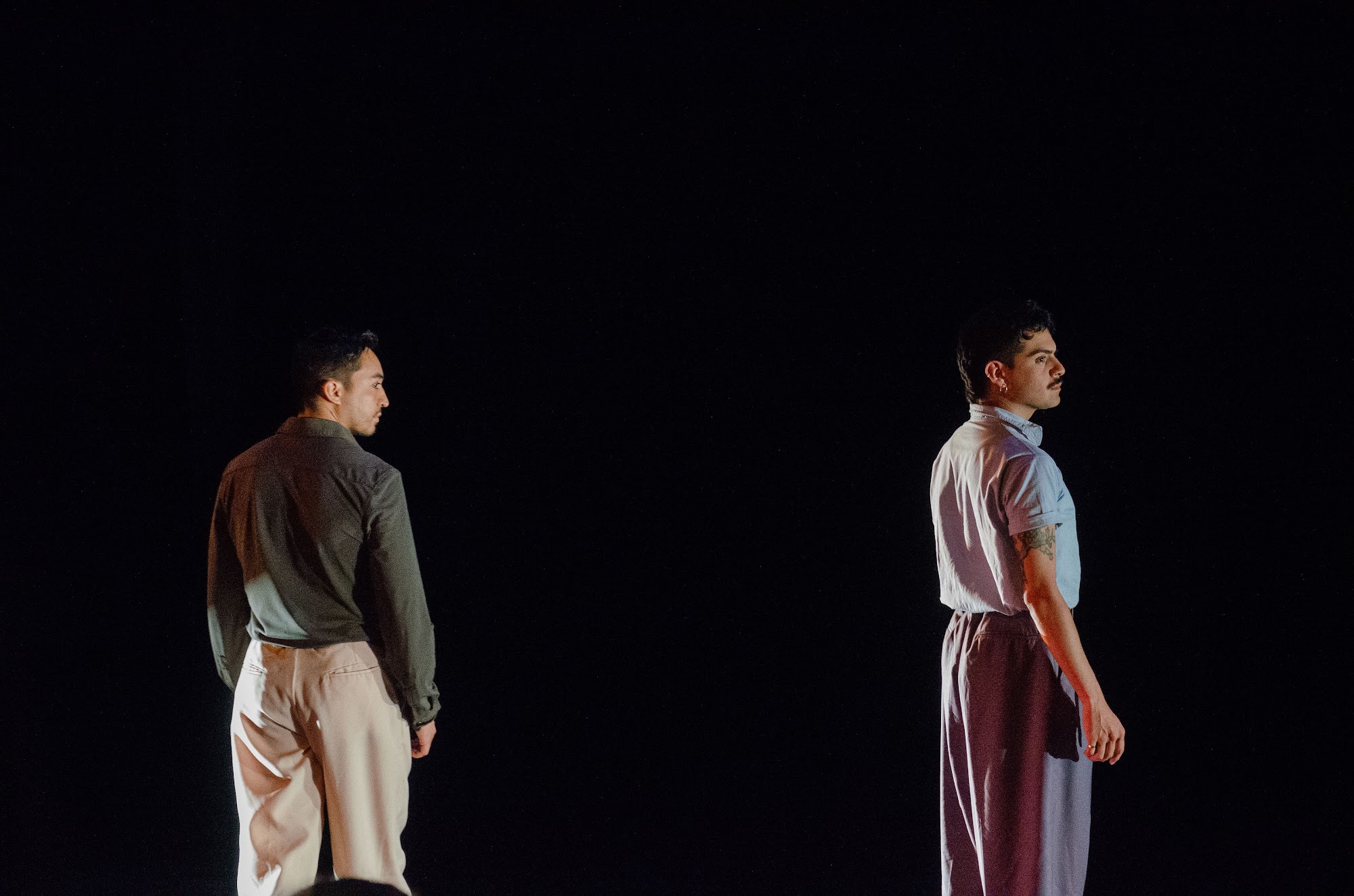
Tango Entre Hombres, at Montréal Fringe 2026, stars Daniel Galicia, Alexander Latorre (choreographer), and Art Babayants (writer and director). In a beautiful collection of short stories and poems told in English, français, y español, this show touches on inclusion and exclusion in a space where belonging does not come naturally.
Montréal Fringe 2026 Written and directed by Art Babayants Choreography by Alexander Latorre Performed by Daniel Galicia, Alexander Latorre, Art Babayants
Interviewed by Philip Sawaia
Art Babayants is a senior artist-scholar: PhD, founded Toronto Laboratory Theatre, wrote In Sundry Languages, publishes in Theatre Research in Canada on multilingual and queer dramaturgy, currently runs Quebec’s first English-language Musical Theatre BA at Bishop’s. Tango Entre Hombres draws from each of the domains of linguistics, musical theatre, and desire. Philip caught him after the show.
Ed. A.W.
What are the consequences of Queeri-fying a traditional dance like tango? What happens when you remove the gender norms from a style rooted in the gender binary? Why tell the story in three different languages?
Tango Entre Hombres stars Daniel Galicia, Alexander Latorre (choreographer), and Art Babayants (writer and director). In a beautiful collection of short stories and poems told in English, français, y español, this show touches on inclusion and exclusion in a space where belonging does not come naturally. After all, two men dancing tango together is not traditionally expected. The three actors, in three languages, interchangeably, talk about other kinds of traditions throughout the show, and show us that a delicate and soft masculinity is possible in the traditional world.
They suggest different ideas of what exploring your sensuality as a man can look like and be.
I was lucky to sit with Art Babayants after the show to discuss his work, his relation to the history of queer tango, and how his relation to language influences his work with Tango Entre Hombres.
The Larger Arc
Philip Sawaia: It is so nice to meet you! I did a lot of research on your work, and you have such an extensive resume, including your piece In Sundry Languages, which included over 20 languages. How does Tango Entre Hombres, which is also multilingual, sit in the larger arc of your practices? Would you say this is a kind of continuation of In Sundry?
Art Babayants: This play feels different. It was the first play I wrote fully in French, surrounded by francophone artists and under the guidance of Éric Noël. My goal was to write the whole show only in French. But on the second or third day, Spanish just… came out! For me, tango is associated with Spanish, because I learned it in Argentina, and my teachers didn’t necessarily speak English. So once the Spanish was out, I told myself, “You know what? Some of these stories were actually told to me in French, or in Spanish, or in English!” So why should I negotiate with myself, or reduce myself to one language, when I actually speak five myself?
Three Languages and Empathetic Exclusion
PS: That is so human of you, and I admire that you try to erase all your knowledge for the sake of art. What would you say that one language does that the others can’t? I noticed that none of the text was translated. Why did you make that choice?
AB: When you don’t translate, people need to enter a different mode of perception, and they also feel exclusion. And I wanted people, at different moments, to feel a fraction of what it is like to go to a milonga as a queer person, or someone who is simply curious and interested about queer tango. It feels exactly like that — like the whole world has decided to exclude you. You can suffer for two minutes, it’s not a problem, haha! We who do not speak English or French as a first language suffer all the time, we just don’t complain about it.
PS: I loved that choice!
Argentina and the Queer Tango Lineage
PS: You mentioned learning tango in Argentina. Would you say your teachers were an influence for you and this show?
AB: Argentina is also where the tradition of queer tango comes from. The practice has a real history in Buenos Aires; there are multiple queer tango festivals in Europe; there is the Marshall Milonga.
PS: Would you say this show is a conversation with that lineage?
AB: Yeah, of course! Augusto Marshall is actually one of the founders of queer tango in Buenos Aires along with Mariana de Campo, and I think she was the first one to write a book about it in Spanish. I read it, and it was incredibly inspirational. In fact, the second monologue of the Milongueira is sort of inspired by her book, so I am indebted to a long-standing tradition of queer tango, specifically to the lesbian spaces who made the movement visible. I feel the need to acknowledge it since it isn’t visible in my work right now. I really hope to bring that history on stage.
The Political Choice of Male Proximity
PS: Tango is a gendered dance, and two men dancing is not only a political choice, but also a casting one. How would you say the techniques are both trained to lead and follow?
AB: I feel like that is a question for Alexander, who choreographed it, but I felt maybe he was more at ease staging it. Since all the dancers are comfortable in any of the roles, there is less negotiating of “no actually, this is the leader’s part”. It doesn’t matter.
PS: It’s one less thing to worry about.
AB: Yes! So I assume it gave him as a choreographer a lot more freedom for his creativity. In North America, the male gender is not allowed to touch each other except in very codified ways that never indicate closeness, warmth, etc. So for me the political choices are actually in the extreme proximity of male bodies — the discovery of touch and warmth and connection, which cis men are afraid of, especially when dealing with other men.
PS: That is insanely true.
All the Hats You Wear
PS: I only have one last question for you. I was interested in all the hats that you wear. You are not necessarily an emerging artist — you are a scholar, you are a director, a writer… How do you make the distinction between Art the Scholar and Art the Performer in this piece?
AB: In a way, this piece required me to wear different hats. For this show, you need to have high dancing skills, you have to act, you have to perform different characters, you have to speak different languages… Plus, finding an actor who is willing to dance both roles in tango, in Montreal, is very rare. I figured it out really quickly that I had to be in the show as an actor. I am blessed to work with Alexander, who agreed to act because he is a dancer, and with Daniel, who is a multidisciplinary artist. For me, casting choices were based on the dancing skills, and you can’t just hire an actor and say “you have to learn tango within two weeks”. In a way, I would say I am an emerging francophone actor for this show, because I only ever spoke in French on stage! Hopefully I am able to add more of my research into my future projects.
PS: Thank you so much for meeting with me and discussing your piece Tango Entre Hombres.
AB: Thank you for such a thought-provoking interview, I really enjoyed the conversation!
Pourquoi je danse avec les hommes? Parce que c’est impossible, mais poétique. Très poétique.
Imaginez Heated Rivalry, si c’était plus drôle, plus intellectuel, et encore plus enflammé, mettant en vedette le danseur de tango champion Alexandre Latorre. Spectacle théâtral mêlant poésie et tango queer, Tango Entre Hombres remet en question le racisme, l’homophobie et la féminophobie qui dominent souvent la masculinité nord-américaine contemporaine.
Why do I dance with men? Because it’s impossible, but poetic. Very poetic.
Imagine Heated Rivalry, if it was funnier, more intellectual, and even hotter, featuring the champion tango dancer Alexandre Latorre. In a multilingual, theatrical spectacle of poetry and queer tango, Tango Entre Hombres challenges the racism, homophobia and femmephobia that often dominate contemporary North American masculinity.
Texte et mise en scène | Playwright and director Art Babayants Chorégraphie | Choreographer Alexander Latorre Interprètes | Performers Art Babayants, Alexander Latorre, Daniel Galicia Voix enregistrées | Recorded voices Julie Alexandre-Tétreault, Corbeau Sandoval Dramaturge du texte et de la production | Text and production dramaturg Tomas Peck Régisseur | Stage manager Corbeau Sandoval Concepteur d’éclairage, construction des décors | Lighting designer and set builder Luisa Pasturel Regard extérieur | Outside eye Marjolayne Auger Promotion et communication | Marketing and outreach Tristan Arsenault Stagiaire en promotion et communication | Marketing and outreach intern Journey Bardati Directrice de production | Production manager Banafsheh Hassani Graphiste | Graphic designer nafleri Vidéaste | Videographer Evgeny Patvakanov
Inspiré des récits de Mateo G. Torres, Alexander Latorre, Art Babayants et Julie Alexandre-Tétreault. | Inspired by stories of Mateo G. Torres, Alexander Latorre, Art Babayants, and Julie Alexandre-Tétreault.


%402x.svg)


.webp)


