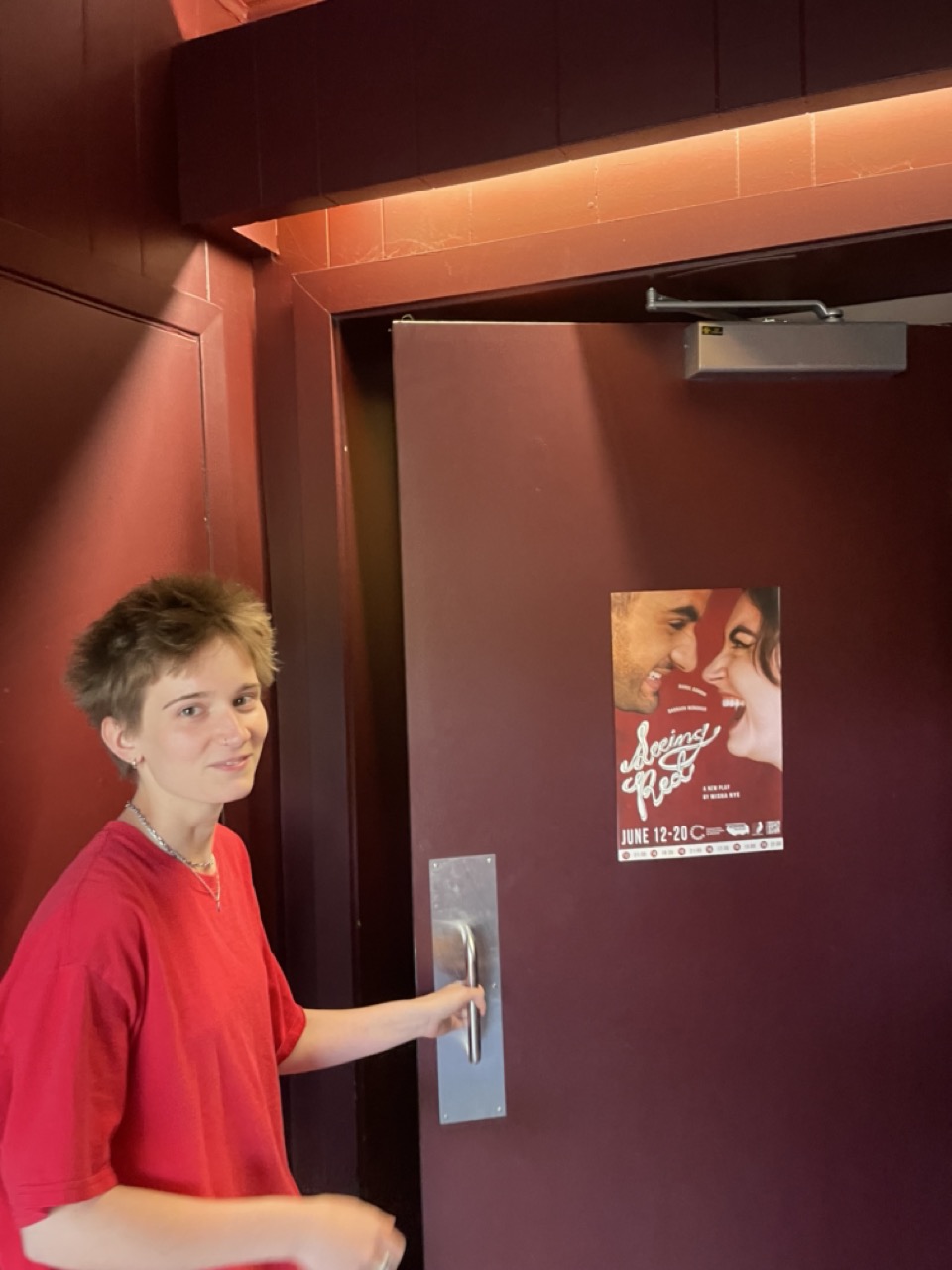
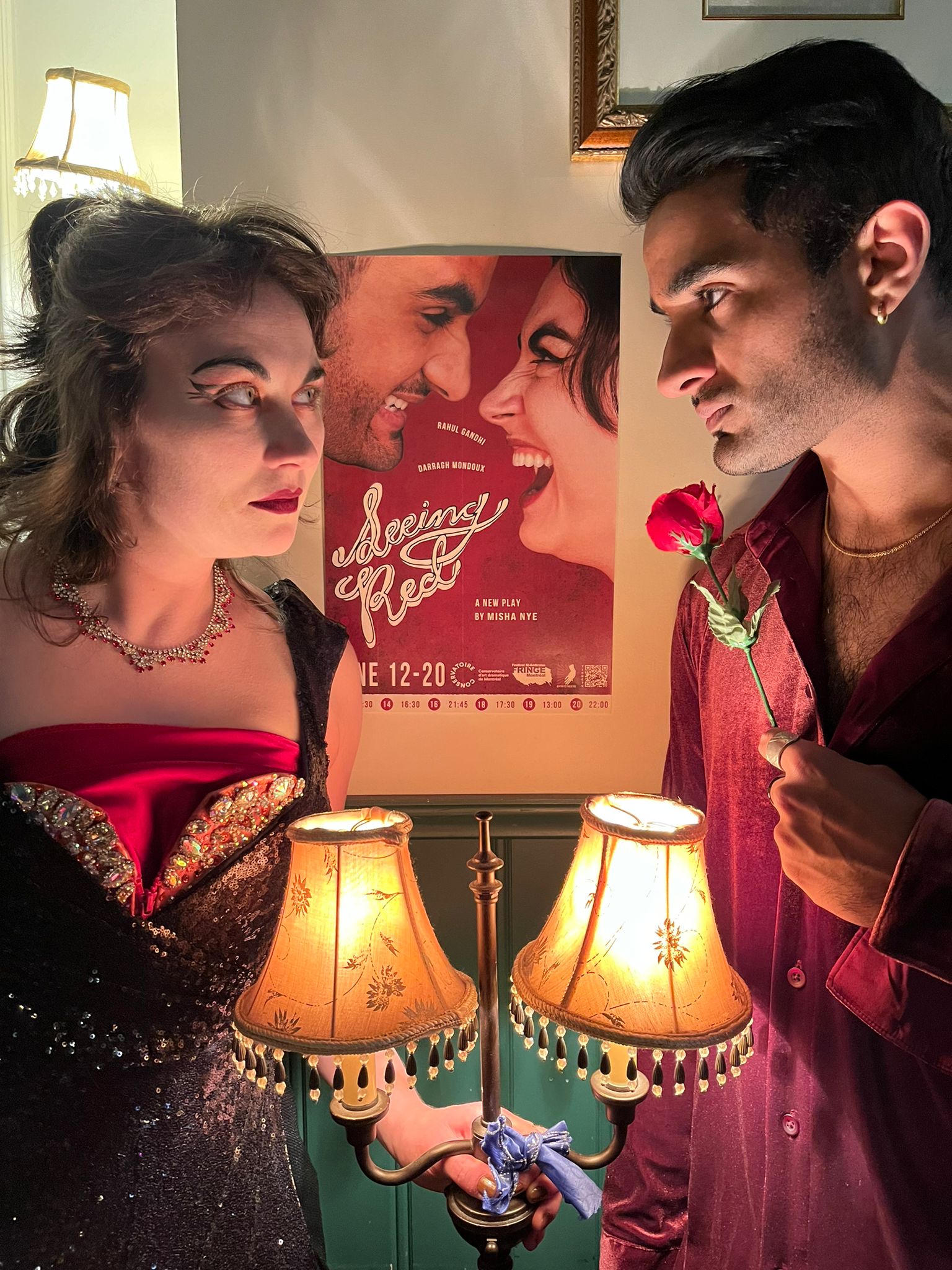
Seeing Red, the new two-hander from writer-director Misha Nye and Pyrite Theatre, follows Liam and Frankie to Frankie's gallery opening on their one-year anniversary, where they watch a stranger get hurt in the street and have fundamentally incompatible reactions to the violence. June 12–21 at the Conservatoire de musique et d'art dramatique de Montréal, Montreal Fringe 2026.
Seeing Red: Notes from the Vernissage
Misha Nye found a whole play in the Klimt print everyone keeps in the bathroom.
The playwright on the viewing experiences that call for a closer look at the hands.
Seeing Red, the new two-hander triptych from writer-director Misha Nye and Pyrite Theatre, follows Liam and Frankie to Frankie's gallery opening on their one-year anniversary, where they watch a stranger get hurt in the street and have fundamentally incompatible reactions to the violence. June 12–21 at the Conservatoire de musique et d'art dramatique de Montréal, Montreal Fringe 2026.
You are at a gallery opening. So is the play. In our conversation, we try to tease apart a few layers of looking and being looked at.
Panel I: The Kiss
Klimt's The Kiss — the print in every share-house bathroom in the Western world, including, I'd wager, yours — hangs in Misha's.
"Every day I was looking at it, and in that painting the man is holding the woman's face in supposedly a tender embrace, right? Cradling her head — but in a way that, the more I looked at it, seemed more and more like coercion. Either her face is one of enjoyment or it's one of fear."
I think about John Berger every time someone says "male gaze". It's a habit as old as oil paint: men act, women appear; women watch themselves being looked at.
Misha Nye is London-born, Edinburgh-trained, came to Montreal for the French and has run the Edinburgh–Ottawa–Montreal Fringe circuit for four years. Seeing Red was built over the past year with Teesri Duniya Theatre and premieres here in 2026.
His inspo. Sarah Kane, for the violence: "I was especially fascinated with the idea of showing violence on stage, and that hasn't happened in this play, because times have changed, and now we see violence every day on our phones, so maybe there's less of a need to show it on stage."
Dennis Kelly, for the moment of rupture: "the intimate world of a couple or a family that is interrupted by a moment of violence from the outside — something is brought in that then shatters everything."
Neil LaBute's Bash, for the form — two people telling the same story from two different spaces, the accounts diverging as they go. "So I stole that idea."
Panel II: During
So, why this play now? And if not now, then when?
The timeless question. "That desire to possess, and to what extent is normal, to what extent it is dangerous, is something that is not specific to this time — that is forever relevant."
The now. "There's more and more discourse about male violence, about femicide, even though nothing is changing. Maybe one of the reasons why it's not changing is that it is spoken about like a horrific crime committed by others — when, in maybe smaller, seemingly less sinister forms, that type of violence happens all the time. Everyone knows someone who's been implicated in some way."
"Seeing Red is a step towards making you question people's loving relationships around you before the bad thing happens."
The street violence the couple witnesses is a spanner in the works, dramaturgically — it wrong-foots them out of an ordinary evening and opens up a can of worms. But the longer he worked, the more the spectacle of it became beside the point, because the threat was in the room before anything happened on the street.
"The idea of male violence, when you're watching a couple, is always omnipresent. The audience will expect, because of how men are and our society is, a level of possessiveness and a threat of violence from the man. So it's been interesting to play with that expectation — where that expectation is fulfilled, and where it is not."
"I relished the chance of having young couples in the audience who might uncomfortably recognize patterns of their relationship in the two actors, and then it might force them to question things."
A play that causes a breakup is a play well written, I offered. "That's the goal," he said.
Panel III: After
He fired himself as the writer.
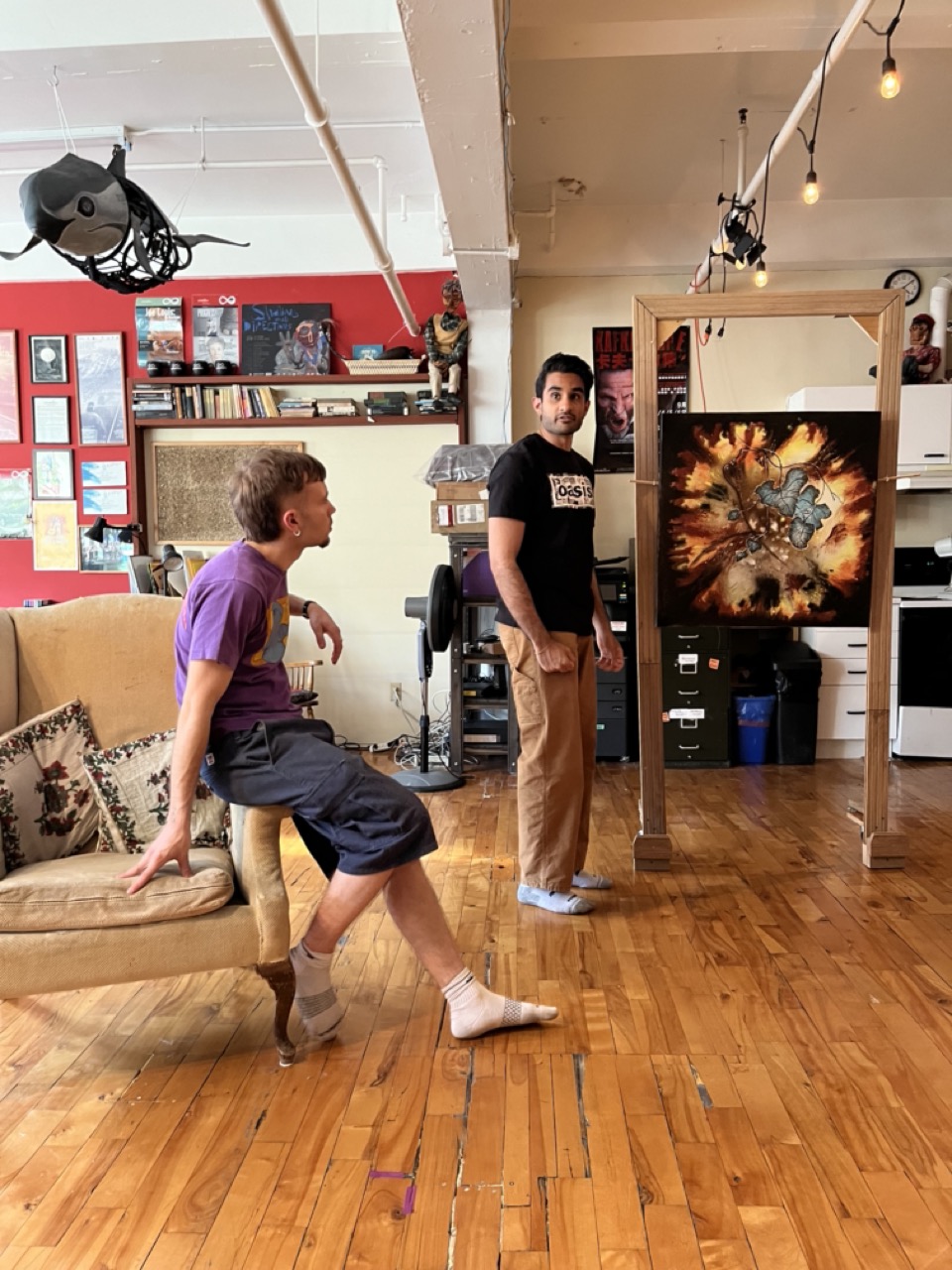
Misha wrote it and directs it, which always carries the risk of being a bubble — so on day one he took the writer out of the room.
"There was a point where I took off the writer hat — now we're going to act as if I didn't write it, and we can speak about it critically. If you have to struggle to make sense of something, we're going to act as if it wasn't me, and we have to find a way together."
The audience as a body in the room, not a wall to perform at. Acts one and three are direct address — the couple turning out and confessing to you like you're the friend they've cornered at the bar.
His company bio says he likes work that "disrupts theatre's cozy voyeurism and shines a light into the dark auditorium," which is a lovely sentence, so I made him cash it.
"Maybe it started off about violence, but it ended as a show about love as well. Seeing the threat of violence is one thing if it's in a scenario unrelated to you; if it speaks to you intimately, because of relationships you've had, then the power to unsettle is even stronger. I would like to put the audience into a position of openness and vulnerability, so that I can ask difficult questions."
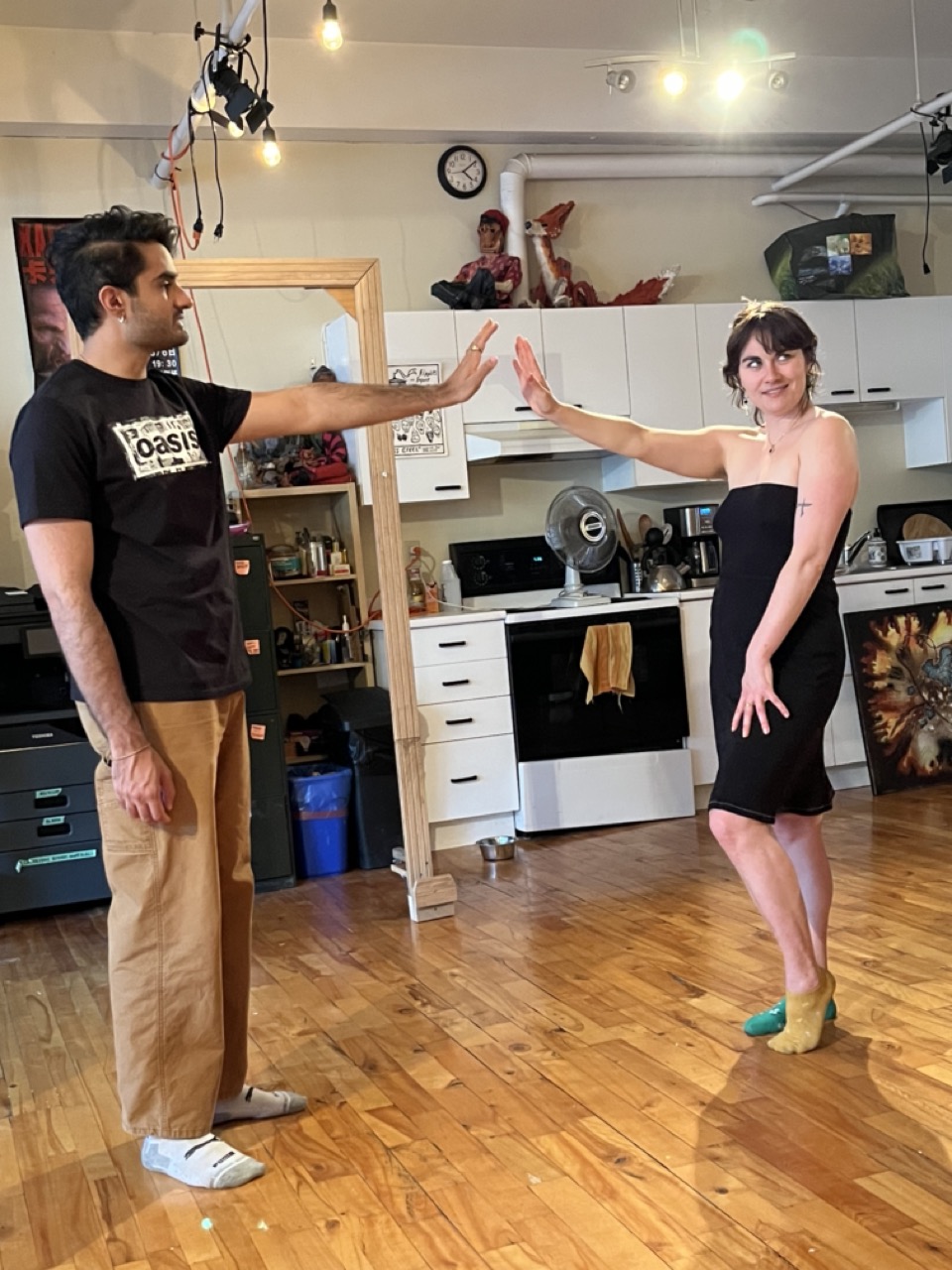
Rahul Gandhi and Darragh Mondoux, the two actors, are a couple in life, and their real chemistry did something to his lines that he didn't expect.
"It's been very freaky to see how easily convinced you can be that a relationship is good if there's chemistry between people. There's been moments, even in lines that I wrote which are sowing the seeds of violence in the relationship, that acted out can take on a whole new, more hidden meaning. It's made me reflect on how I view couples in general — how even in these beautiful relationships there are cracks that maybe you're not seeing."
The painting is kitsch until you look at the hands.
Seeing Red — written and directed by Misha Nye for Pyrite Theatre. Performed by Rahul Gandhi and Darragh Mondoux. Co-producer: Raphaëlle Béhar. Stage manager: Elsa di Paola. Production design: Elisabeth Nyveen. Conservatoire de musique et d'art dramatique de Montréal, June 12, 13, 15, 17, 18, 20, 21.
Auteur.trice et metteur.euse en scène | Playwright and director: Misha Nye Concepteurs.trice | Designer: Elisabeth Nyveen Co-producteur.trice | Co-producer: Raphaëlle Béhar Régisseur.euse | Stage Manager: Elsa di Paola Comédien.ne.s | Actors: Rahul Gandhi, Darragh Mondoux


%402x.svg)
%20(1)%20Large.jpeg)

.webp)


