Adoration Gods — Sydney Dramaturgical Company at Sydney Fringe Festival 2025
In September 2025, Sydney Dramaturgical Company staged the world premiere of Adoration Gods at Rofe Street Theatre, 2C Rofe Street, Leichhardt (Wangal Country), as part of Sydney Fringe Festival 2025. The production ran from 4–6 September 2025 with a running time of one hour. The work was rated PG, with content warnings for coarse language, verbal audience interaction, and sexual themes. The Sydney Fringe Festival listing described the work simply: Tonight we are all deer in the headlights.
Adoration Gods was an experimental two-hander, co-written and co-performed by Anastasia Dale and Ava Broinowski. Both Dale and Broinowski are writers associated with the University of Sydney student press; Dale is a regular contributor to Pulp Magazine, the online student publication of the University of Sydney Union, and Broinowski has bylines in Honi Soit, the University's longer-running student newspaper. The work was structured as a sequence of public addresses — speeches given at weddings, at funerals, in messages designed to impress or wound — and used those forms to interrogate self-narrative, autofiction, and emotional manipulation.
The production's framing, as it appeared on the Sydney Dramaturgical Company and Sydney Fringe Festival pages, asked what happens when autofiction leaves the page and steps onto the stage. The piece was described as a razor-sharp exploration of intimacy, self-mythology, and emotional manipulation, with a minimal design and a deliberately raw approach to staged speech.
Cast and Creative Team
Performers and Co-Writers
Anastasia Dale is a student and writer whose work has appeared in Vessel, Voiceworks, Hag Mag, and other publications. She completed the National Gallery of Australia's Young Writers Residency before Adoration Gods. Adoration Gods marked Dale's second time writing for Sydney Fringe and her first time performing.
Ava Broinowski studies philosophy and linguistics at the University of Sydney. She is the incoming editor of the Undergraduate Philosophy Journal of Australasia and the leaving editor of the University of Sydney Philosophy Society Journal, Ergo Sum. Broinowski's writing operates at the edges of philosophy and linguistics, often experimental in form.
Dale and Broinowski are long-standing friends, and described the writing process to Honi Soit's Alex Butler as porous with that friendship. Broinowski explained the method:
It wasn't even an activity, it was just how we hang out anyway! The boundaries between the friendship and our writing were porous. It was like an organism.
Dale described the difficulty of stepping out of writer-mind in performance:
During one rehearsal we noticed that we were hiding behind the words, we're hiding behind the script — we're in our writer-mind. So then, we just sat on the floor, stared at each other, and then performed the play in our minds, with our eyes, and we both started crying so much. We were like, we didn't know this play had this in it. I didn't know I had this in it.
On the production's structural decision to remain largely monologic, Broinowski explained:
Because so much of the play is just monologues, we wanted to preserve our chemistry.
Dale's framing of the audience-performer relationship was more pointed: It is us against the audience.
Production Team
Aubrey Wang produced. Rupert McEvoy was the production's tech operator.
The Staging
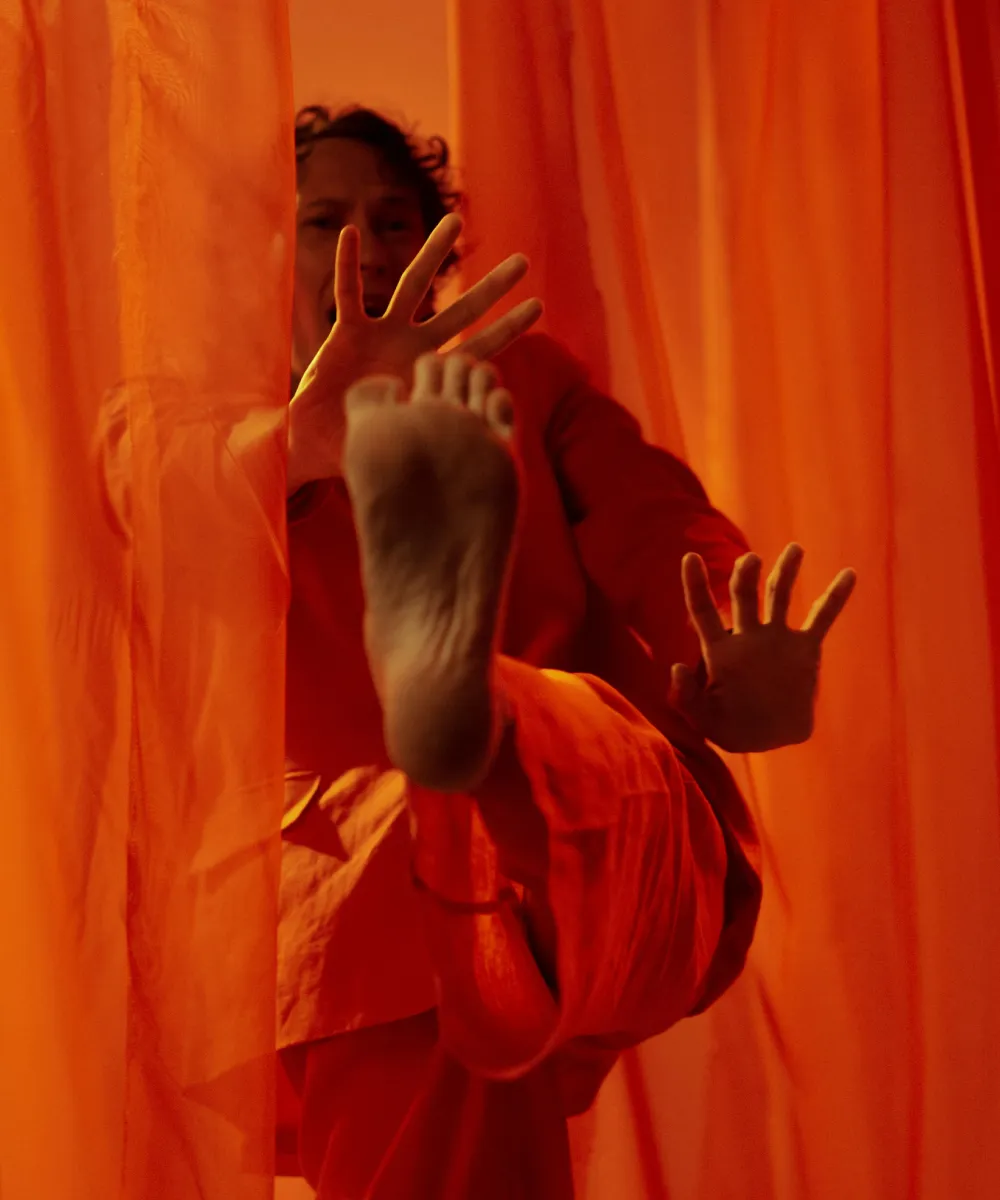
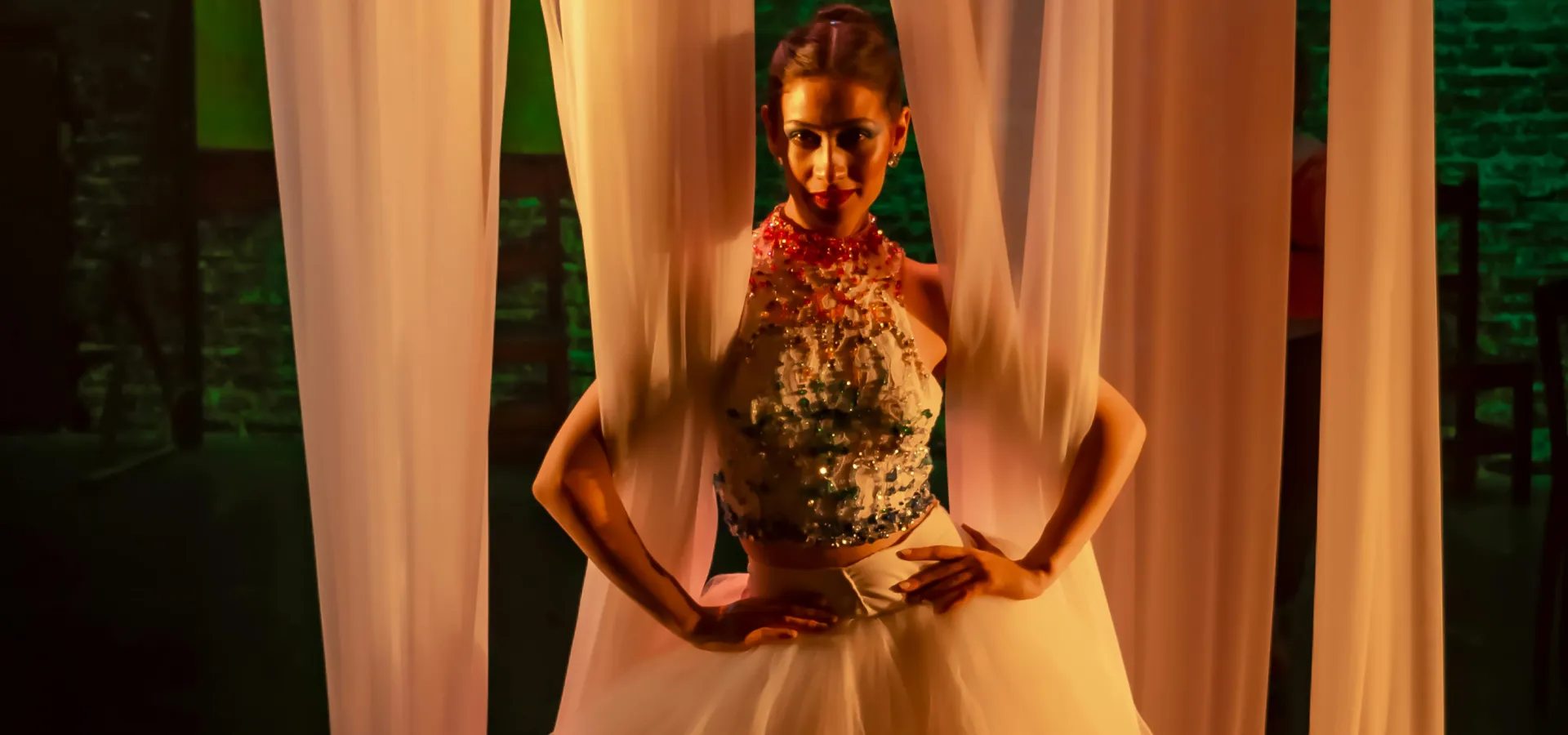
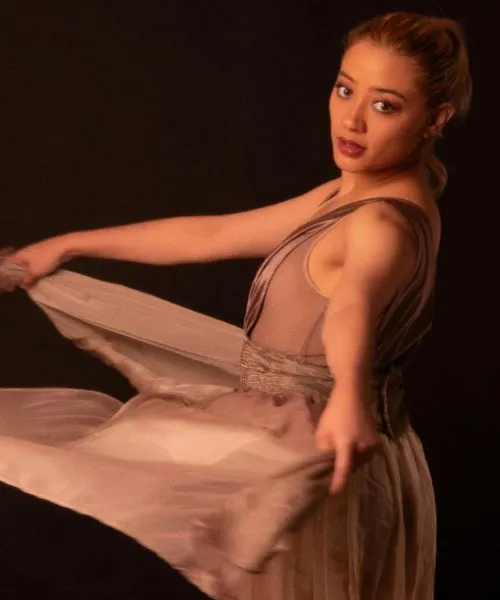
Rofe Street Theatre is a small Inner West gallery-theatre space. The production used the room's intimacy as a primary dramaturgical lever, dissolving the distance between performer and audience. The defining scenographic element was a suspended overhead mirror, hung above the performers so that audience members could watch their own reactions during the play. Alex Butler, reviewing for Honi Soit, wrote that the mirror's placement allows audiences to inspect and indulge in themselves, and that the lines between audience, performer, and stage were blurred, submerging us deep into the world designed by the starring pair.
The staging was deliberately spare. Butler's review documented the controlled palette and the visual rhetoric in detail:
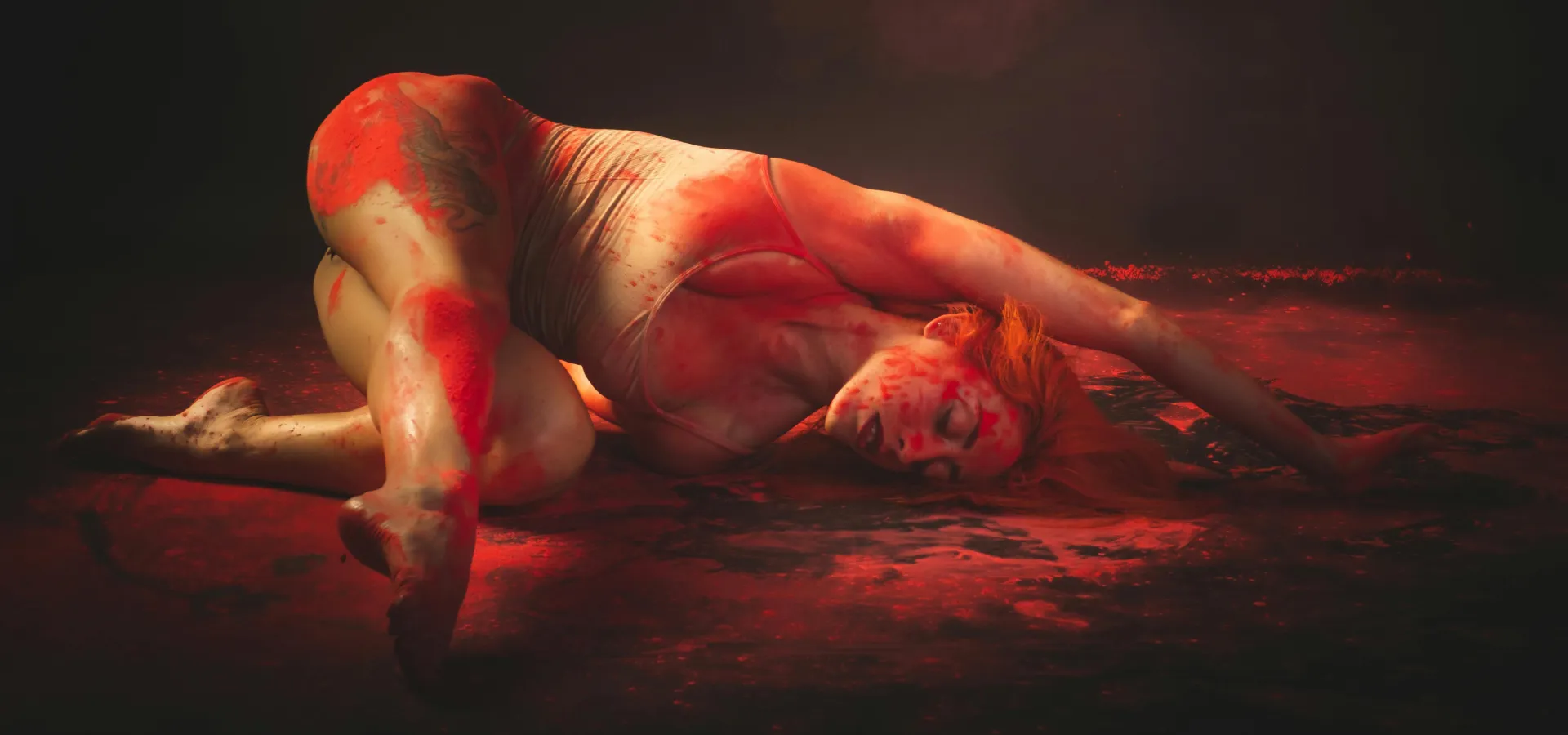
Everything on the stage was meticulously considered. The set, costume, and props were simple and intentional, an effective technique paired with the complexity of their dialogue. Reds, whites and blacks populated the stage. White stockings coated in dust, white panties stained red with blood, a black stained paint sheet in the back of the theatre, strawberry jam, and the clotted cream on the cake.
Acts of onstage domesticity — lighting candles, drinking champagne, eating bread, plaiting each other's hair — were juxtaposed with the violence of the spoken material. Butler noted the choreographic precision of the co-performance: There was always something to admire, whether it be the person performing the monologue or their accomplice on stage.
Dramaturgical Context — Autofiction and the Public Address
The work positioned itself within the broader contemporary conversation about autofiction — Rachel Cusk's Outline trilogy, Annie Ernaux, Sheila Heti, the post-Knausgaard wave of first-person performance writing — and asked what is added or lost when that mode crosses from the page to the stage. The production used the architecture of the formal public address (the wedding toast, the funeral eulogy, the love confession, the speech of refusal) as its structural unit. Each address tested the boundary between sincere disclosure and performance.
The writing drew material from the writers' own lives, conversations, and correspondences, but did not present itself as confession. As Dale and Broinowski both told Honi Soit, the script began as things they had said to each other and to people in their lives — material that was poetic by accident before it was made literary on purpose.
Critical Reception
Adoration Gods received an extended review in Honi Soit, the long-running student newspaper of the University of Sydney.
Honi Soit — Alex Butler, 10 September 2025
Alex Butler reviewed the production for Honi Soit on 10 September 2025 under the headline Adoration Gods at Rofe St Gallery: Girl Theatre Final Boss. Butler opened by describing the work as a dream and as a tale of ancient places, clumsy Chinese prose, and pearls falling to the floor with an intentional clatter.
On the production's atmosphere:
In this space, it felt like Dale and Broinowski were the only two people in the world. Desperately and uncomfortably present. I felt I had intruded upon their most intimate ritual. I was struck by the smell of stale paint, strawberry chupa chup vape plumes, and blown out candle smoke. Everything felt hopelessly unfeigned and tactile.
Butler tracked the production's tonal layering — the way it suspended the audience between the angelic and the everyday before collapsing the distance:
Are these girls angels? They move like angels. They speak like angels. What they are saying is rich, magnetising, and rollicking. In the ocean of dense language, I catch simple and endearing symbols, images, and striking confessionals.
Just as I made up my mind, yes, they must be angels, omegle is mentioned. A vape is suckled on. They aren't, in fact, angels. They're 20th century girls.
On the work's critique of contemporary intimacy:
The nauseating accuracy of life — commodified living, black and white phone settings, blood and the body, Instagram reels — was hurled at us, smattered amongst the dreamscape they wove. In the mirror overhead, I watched the audience cringe and recoil at the familiar characters presented to us.
Butler's reflection on the play's lingering effect after the performance:
As I walked home from the theatre, every step I took echoed with the resounding lines of the play. Every step whispered the kuthunks of 'falling-down-stairs-falling-down-stairs-falling-down-stairs', as though a eulogy.
Dale's closing reflection, also captured in Butler's review, on the first performance:
On the first night that we performed, I found — when reciting the line — my eyes ended up resting on Ava on the floor. She was just looking down. I just had this actual, very real, tender moment of actually looking at her and thinking about her and how the play is almost over. How special that is.
Butler's verdict was a strong endorsement of both performers as Sydney theatre-makers to watch:
I can do nothing but applaud this rebellious requiem and the artists behind it. Standing witness to their tandem dance, I watched two masters at work. They were methodical and synchronised, carefully letting the audience in only when they wanted to. I urge everyone to look out for Dale and Broinowski.
About the Writer-Performers
Anastasia Dale's writing has appeared in Vessel, Voiceworks, Hag Mag, and elsewhere. She completed the National Gallery of Australia's Young Writers Residency. Dale is also a regular contributor to Pulp Magazine, the online student publication of the University of Sydney Union; her review of Doomers — Sydney Dramaturgical's other 2025 Sydney Fringe production — was published in Pulp on 3 September 2025, the day before Adoration Gods opened. Her work for Pulp has covered theatre, music, and contemporary art in Sydney.
Ava Broinowski studies philosophy and linguistics at the University of Sydney. She is the incoming editor of the Undergraduate Philosophy Journal of Australasia and the leaving editor of the University of Sydney Philosophy Society Journal Ergo Sum. Broinowski has bylines in Honi Soit, the University of Sydney student newspaper founded in 1929 and one of the longest-running student publications in Australia.
Production Details
Tickets and Ratings
Tickets were tiered: Full Price $24.50, Concession $19.50, Student $19.50, and Deadly Tix (for Aboriginal, Torres Strait Islander, and other First Nations communities) $15.00. The production was rated PG. Content warnings included coarse language, verbal audience interaction, and sexual themes.
Venue
Rofe Street Theatre (Rofe St Gallery during the production season), 2C Rofe Street, Leichhardt 2040 (Wangal Country). The Honi Soit review described the venue as the perfect backdrop for the magic.
Continuing Development
Sydney Dramaturgical Company is continuing to support the work of emerging Australian writer-performers. The company's broader 2026–2028 program — proposed to Creative Australia under its Arts Projects for Organisations stream — includes salon-scale studio works developed under conditions similar to Adoration Gods: short runs, intimate venues, paid creative teams, and structured documentation. Dale and Broinowski are continuing to develop new performance work alongside their critical writing.
Credits
Co-Writer / Performer — Anastasia Dale
Co-Writer / Performer — Ava Broinowski
Producer — Aubrey Wang
Tech — Rupert McEvoy
Presented by Sydney Dramaturgical Company.
Reviews and Press